
Day Wedding vs Night Wedding: How Should Styling Change?
Last Updated on March 30, 2026 by gradienteye
Indian weddings are deeply layered celebrations, with each function having its own aesthetic, mood, and styling language. One of the most overlooked factors in bridal styling is time of day. A bride styled for a morning ceremony will look completely different from a bride styled for an evening reception — even if the outfit category is the same.
Understanding day vs night wedding styling India is essential because lighting, temperature, photography, and ambience all change drastically throughout the day. Colours behave differently under sunlight. Fabrics shine differently under artificial lights. Makeup that looks flawless outdoors might appear flat in a dim banquet hall. This is why brides today are exploring time-based bridal looks pan-India, ensuring every look matches the time of the wedding function.
From daytime night shaadi bride outfits to understanding light vs heavy fabrics shaadi timing, this guide explains exactly how bridal styling should shift between day and night weddings. If you’re planning multiple functions — mehendi, pheras, sangeet, and reception — learning how change bridal styling day vs night wedding functions India will ensure every look photographs beautifully and feels comfortable.
This detailed Styl Inc day night wedding styling guide India breaks down everything brides need to know.
Fabric Choice – Light & Airy vs Rich & Structured
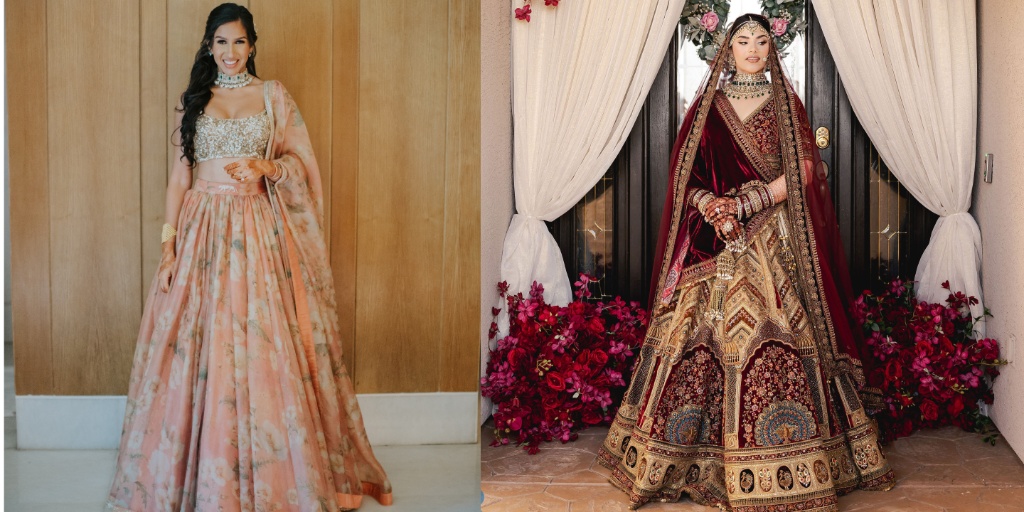
Image Source: Styl Inc
Fabric is the first element that must change when planning morning evening bridal looks. Day weddings in India often take place outdoors — gardens, terraces, heritage courtyards — where sunlight and temperature play a major role. Night weddings, on the other hand, usually occur under chandeliers, stage lights, and LED panels. This is where the balance between light vs heavy fabrics shaadi timing becomes important.
Best Fabrics for Day Weddings
For daytime ceremonies, fabrics that feel light, breathable, and fluid are ideal. Materials such as chiffon, georgette, organza, and lightweight silk blends are particularly popular for day weddings because they reflect sunlight gently and create elegant movement. These fabrics allow designers to craft soft silhouettes that look graceful without overwhelming the bride, especially during outdoor ceremonies that may last several hours.
A bride choosing a pastel day lehenga for a morning ceremony will often find that lighter fabrics help enhance the elegance of the outfit while keeping it comfortable. Because daytime weddings are frequently photographed under natural sunlight, these materials also contribute to a soft and luminous appearance, enhancing what photographers call the natural light bridal look. The combination of breathable fabrics and subtle embellishment helps create an effortless aesthetic that feels appropriate for daylight celebrations.
Many brides planning their wedding wardrobe also consider the contrast between day wedding lehenga vs night reception saree. A flowy lehenga for daytime pheras paired with a richer saree or heavier ensemble for the reception allows the bride to adapt her style seamlessly as the celebrations move into the evening.
Best Fabrics for Night Weddings
Evening weddings create the perfect opportunity to embrace luxurious fabrics and heavier textures. Artificial lighting—whether from chandeliers, stage lights, or decorative installations—adds depth and richness to fabrics that might appear too intense in daylight.
Velvet, brocade, raw silk, and heavily embellished net are some of the most popular fabrics for night weddings. These materials hold their structure well and reflect artificial lighting, adding drama and sophistication to the bridal look. A velvet night wedding outfit, for example, instantly conveys regal elegance and works beautifully for receptions or cocktail functions.
Similarly, raw silk and brocade are excellent choices for brides who prefer deeper colours such as maroon, emerald, or navy. These fabrics enhance the richness of a jewel-tones reception lehenga, making the outfit stand out under evening lighting. When paired with intricate embroidery or metallic accents, these fabrics transform the bridal look into a statement ensemble suited for grand nighttime celebrations.
Colour Palette – Soft Glow vs Dramatic Depth
Colour selection is one of the most visible differences between daytime and nighttime bridal styling. The way colours appear changes significantly depending on the lighting environment, which is why understanding day vs night wedding styling India becomes crucial when planning wedding outfits.
Day weddings benefit from colours that reflect sunlight softly and appear luminous rather than overpowering. Pastels and muted tones work particularly well in daylight because they capture the softness of natural lighting while maintaining a sophisticated bridal aesthetic. Evening weddings, however, call for colours with greater depth and intensity so that the outfit does not fade into the background under artificial lights.
This distinction explains why many brides plan time-based bridal looks pan-India, ensuring each function has a distinct visual identity that aligns with its timing and setting.
Ideal Day Wedding Colours

Source: Styl Inc
Daytime ceremonies are ideal for light and romantic colour palettes. Shades such as pastel pink, mint green, ivory, coral, and powder blue are often chosen because they appear soft and radiant under natural sunlight. These colours enhance the overall brightness of the setting and complement outdoor venues beautifully.
A pastel day lehenga is one of the most popular choices for morning pheras because it creates a refined yet modern bridal look. Pastels also work exceptionally well with floral décor and daytime photography, helping to achieve the soft glow associated with the natural-light bridal look.
These shades also contribute to the balance required when designing morning-evening bridal looks, allowing the bride to transition from subtle elegance during the day to dramatic glamour in the evening.
Ideal Night Wedding Colours

Source: Styl Inc
Evening weddings provide the perfect canvas for deeper, richer colours that look dramatic under artificial lighting. Shades like emerald green, wine, navy blue, maroon, and deep red are classic choices for receptions and evening ceremonies.
A jewel tones reception lehenga instantly creates visual impact when photographed under stage lights. These colours hold their intensity even in dimly lit venues and appear luxurious when combined with metallic embroidery, sequins, or zari work.
This contrast between soft daytime tones and deeper evening shades is why brides often consider a day wedding lehenga versus a night-reception saree. Wearing a pastel lehenga during daytime rituals, then transitioning to a richer saree or lehenga at night, allows the bridal wardrobe to reflect the changing mood of the celebrations.
Jewellery Styling – Minimal vs Statement

Source: Styl Inc
Jewellery styling must also adapt to the wedding time of day. Daytime sunlight can cause heavy jewellery to reflect excessive glare, while evening dim lighting requires pieces that sparkle more prominently.
Daytime bridal jewellery typically emphasises understated elegance. Brides often choose delicate pieces such as kundan studs, pearl drop earrings, or a single maang tikka to maintain balance in the overall look. Light bangles and subtle necklaces complement daytime shaadi bride outfits for night ceremonies.
In contrast, night weddings allow brides to embrace more dramatic jewellery styling. Full polki sets, elaborate matha pattis, heavy chokers paired with rani haars, and statement earrings become central elements of the look. Artificial lighting enhances the sparkle of gemstones and diamonds, making these pieces ideal companions for a jewel tones reception lehenga or velvet night wedding outfit.
Bridal Makeup – Dewy vs Dramatic

Source: Styl Inc
Makeup is another element that must evolve between day and night functions. Because daylight reveals every detail, daytime bridal makeup should focus on freshness and natural radiance. Lightweight foundations with SPF, soft blush tones, subtle kohl, and nude lips create a balanced look that enhances the bride’s features without appearing heavy.
This makeup style complements a natural-light bridal look, ensuring the bride appears luminous in daylight photos. When paired with a pastel day lehenga, the overall effect feels soft, romantic, and timeless.
Night wedding makeup, however, needs greater definition to remain visible under stage lighting and flash photography. Contouring becomes more prominent, eye makeup often includes smoky tones, and lip colours may shift toward deeper reds or berries. Highlighting and shimmer are also used strategically to ensure the face reflects light beautifully. These adjustments help maintain the depth and drama required for evening celebrations, especially when the bride is wearing a jewel tones reception lehenga or a velvet night wedding outfit.
Silhouette Differences – Flow vs Structure
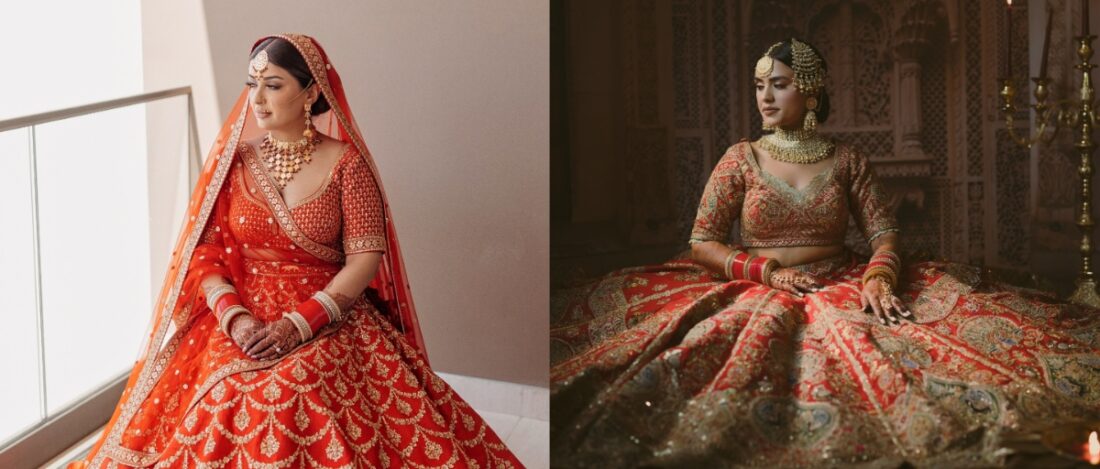
Silhouettes also evolve when designing time-based bridal looks pan-India. Daytime bridal outfits often prioritise comfort and fluid movement because ceremonies may take place outdoors and last several hours. Flowy lehengas, anarkalis, and lightweight pre-draped sarees are common choices for daytime functions.
Evening silhouettes, however, lean toward more structured designs. Fitted blouses, heavier lehengas, velvet sarees, and dramatic dupatta drapes create a striking presence under evening lighting. These silhouettes are designed to command attention at receptions and on stage.
The contrast between relaxed daytime silhouettes and structured evening outfits perfectly illustrates the difference between morning and evening bridal looks.
Function-Wise Day vs Night Styling Example

Image Source: Styl Inc
A practical way to understand how bridal styling changes from day vs night wedding functions India is to examine how outfits can be planned across multiple wedding events.
A morning mehendi ceremony might feature a pastel lehenga, minimal jewellery, and relaxed hairstyles such as loose waves or braids. The focus remains on comfort, colour, and ease of movement. By contrast, an evening sangeet allows for bolder styling, such as a jewel-toned lehenga paired with a cape-style blouse and statement earrings.
For daytime pheras, many brides opt for ivory, coral, or soft red lehengas styled with a single dupatta drape and dewy makeup. The reception look, however, often shifts toward silk or velvet ensembles paired with heavy polki jewellery and glamorous makeup.These transitions clearly demonstrate how day vs night wedding styling India influences every styling decision.
Why Lighting Matters More Than Trends
While bridal fashion trends evolve constantly, lighting remains one of the most influential factors in styling. Sunlight softens colours and textures, while indoor lighting deepens tones and intensifies shine. Camera flashes and stage lights can also affect how fabrics and embellishments appear in photographs.
This is why understanding light vs heavy fabrics shaadi timing is far more important than simply following current fashion trends. Brides who test their outfits and makeup under lighting conditions similar to their venue are far more likely to achieve balanced and photogenic results.
Why Styl Inc Excels in Time-Based Bridal Styling

Image Source: Styl Inc
Creating a cohesive bridal wardrobe requires careful planning and professional insight. The Styl Inc day-night wedding styling guide for India focuses on aligning bridal fashion with venue conditions, lighting, and function timing.
Styl Inc helps brides develop coordinated wardrobes through venue lighting analysis, function-wise colour planning, and fabric comfort strategies. This approach ensures every look—from the pastel day lehenga worn during daytime ceremonies to the jewel tones reception lehenga styled for evening receptions—feels intentional and visually striking.
By planning thoughtfully, brides can create stunning time-based bridal looks pan-India that reflect both personal style and the unique atmosphere of each wedding celebration.
Until then, keep it stylish,
Lakshita Vohra Manchanda
No Comments