

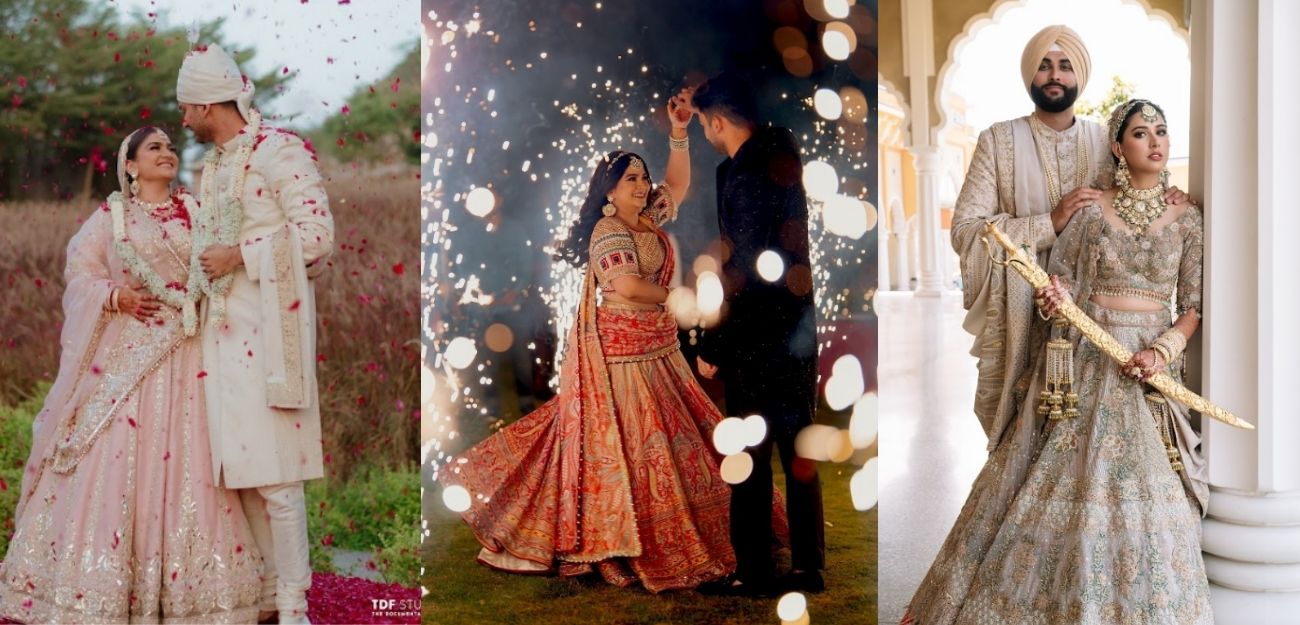
Banarasi, Brocade And Raw Silk: How To Choose The Right Wedding Fabric
Last Updated on January 20, 2026 by gradienteye
Choosing the perfect wedding fabric can be just as challenging as selecting the outfit itself. This is especially true when traditions and memories are involved. For Indian weddings, Banarasi, brocade, and raw silk are timeless choices. They are known for their elegance, heritage, and luxurious appeal.
Although all three fabrics are rich and regal, each offers a distinct look. They also differ in texture and styling possibilities. Understanding these differences can help you choose what suits your ceremony, climate, and personal style. This guide explains the differences between banarasi, brocade, and raw silk. It also helps you select the ideal bridal fabric for your special day.
What is Banarasi Fabric?
Banarasi fabric is a luxurious, intricately woven textile from Varanasi, India, traditionally a staple for bridal sarees and lehengas. It is known for its rich silk base, elaborate motifs such as paisley, florals and jali designs and the use of gold and zari threads. Common types of banarasi fabrics include katan, kora, georgette and tissue. Prominent weaving techniques include jamdani, Tanchoi, Butidar, Kaamdani, each contributing to the fabric’s distinctive elegance.
Banarasi For Bridal Sarees and Lehengas?
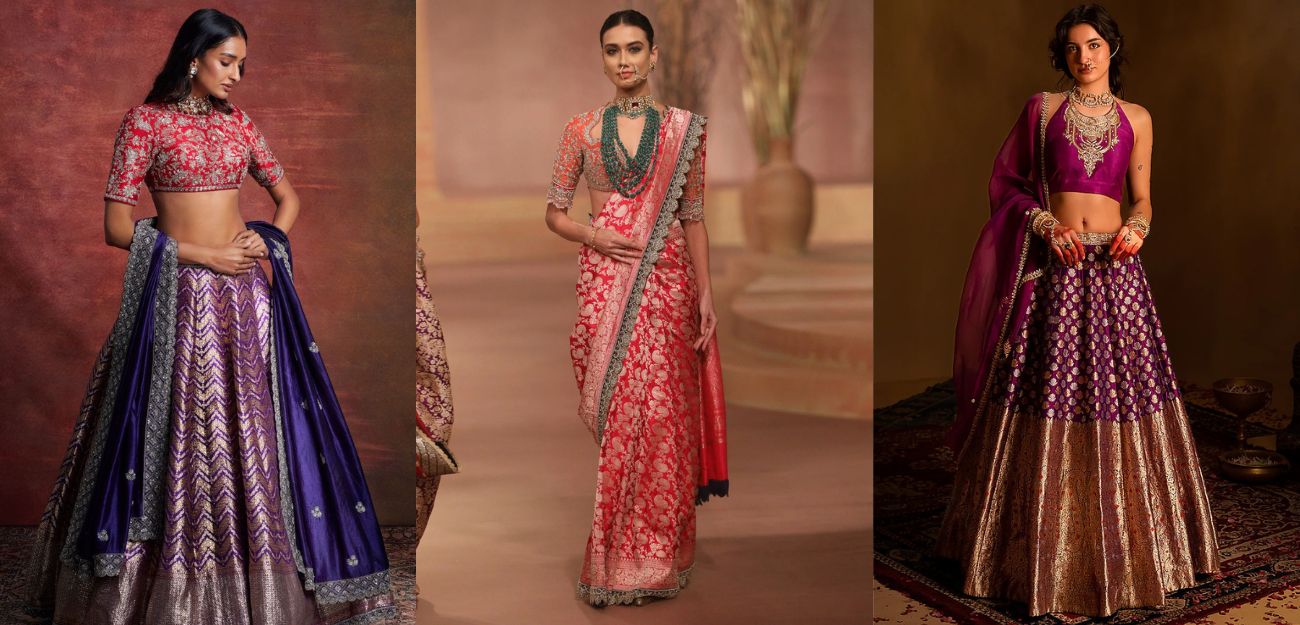
Source: Pernia’s Pop Up Shop, Pernia’s Pop Up Shop, Pernia’s Pop Up Shop
Banarasi sarees and lehengas are often passed down through generations due to their sentimental value, timeless elegance, and grandeur. Additionally, they are among the most popular bridal wedding fabrics in India, particularly among brides at weddings. They are celebrated for their exquisite zari work, heirloom value, and intricate craftsmanship.
Brides looking to experiment with different styles can opt for sarees, which offer fluid grace and movement, making them feel poised and elegant. With various draping styles and a wide array of hues, today’s modern brides are spoilt for choice.
Banarasi brocade bridal wear, such as lehengas are understated in elegance and offers grandeur as compared to heavily sequinned or stoned lehengas, making them a traditional choice for brides. One can opt for a pure silk banarasi lehenga or lighter fabric options like georgette or organza for long ceremonies. You can experiment with different necklines and dupatta fabrics to create a seamless, well-coordinated look.
Handloom Banarasi Weaves and Zari Craft
Handloom Banarasi weaves are exquisite silk textiles, from Varanasi, India, renowned for their luxurious silk bases such as katan and kora, Mughal-inspired motifs and intricate zari brocade weaving. Crafted on traditional pit looms, these textiles feature elaborate patterns like bel, jaal on pit looms created using gold or silver zari through techniques like Kadhwa, Tanchoi. The meticulous craftsmanship and rich motifs make banarasi sarees vintage garments.
Texture, Drape and Traditional Appeal
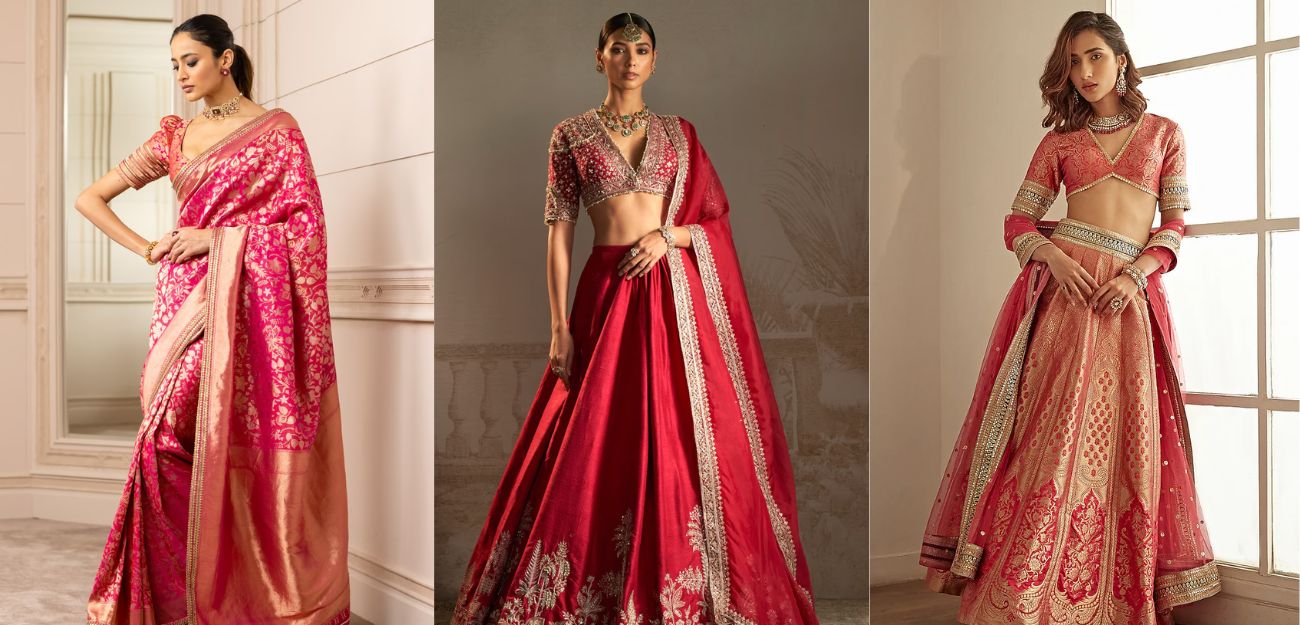
Source: Tarun Tahiliani, Riddhi Mehra, Aza Fashions
Texture
Banarasi or brocade for bridal lehengas or sarees is renowned for its luxurious texture, majestic drape and deep-rooted traditional appeal. Traditionally woven using fine silk- often mulberry silk they are known for their rich sheen, opulent appearance and intricate zari work featuring gold or silver threads.
Drape
The dense weaving and weight of these sarees create a structured drape, making it one of the best wedding fabrics. While classic banarasi sarees are heavy, the modern ones are lighter and more comfortable to wear.
Traditional appeal
Banarasi sarees are a staple in traditional weddings due to their opulent and rich feel. The designs feature Persian-inspired motifs such as jangla, kalga and bel. Their appeal lies in rich colors, nature-inspired motifs such as florals, peacocks and techniques like jangla.
When Banarasi Works Best For Weddings
Banarasi works well for weddings year-round, transitioning effortlessly from day to evening ceremonies. Heavy katan or tissue silks with intricate zari add timeless glamour, while pastel shades are ideal for daytime rituals and destination weddings. Classic reds, maroons or emerald suits for main ceremonies, while pastels offer a modern touch.
Understanding Brocade Fabric
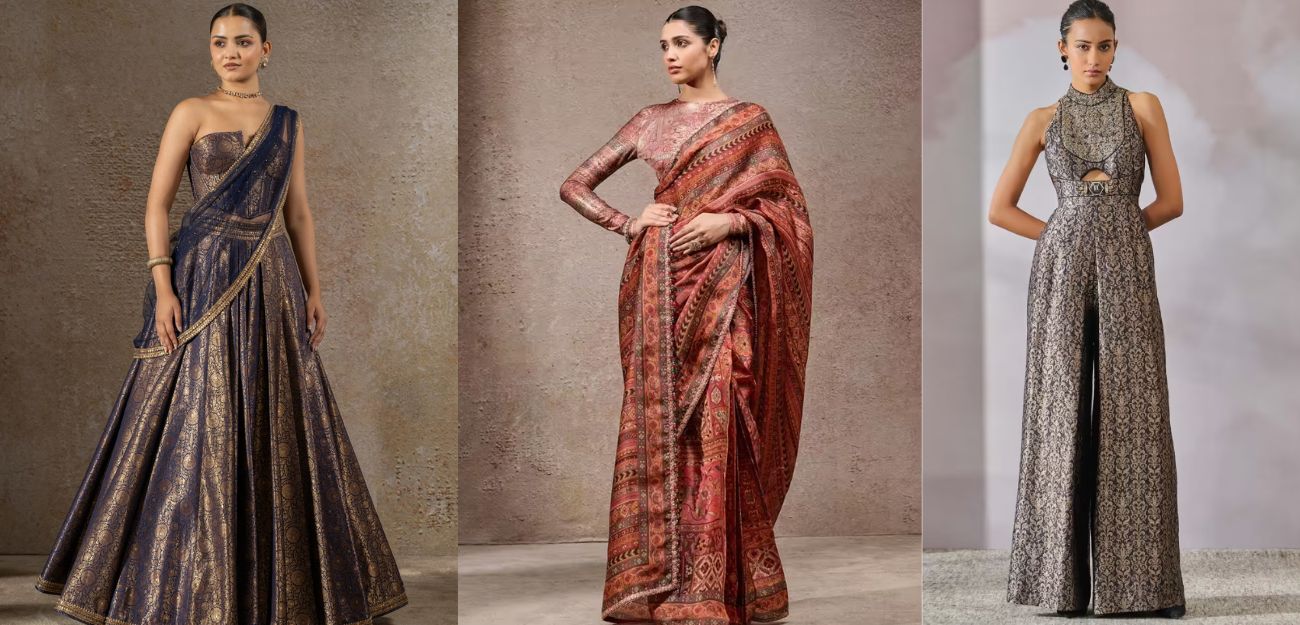
Source: Tarun Tahiliani, Tarun Tahiliani, Tarun Tahiliani
Brocade is a lustrous, high-quality woven fabric known for its intricate designs. Unlike embroidery, brocade patterns are woven directly into the fabric rather than added afterwards. The weaving technique creates a distinct textured surface with raised patterns that are both tactile and visually appealing. Brocade is one of the best wedding fabrics for lehengas and sarees. However, due to its rich and delicate nature, brocade offers a rich feel; it requires careful maintenance to preserve its beauty.
Brocade In Wedding Dupattas?
Brocade is a popular wedding fabric choice used in dupattas due to its rich, opulent appearance featuring raised, intricate woven patterns and metallic threads, which add luxury and texture perfect for bridal wear. These dupattas provide a stunning visual impact, elevating wedding outfits beautifully.
Jacquard Weaving and Raised Metallic Patterns
Jacquard weaving is a technique that creates intricate, complex patterns woven directly into the fabric, resulting in a raised textured surface. When these fabrics incorporate metallic threads, they produce a rich textile called brocade.
Structure Shine and Layering Potential
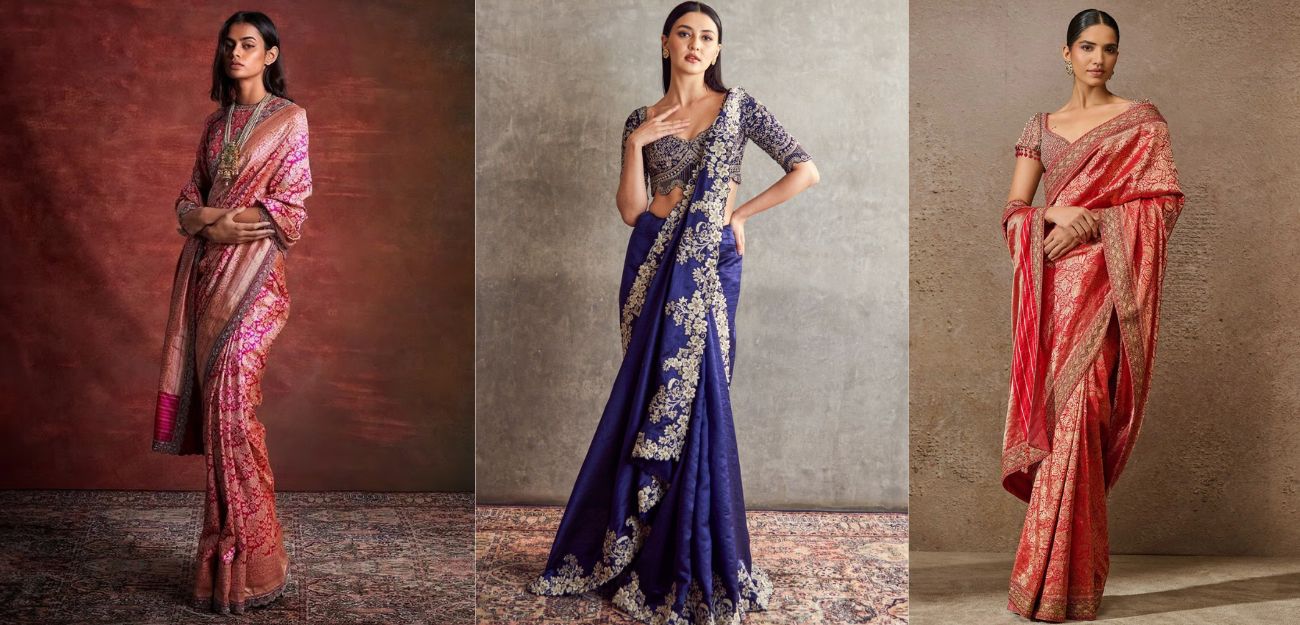
Source: Fashion Network India, Jayanti Reddy, Tarun Tahiliani
Brocade’s defining feature is raised, three-dimensional patterns that are woven directly into the fabric using a specialised jacquard loom rather than being printed. Brocade is a medium to heavyweight fabric known for its durability and luxurious finish. The sheen of traditional silk threads provides a natural luminescence while metallic threads are often woven in to enhance its appearance, creating an eye-catching glimmer that catches the light and adds a sense of opulence. The combination of banarasi brocade is well-suited for bridal outfit garments such as lehengas and sarees due to its intricate craftsmanship.
Best Uses Of Brocade In Bridal Styling
Brocade is the primary wedding fabric for statement bridal wear. In indian weddings, a classic red or maroon banarasi brocade saree or lehenga with intricate zari work is a traditional choice valued for its rich texture and regal appeal. When considering brocade vs. raw silk for a wedding lehenga, brocade represents woven patterns and opulence, while raw silk offers understated, matte elegance. In Western contexts, brocade can be used for the entire gown, creating stunning silhouettes that emphasise structure.
Raw Silk for Embroidery and Structured Fits
Raw silk is an excellent choice for embroidery and structured garments due to its unique nubby texture, durability and natural stiffness. These qualities allow it to hold intricate designs and maintain a defined silhouette. When choosing between banarasi and raw silk, banarasi is often preferred for bridal wear due to its rich weave, zari, and lustrous, opulent appearance, while raw silk offers a matte finish and subtle elegance.
Day Vs Evening Wedding Use Of Raw Silk
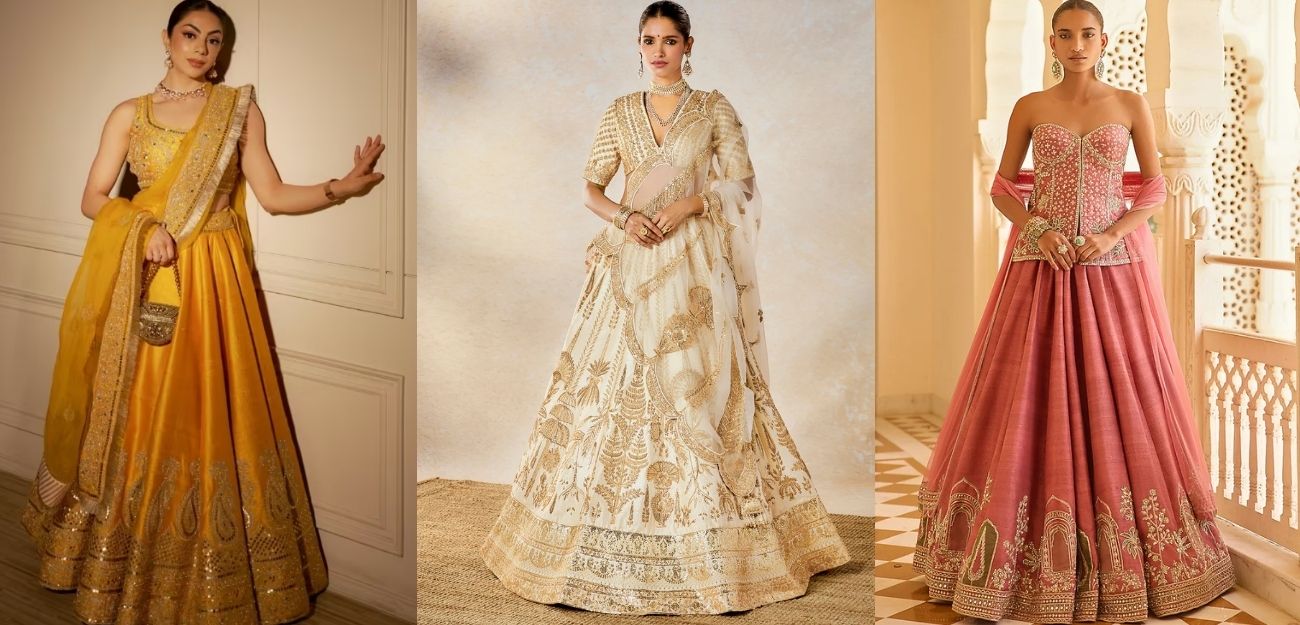
Source: Sheetal Batra, House Of Masaba, Riddhi Mehra
Raw silk, like any fabric, has its own pros and cons. Its breathable nature makes it a good choice for day weddings. This is a clear advantage. However, its comparatively lower sheen can be seen as a drawback.
The fabric’s natural texture and subtle sheen work beautifully in daylight. They enhance elegance without looking too heavy. Lighter shades such as ivory, beige, and pastels pair well with minimal embroidery. This combination creates an understated and refined look.
For evening functions, raw silk takes on a richer appearance. Festive or artificial lighting enhances its drape and depth. This gives the fabric a regal and polished finish.
Pheras, Sangeet, Reception Wedding Fabric Choices
For pheras, banarasi silk is an ideal choice due to its regal appearance, rich texture and ability to hold structured silhouettes while showcasing intricate zari work, making it perfect for the main event.
For the sangeet, opt for light and fluid fabrics that allow ease of movement. While brocade adds volume, pairing it with lighter fabrics, such as georgette through a dupatta or panels, helps balance structure with comfort. Georgette gives an airy feel, making it suitable for dance- heavy functions. For receptions, a raw silk lehenga with embellishments offers grandeur along with elegant structure, making it a refined and appropriate choice for the occasion.
Mixing Wedding Fabrics In One Bridal Outfit
Many wedding fabrics in a bridal outfit add depth, dimension, structure, texture and a modern flair by balancing different fabric weights, such as pairing a brocade blouse with an organza banarasi skirt. The structured silk blouse provides form and richness, balancing the sheerness and lightness of the organza while adding visual interest.
Personalised Bridal Fabric Consultation
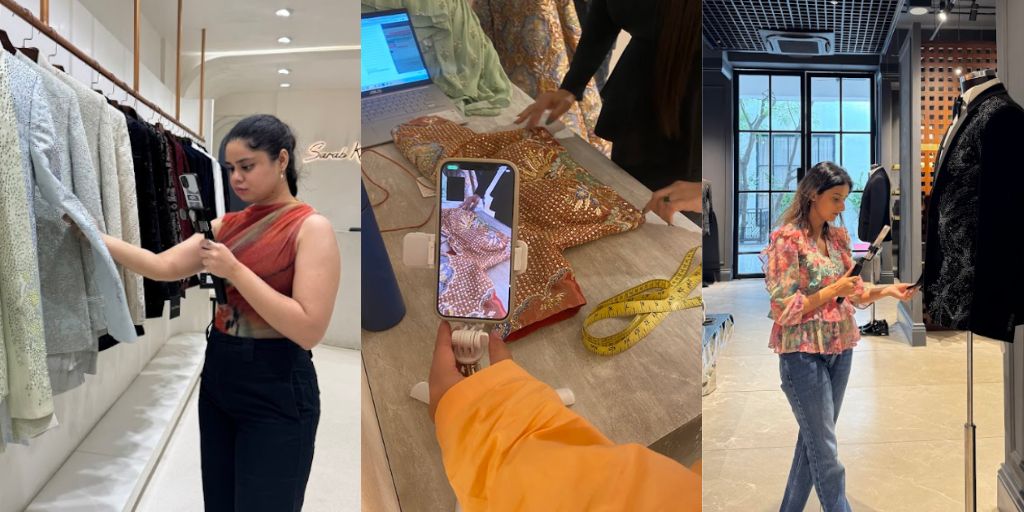
Source: Styl Inc
Styl Inc offers personalised bridal styling services that help brides with curated wardrobe planning, including guidance on wedding fabrics, colors, palettes, drapes and embroidery styles. They collaborate with leading designers and provide customised styling that reflects the bride’s personality, body type and overall wedding theme.
Conclusion
Understanding the difference between banarasi, brocade and raw silk does help in choosing the wedding fabric, especially when considering climate, season and timing of the celebration. Each fabric behaves differently in terms of weight, lustre, comfort, breathability and comfort.
Until next time,
Keepin’it stylish
Aparna Iyer
1. What is the difference between banarasi, brocade and raw silk for weddings?
2. Which fabric is best for a bridal saree- banarasi, brocade or raw silk?
3. Is banarasi fabric suitable for bridal lehengas?
4. What are the common wedding uses of brocade fabric?
5. Is raw silk a good choice for bridal lehengas?
6. Which fabric works best for the phera ceremony?
7. Which wedding function suits brocade the most?
8. Can banarasi, brocade and raw silk be used together in one bridal outfit?
9. Which fabric is most durable for long wedding functions?
10. How do I choose the right wedding fabric based on season and function?
No Comments