

Handloom vs Machine Fabric: What Works Better for Wedding Wear?
Last Updated on January 29, 2026 by gradienteye
Choosing the right fabric can make or break a bridal outfit. In India, where wedding attire carries emotional, cultural, and visual significance, the debate of handloom vs machine-made fabric for Indian weddings is more relevant than ever. Brides today want beauty, comfort, sustainability, and value—often all at once.
From heirloom sarees to statement lehengas, understanding the difference between handloom and machine-made fabric helps brides make informed choices. This guide dives deep into textures, costs, sustainability, durability, and styling to answer the ultimate bridal question: what really works better for wedding wear?
What Defines Handloom Fabric?
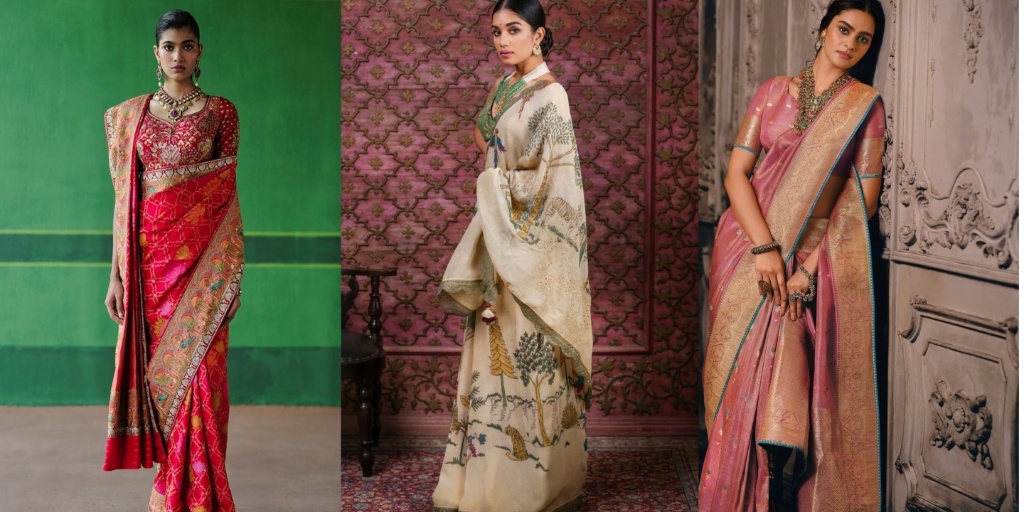
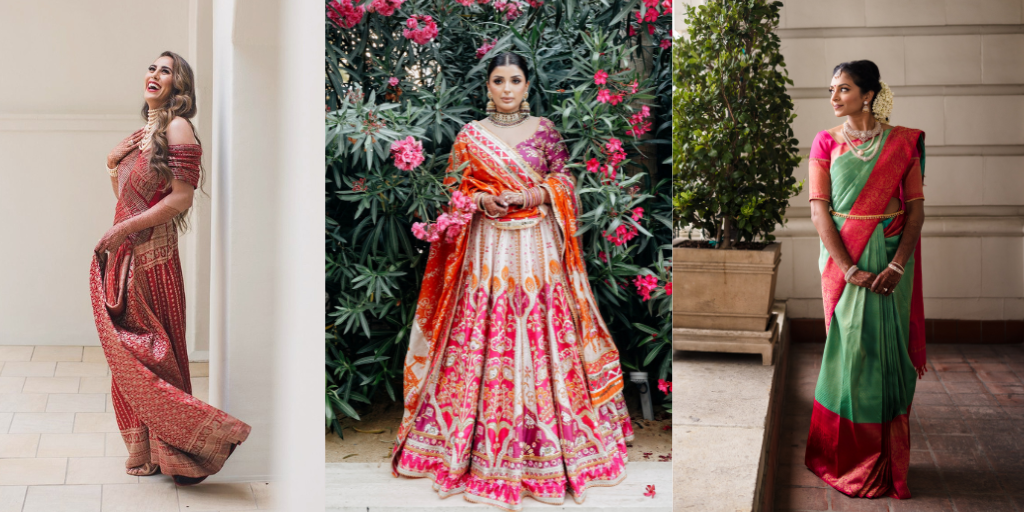
Image Source: Instagram/Shanti Banaras, Instagram/Sabyasachi
To understand the handloom machine fabric difference in bridal, we must first understand what “handloom” truly means.
Handloom in Bridal Sarees?
Handloom fabric is woven manually on a loom operated by skilled artisans. Bridal staples like authentic handloom Banarasi sarees, Kanjeevarams, Paithanis, and Jamdanis are woven thread by thread—making each piece unique. This is why handloom is often the first choice when brides ask what handloom fabric is for weddings.
In the debate of handloom saree vs powerloom lehenga shaadi, handloom sarees often win for traditional ceremonies due to their richness and cultural depth.
How Handloom Weaving is Done
Unlike machines, handloom weaving relies on human precision. Each motif, zari line, or pattern is manually interlaced. This process explains the visible natural irregularity that differentiates handcrafted bridal textiles from factory-made ones and highlights the true difference between handloom and machine-made fabric.
Texture, Breathability & Natural Irregularity
Handloom fabrics use natural fibers like silk, cotton, or linen, making them more breathable—an important factor when deciding which fabric, handloom or machine, to use for long wedding rituals. Minor inconsistencies in the weave are signs of authenticity, not flaws.
Cultural & Heirloom Value of Handloom Wedding Wear
Handloom outfits often become heirlooms passed across generations. Brides who care about legacy and sustainable wedding fabrics in India often ask, is handloom better than machine fabric for weddings? From an emotional and cultural perspective, the answer is often yes.
Machine-Made (Powerloom) Fabric Explained

Image Source: Pinterest/Anita Dongre; Pinterest/Aza Fashions – Global; Pinterest/mahima mahajan
While handloom celebrates heritage, machine-made fabrics dominate modern bridal fashion due to efficiency and versatility.
Machine Fabric for Lehengas?
Machine-made or powerloom fabrics are produced using automated looms. These fabrics are extremely popular in bridal lehengas, especially when brides search for handloom vs machine fabric for bridal lehenga options that allow heavy embroidery, lighter weight, and trend-driven designs.
Powerloom Weaves & Uniform Finish
Powerloom weaves produce perfectly uniform textures. This consistency is a key handloom machine fabric difference, especially visible when comparing bridal zari alignment and surface smoothness. Many powerloom synthetic bridal fabric options mimic silk while being more affordable.
Cost, Availability & Mass Production Benefits
When brides ask if handloom fabric is expensive for weddings, the comparison becomes clear. Machine fabrics are cost-effective, easily available, and ideal for multiple wedding functions—making them a practical answer to the best fabric for wedding handloom or machine.
Durability & Embroidery Compatibility in Machine Fabrics
Machine-made fabrics are often stronger and more embroidery-friendly, especially for sequins, crystals, and 3D embellishments. This impacts decisions around bridal fabrics made on handloom machines in India, particularly for dance-heavy events.
Head-to-Head Comparison

Image Source: Pinterest/Sabyasachi; Pinterest/Papa Don’t Preach; Instagram/ekayabanaras
Texture & Weave Differences
The most visible difference between handloom and machine-made fabric lies in texture. Handloom has a softer, organic feel, while machine fabric feels smoother and more polished.
Breathability & Comfort Levels
For brides wondering which fabric is more breathable, handloom or machine, handloom wins due to natural fibers. This makes it ideal for pheras and daytime ceremonies.
Price & Accessibility Comparison
In powerloom vs handloom wedding wear, machine fabric is more budget-friendly and accessible, while handloom involves artisan labor, making it premium.
Sustainability & Environmental Impact
Handloom supports eco-friendly wedding fabrics, minimal electricity usage, and artisan livelihoods. Brides prioritizing sustainable wedding fabrics in India often prefer handloom.
Longevity & Maintenance Needs
Machine fabrics are easier to maintain. However, handloom—when cared for properly—lasts decades, answering concerns about which fabric is more durable, handloom or machine.
ALSO READ: https://styl-inc.com/blogs/organza-vs-tissue-fabric-whats-the-real-difference-for-wedding-outfits/
Which Wins for Wedding Functions?

Image Source: Torani, Sabyasachi, Anita Dongre
Pheras: Handloom vs Machine Choice
For pheras, handloom silk sarees or dupattas are ideal due to comfort and sanctity. Brides frequently researching handloom or machine-made fabric for bridal outfits in India lean toward handloom here.
Sangeet & Cocktail: Practical Fabric Picks
Machine fabrics dominate sangeet and cocktail looks. If you’re asking which fabric is more practical for sangeet or dance functions, machine-made lehengas are lighter and movement-friendly.
Mixing Handloom & Machine Fabrics in One Outfit
A growing trend is the handloom and machine fabric combination bridal outfit—for example, a handloom dupatta with a machine-made embroidered lehenga.
Styling Handloom Bridal?
When brides explore handloom bridal styling in India, styling focuses on minimal cuts, classic silhouettes, and letting the fabric shine.
Styl Inc: Authentic Fabric Expertise

Image Source: Styl Inc
Identifying Authentic Handloom vs Powerloom
The Styl Inc. handloom machine guide wedding helps brides identify real handloom through weave inspection, GI tags, and artisan sourcing—crucial in avoiding mislabeled powerloom fabrics.
Personalized Bridal Fabric Consultation
Through handloom wedding fabric consultation at Styl Inc., brides receive guidance on choosing between handloom and machine fabrics based on body type, ceremony, climate, and budget.
Pan-India Handloom Sourcing & Styling
Styl Inc. works directly with weavers across India, offering curated handcrafted bridal textiles and modern machine-made couture—bridging tradition and trend.
Choose Your Wedding Fabric Today
Free Handloom vs Machine Styling Consult
Confused between the best fabric for a wedding, handloom or machine? Styl Inc. offers a complimentary session comparing handloom vs. machine-made fabric for Indian weddings based on your wedding itinerary.
How to Get Started with Styl Inc
Whether you want a Banarasi heirloom or a modern lehenga, Styl Inc ensures clarity, authenticity, and styling confidence. Begin with a one-on-one consultation where our experts understand your wedding functions, personal style, and comfort needs. From decoding handloom vs machine-made wedding India to recommending the right silhouettes and sourcing authentic textiles, Styl Inc simplifies every fabric decision—so you invest in pieces that truly matter.
Until then, keep it Styl’ish,
Lakshita Vohra Manchanda
No Comments