In the midst of wedding preps, choosing the best fabrics that photograph well often gets overlooked. Along with prior planning, selecting fabrics wisely can make a significant difference. Factors like venue, season, budget, and comfort should be carefully considered. From outfits to accessories, it is important to choose fabrics that not only feel comfortable but also photograph well. Here is a breakdown on how to select fabrics that photograph well.
Camera Challenges with Fabrics
The main challenge in photographing Indian fabrics is capturing their intricate textures, vibrant natural colors, and detailed motifs, which require precise lighting, accurate white balance, and sharp lenses.
How Light Reflection Affects Bridal Photos
Light reflection affects how fabrics and skin tone appear in bridal photos, creating various effects that range from flattering, romantic light to harsh, unflattering shadows. Light bouncing off a large, neutral-colored surface, such as a white wall or reflector, or light-colored ground, becomes soft and diffused. This helps minimize imperfections, evens out skin tones and creates a flattering look for bridal photography.
Texture vs Flatness in Wedding Photography
This wedding photography guide highlights how texture and lighting add depth and visual interest. Textures create richness and a three-dimensional feel, while flat images result from lighting that lacks contrast and shadow to define surfaces.
Silk Lehenga Camera Tips
Silk lehengas look rich on camera, but they do need tweaks to capture them beautifully. Soft natural light, like sunlight, can work well for the camera. Avoid harsh direct sunlight as silk reflects light, which can look shiny. Choose the right camera angle, like shooting from above the waist level, to avoid the silk looking heavy. Choose structured blouses, such as a boat neck or a corset, to balance the silk’s stiffness. Opt for jewel tones as they photograph well.
Satin weave features long, floating yarns on the surface, minimizing light scattering and resulting in a smooth, lustrous finish that catches light dramatically. The fabric’s color may look vibrant under lighting, flash photography can sometimes wash out the highlights or cause dark colors to appear gray in photos. Because satin has a very smooth and reflective surface, even minor wrinkles become visible, often requiring post-production editing.
How Shiny Fabrics Enhance Bridal Glow
Shiny fabrics like satin and silk act as a reflector, catching and bouncing light, creating a natural and soft shimmer that mimics healthy, glowing skin and enhances luminosity in a photograph. They are among the best fabrics for wedding photography, especially for a lehenga. The way light plays across the drapes of shiny fabrics adds visual depth and dimension to the outfit, resulting in an elegant and polished look.
A brocade saree looks regal for a wedding photoshoot. Their rich texture, lustrous threads make them perfect for bridal portraits. Choose banarasi brocade with gold/ silver zari as they are photogenic. For light shoots, choose pastel brocade with subtle metallic work. You can opt for red, maroon, gold, green and pair it with contrasting blouse shades to add depth. For bridal shots, opt for close-up portraits to capture the intricate brocade texture.
Raw silk is one of the best fabrics that photographs well and looks absolutely beautiful due to its rich, elegant, and timeless appearance. Unlike satin or pure zari fabrics, raw silk is less likely to blow out under strong lighting. It performs well under low-light conditions where its texture and color depth show up beautifully in detail shots. Additionally, raw silk holds exceptionally well, maintaining crisp pleats, defined pallus and strong silhouettes.
Best Textured Fabrics for Close-up Shots
For close-up shots, raw silk captures depth, light and shadow beautifully, giving photos a rich and tactile feel. Fabrics like raw silk have a matte finish with natural slubs adding depth without glare. Intricate zari work and motifs shine subtly under soft lighting, enhancing details without overpowering the frame. When choosing brocade for close-ups, opt for less reflective versions as highly reflective brocades are more likely to blow out under strong lights.
Avoid Heavy Fabrics in Sunlight
Heavy fabrics such as brocade and silk can cast strong shadows in direct sunlight due to their thickness. Their reflective surfaces may catch light unevenly, creating distracting highlights or patterns in photos. Because of their weight and structure, they tend to drape less fluidly, appearing more rigid in motion. Highly shiny, heavy fabrics can reflect sunlight intensely, which may alter how colors appear on camera compared to real life.
Movement, Flow and Wind-Friendly Fabrics
Source: Riddhi Mehra, Osaa by Adarsh, Rahul Mishra
Bridal outfit fabrics such as chiffon photograph well as they are lightweight, sheer and flow effortlessly, creating a soft, romantic effect. They are perfect for dreamy and outdoor weddings where natural movement enhances the visuals. Organza, which is stiffer than chiffon, holds shape while feeling light. It adds an airy volume, structure and a crisp, elegant finish.
Outdoor day vs Evening Fabric Choices
For daytime events, lightweight and airy fabrics like chiffon create an ethereal look in photos. Organza offers crispness and volume, making it ideal for a beach wedding, but this depends on the climate. For the evening, fabrics like silk and satin reflect light beautifully, adding a touch of luxury and sophistication. Fabrics with subtle glitter or metallic thread accents will sparkle under evening lights.
Mixing Sheen and Texture for Balanced Photos
Mixing sheen and texture is especially important because wedding photos often combine shiny elements, such as satin, with highly textured ones, like lace. For bridal portraits, sheen should be intentional and limited. If the dress fabric is shiny, let everything else be matte or textured to balance it.
Indoor-Outdoor Wedding Outfit Strategy
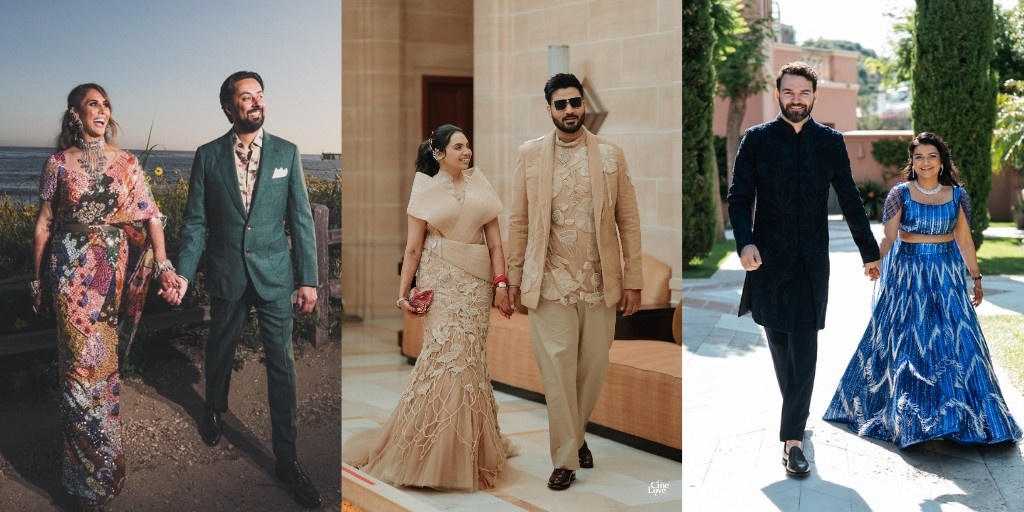
Source: Astha Narang, Papa Don’t Preach, Anushree Reddy
Fabric choice matters a lot for an indoor-outdoor wedding strategy. Fabrics like silk crepe drape beautifully without clinging and avoid harsh reflections under both indoor lighting and outdoor sunlight. For outdoor ceremonies, lightweight fabrics like tulle and organza are suitable, as they add volume and remain comfortable under natural light.
Camera – Tested Bridal Fabric Selection
Silk and silk blends are photo-ready bridal fabrics with a natural sheen that photographs without glare and holds structure well for pleats and drapes. Chiffon is lightweight and diffuses light, making it ideal for flowy silhouettes and movement shots. It drapes beautifully without harsh reflections. Velvet has a rich color that absorbs light, and is ideal for winter weddings.
Fabric Trials for Bridal Photography
Sheer fabrics such as chiffon, georgette and organza photograph well and are translucent against skin and backlight- some can appear milky or show seams. Satin and silk are highly reflective, so it is important to test for glare and brown highlights. Some colors vary under different lighting, so test them in natural light, flash and mixed lighting. Some silks and satins crease instantly, so conducting a trial is important.
Conclusion
Therefore, one must choose fabrics wisely, as they appear differently in natural light than in real life, and conducting a trial run helps ensure a better understanding.
Until next time,
Keepin’it stylish
Aparna Iyer
1. Which wedding fabrics photogarph best for bridal outfits?
Choosing fabrics that photograph well depends on the desired look. For sarees rich and textured fabrics like brocade and silk photograph well. For lehengas, flowy fabrics like chiffon, organza, georgette work well for movement, etc.
2. Why does fabric choice affect wedding photography?
Yes, fabric choice affects bridal photography. The texture, sheen and drape of a fabric can dramatically change how a bridal outfit looks on camera.
3. Do shiny fabrics look better than matte fabrics in wedding photos?
Yes, shiny fabrics look better than matte in wedding photos, but it also depends on the lighting, style and the mood you are looking for.
4. Which lehenga fabric looks best in bridal photography?
For a bridal photo shoot, the best lehenga depends on the look, lighting and style of the shoot.
5. What saree fabrics work best for wedding photography?
For wedding photography, the saree fabric you choose makes a huge difference in how your bridal look appears on camera. Some fabrics naturally photograph better because of their texture, drape, sheen.
6. Which fabrics are ideal for outdoor wedding photography?
For outdoor wedding photography, the fabric choice is important because it affects how your outfit moves, catches light and photographs in natural light.
7. Are textured fabrics better than flat fabrics for bridal pictures?
Yes, textured fabrics generally photograph better than flat fabrics for bridal pictures but it also depends on the look you want.
8. Which fabrics should be avoided for wedding photography?
Heavy fabrics, extremely sheer fabrics and wrinkle-prone fabrics should be avoided for wedding photography, as they are less likely to drape well and hold shape.
9. How can I test if a fabric will photograph well before my wedding?
To test fabrics before your wedding day, you can check the fabric in natural light and artificial light, test the drape and flow, check for wrinkles and creases, etc.




No Comments