

Embroideries of India: Difference Between Zardozi and Dabka
Last Updated on January 27, 2026 by gradienteye
Indian weddings are a beautiful celebration of craftsmanship, culture and age-old artistry. Among the various types of bridal embroidery India is known for, zardozi and dabka stands out for its luxury, heritage, and intricate handwork. Understanding the difference between zardozi vs dabka embroidery India is more than just the aesthetics of it, it’s about the comfort, durability, cost and how the embroidery allows your outfit to move during long rituals. In this guide by Styl Inc., let’s understand the difference between zarbozi and dabka embroidery and help you make an informed choice about your bridal outfit.
What is Zardozi Embroidery?
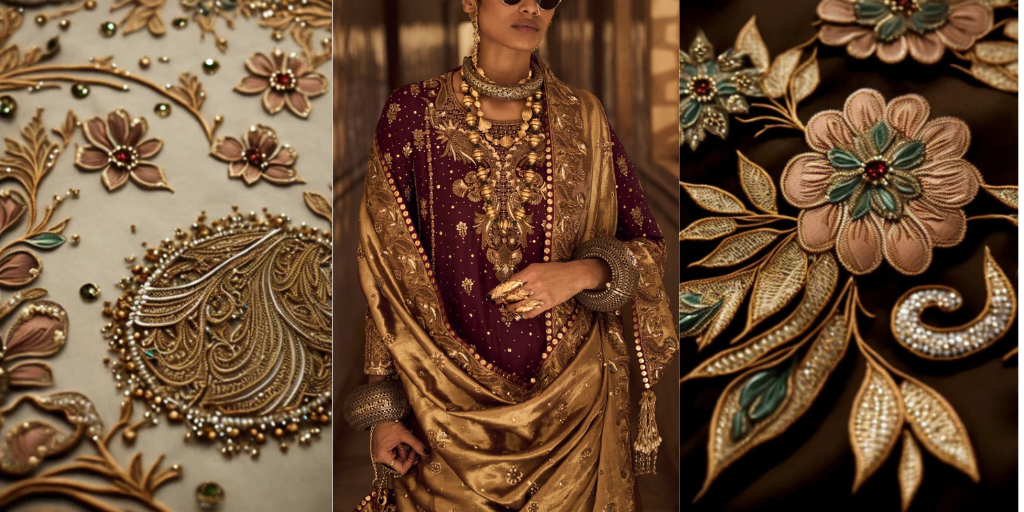
Credits: Sureena Chowdhri, The Rose Girl, The Indian Couture
Zardozi embroidery is one of the most royal and rich forms of metallic thread embroidery. The word ‘zardozi’ comes from the Persian words ‘zar’ meaning gold and ‘dozi’ meaning embroidery. This type of embroidery involves using gold and silver threads alongside beads, sequins and pearls to create intricate patterns. Popularly known for its rich texture and detailed finishing, zardozi work is often used in royal bridal wear and heirloom outfits.
Zardozi Technique Basics
At its core, zardozi involves using golden and silver threads along with beads, pearls, sequins and shiny stones which are stitched onto luxurious fabrics like velvet, silk, organza and chiffon. The embroidery is typically done on a wooden frame which allows artisans to create dense and elaborate patterns with precision. Artisans make beautiful and intricate patterns and designs like flowers, birds and other royal designs. This embroidery technique results in a heavily embroidered design that is thick ad raised a little from the fabric which stands outs both visually and physically.
Origin & History of Zardozi in India
The art of zardozi embroidery goes back to ancient India. Introduced to India during the Mughal era, zardozi flourished under the patronage of Emperor Akbar. The royal courts were graced with stunning zardozi work with intricate patterns and embellished with various pearls, beads and sequins. This art form symbolized luxury and exclusivity and was reserved for the elite and noble. Indian cities like Lucknow became epicenters of zardozi and gave rise to the iconic Lucknowi zardozi embroidery that is extremely popular even today. Zardozi embroidery was used to adorn royal garments, ceremonial robes and palace textiles for its rich and luxurious look.
Materials Used in Zardozi Work
Traditional zardozi work uses gold and silver-coated wires, zari threads, sequins, beads, pearls and even precious stones. Zardozi is usually done on rich and luxurious fabrics like velvet, silk, satin, organza and chiffon as they can hold the heavy embroidery. The fabric is stretched tightly on a wooden frame and the designed is drawn on to the fabrics. The artisan then starts sewing the metallic threads and other embellishments carefully with a needle. Modern variations of zardozi may use alloy-based threads but the richness and elegance of the embroidery remains the same.
Why Zardozi is Considered Royal Bridal Embroidery
Zardozi embroidery is a popular choice for bridal lehenga designs as its considered regal due to its depth, shine and intricate craftsmanship. This type of embroidery photographs well, holds the structure well and instantly elevates a bridal silhouette. Zardozi embroidery is typically preferred for bridal outfits worn during the pheras, main wedding ceremonies and for statement bridal sarees.
What is Dabka Embroidery?

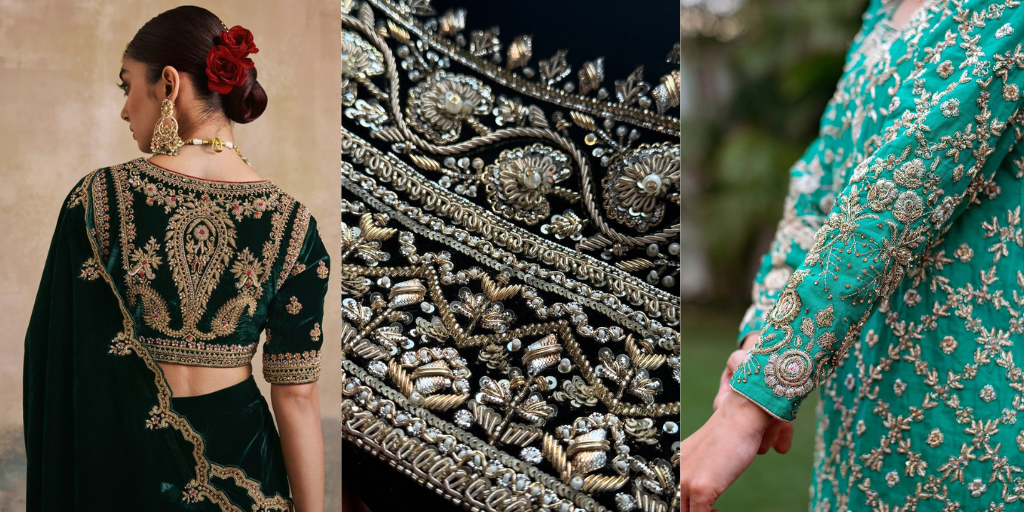
Credits: Vasha, Pinterest, Zeb and Zeeshan
Dabka is another beautiful type of metal embroidery that looks similar to zardozi but differs in its construction, feel and purpose. Instead of using flat metallic threads, dabka uses thin, coiled wires that look like small springs. These coils are stitched onto the cloth using a needle, one by one. Compared to zardozi, dabka provides a lighter and flexible form of raised metal embroidery which is quite popular in India.
Dabka Work Process
Dabka embroidery involves using coiled metallic wires that are cut into small pieces and stitched onto the fabric. Because of this, dabka designs shine softy and look a little raised from the cloth. Unlike zardozi threads, dabka coils sit on the surface which create a spring-like texture and adds dimension without being bulky. Artisans use dabka to make flowers, leaves, borders and other patterns and is often used on sarees, suits, dupattas and even handbags or shoes.
Regional Influence of Dabka Embroidery
Dabka embroidery traces its roots to the Mughal era, where it was commonly used to adorn royal garments. This art form was initially exclusive to the elite, symbolizing wealth and privilege. Today, it is commonly found across North India and Rajasthan and is often paired with zari embroidery dabka techniques to add an extra shine to the outfit. Dabka embroidery has been traditionally used in ceremonial garments, dance costumes and lighter bridal outfits that are easy to move in.
Materials & Threads Used in Dabka Work
Dabka uses metallic coils, zari threads, silk threads and sometimes also beads or sequins. It typically uses a thicker needle and thread as it relies less on dense metal couching. Dabka embroidery bridal outfits are lighter and breathable than compared to zardozi outfits. Dabka work creates bold and striking geometric patterns and is often seen on bridal dresses, shawls and other traditional garments.
Why Dabka is Preferred for Lighter Wedding Wear
Brides often choose bridal outfits with dabka embroidery for their bridal sarees, sangeet outfits or reception looks as it offers elegance and shine without being too heavy. It is ideal to be worn for events that involve movement, dancing and long hours of wear.
Key Differences: Zardozi vs Dabka

Credits: Pinterest, Heaven Gaia
Understanding the key differences between zardozi and dabka becomes easy when comparing the texture, weight, cost and useability of both the embroideries across various wedding functions.
Texture & Visual Depth Comparison
Zardozi is thick, raised embroidery that has dense and sculpted surface whereas dabka is made with tiny coiled wires that look like springs. Zardozi feels heavy, royal and structured while dabka designs are delicate, neat and shine softly appearing lighter and airier.
Weight, Comfort & Wearability
Which comparing which embroidery is heavier: zardozi or dabka, zardozi is undeniably heavier than dabka. While it provides a stunning and royal look, it can also feel heavy and uncomfortable during long wedding ceremonies. Dabka, on the other hand is easy to move in which makes it ideal to wear long hours.
Cost Difference Between Zardozi and Dabka
Zardozi embroidery is typically more expensive than dabka due to its material cost, labour intensity and time investment. Many brides often ask, is zardozi embroidery expensive? and the answer is yes- especially when it’s made the traditional way. Dabka is comparatively affordable while still giving you a royal finish.
Durability & Maintenance Comparison
Zardozi embroidery is highly durable and long lasting when cared for correctly but it often requires careful storage due to its heavy weight. Dabka is lighter and hence needs gentle handling to prevent the coils from loosening. Both types of embroideries can benefit from the right professional cleaning and garment storage.
Best Use-Cases for Each Embroidery Type
Zardozi embroidery is ideal for main bridal lehengas and traditional ceremonies. It provides a luxurious look with the addition of intricate handwork, making them ideal for weddings and festivals. Dabka shines beautifully during pre-wedding functions, receptions, and other outfits that require flexibility and comfort.
Which to Choose for Weddings?

Credits: Nikita Gujral, Tanaksh
When choosing between zardozi vs dabka and deciding which is better for bridal wear, the answer depends on your wedding schedule, venue and your personal style and comfort.
Zardozi vs Dabka for Bridal Lehengas
Zardozi embroidery is ideal for pheras and traditional rituals, providing a royal and elegant look. However, if your wedding has extended ceremonies or destination venues, dabka embroidery might be the more practical and comfortable choice.
Embroidery Choice by Wedding Functions
Zardozi embroidery is perfect for outfits worn during pheras or other formal ceremonies while dabka embroidery is ideal for wedding functions that require comfort, dancing and unlimited fun such as sangeet, cocktail nights and receptions. Many brides often choose different embroideries for different events to balance comfort and impact.
Mixing Zardozi and Dabka in One Outfit
A growing trend is the zardozi and dabka combination bridal outfit where zardozi embroidery is used on the borders and for focal motifs whereas the dabka embroidery fills in the lighter areas. This creates an unmatched visual richness without being too overtly heavy.
Bridal Styling Tips
Brides can focus heavy embroidery in their bridal outfit where structure is required and keep movement prone areas lighter. Necklines, dupatta borders and panels can be highlighted strategically with zardozi embroidery whereas the other areas on the bridal outfit can be kept lighter with dabka embroidery to give a perfect balanced look.
Styl Inc: Master Your Embroidery Choice

Credits: Styl Inc.
Choosing the right type of embroidery for your outfit is just as important as choosing the perfect outfit silhouette. At Styl Inc., embroidery decisions are considered to be a significant styling strategy and not an afterthought.
Personalized Bridal Embroidery Consultation
Styl Inc., offers expert guidance on whether you should choose zardozi or dabka for wedding outfits in India. We keep in mind various factors like body type, climate, ceremony duration and comfort preferences in order to help you make the decision.
Zardozi & Dabka Placement Planning
We help brides decide where they should place heavy and light embroidery on their bridal outfit for the maximum impact and ease. We ensure all your bridal outfits remain wearable and visually balanced.
Pan-India Bridal Styling & Sourcing Support
From heritage ateliers to modern wedding designers, Styl Inc., provides excellent sourcing support across India. We ensure authenticity and craftsmanship in every bridal piece.
Book Your Embroidery Styling Consult
Bridal embroidery is not just for decoration, it’s about storytelling through exquisite craftsmanship. The type of embroidery you choose for your bridal outfit can help you look regal, elegant and beautifully adorned for your special day.
Free Zardozi vs Dabka Styling Session
At Styl Inc., we offer an initial consultation to help brides understand the difference between zardozi and dabka for wedding lehengas, understand more about their wedding venue, theme, personal style and help them to make confident decisions.
How to Get Started with Styl Inc
Start your bridal journey with expert-led guidance with Styl Inc., our experts provide styling that is aligned with tradition, comfort and modern elegance to make your bridal journey effortless.
Until next time
Keepin’ it Stylish
Signing off
Tasneem Lokhandwala
What is the main difference between zardozi and dabka embroidery?
Zardozi is thick, raised embroidery that has dense and sculpted surface whereas dabka is made with tiny coiled wires that look like springs.
What is zardozi embroidery?
Zardozi embroidery is one of the most royal and rich forms of metallic thread embroidery. It involves using gold and silver threads alongside beads, sequins and pears to create intricate patterns.
What is dabka embroidery?
Dabka embroidery uses thin, coiled wires that look like small springs. Compared to zardozi, dabka provides a lighter and flexible form of raised metal embroidery
Which embroidery is heavier: zardozi or dabka?
Zardozi is undeniably heavier than dabka. While it provides a stunning and royal look, it can also feel heavy and uncomfortable during long wedding ceremonies.
Zardozi or dabka – which is better for a wedding lehenga?
Zardozi embroidery is ideal for pheras and traditional rituals, whereas dabka is ideal for extended ceremonies or dance-heavy events.
Which embroidery is better for sangeet outfits?
Dabka embroidery is ideal for wedding functions that require comfort, dancing and unlimited fun such as sangeet, cocktail nights and receptions
Is zardozi embroidery more expensive than dabka?
Zardozi embroidery is typically more expensive than dabka due to its material cost, labour intensity and time investment.
Can zardozi and dabka be used together in bridal wear?
Yes, Zardozi embroidery can be used on the borders and for focal motifs whereas the dabka embroidery fills in the lighter areas.
Which embroidery is more durable: zardozi or dabka?
Zardozi embroidery is highly durable and long lasting when cared for correctly but it often requires careful storage due to its heavy weight
How should zardozi and dabka embroidered outfits be cared for?
Zardozi and dabka embroidery outfits should be stored flat or hung with proper support. Avoid folding on the embroidery and opt for professional cleaning and garment storage.
No Comments