
Indo-Western Groom Looks in 2026: When to Go Fusion & When to Stay Traditional
Last Updated on June 6, 2026 by gradienteye
Indian groom fashion is no longer limited to a single sherwani silhouette. In 2026, grooms are experimenting more confidently with structure, tailoring, drapes, layering, and cross-cultural styling than ever before. From asymmetric kurtas and sharply tailored bandhgalas to Indo-Western sherwanis with modern cuts, the modern Indian groom now has an entire spectrum of styling options to explore. But with more options comes a bigger challenge: knowing when to wear fusion and when to stay traditional.
Here is how modern grooms can navigate an Indo-Western groom look in 2026 without looking overstyled, mismatched, or disconnected from the wedding aesthetic.
The Groom Fashion Shift — Why Indo-Western Is No Longer the Safe Choice
A few years ago, Indo-Western outfits were considered the “safe modern option” for Indian weddings. Grooms who wanted to look stylish but not overly traditional would automatically choose a fusion silhouette for every event.
That approach no longer works. Today’s Indian groom fashion landscape is far more nuanced. Grooms are now planning wardrobes function-by-function rather than repeating one aesthetic throughout the wedding. The rise of destination weddings, cocktail-heavy celebrations, coordinated bride and groom styling, and fashion-forward wedding photography has changed how men approach wedding dressing.
In 2026, the question is not:
“Should I wear Indo-Western?”
The real question is:
“Which functions actually deserve fusion styling?”
That is why the smartest grooms are no longer building one wedding look — they are building a complete visual journey.
Understanding the Indo-Western Spectrum—It Is Not One Look
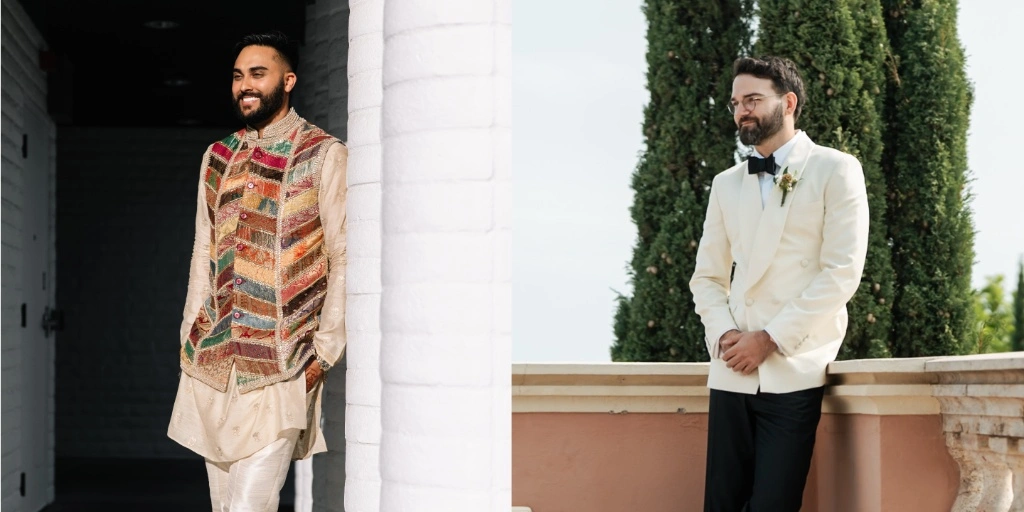
Image Source: Styl Inc
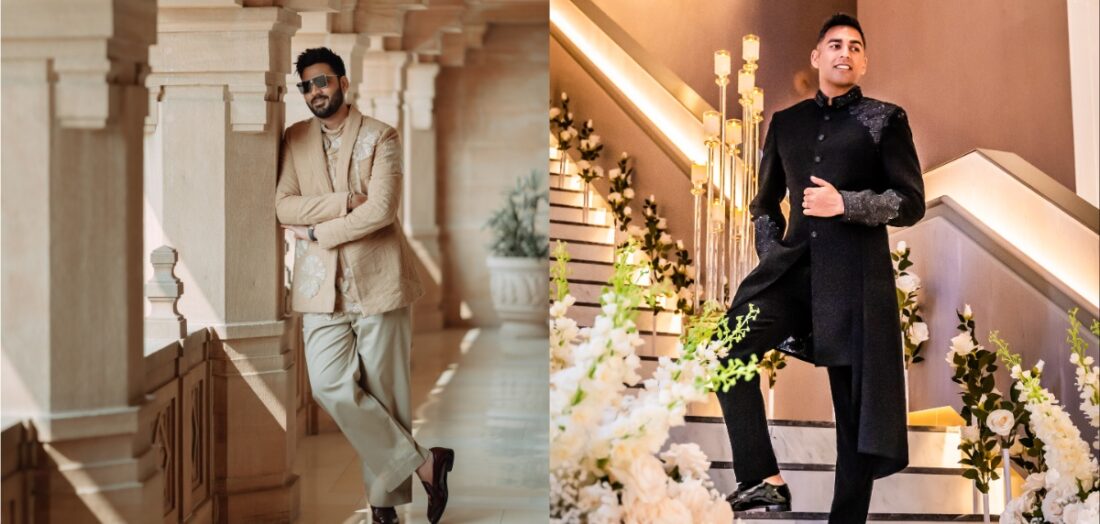
One of the biggest misconceptions around Indo-Western groom looks is assuming fusion means only dramatic drapes or experimental silhouettes. In reality, Indo-Western styling exists on a spectrum. Some looks are subtle and refined, while others are fashion-forward and editorial.
1. Bandhgala Suits
The bandhgala remains one of the strongest fusion pieces in Indian groom fashion 2026. Structured, elegant, and versatile, it blends Indian heritage tailoring with western sharpness.
Perfect for:
- Cocktail nights
- Receptions
- Formal evening functions
2. Nehru Jacket with Tailored Trousers
This is the easiest entry point into fusion styling. A printed kurta layered with a Nehru jacket and structured trousers creates a polished yet approachable look.
Perfect for:
- Mehendi functions
- Daytime events
- Intimate celebrations
3. Asymmetric Kurta with Structured Bottoms
This silhouette has become increasingly popular for sangeet styling. Draped hems, layered cuts, and contemporary tailoring create movement and drama without going fully western.
Perfect for:
- Sangeet nights
- Fashion-forward weddings
- Dance-heavy celebrations
4. Sherwani with Contemporary Cuts & Modern Detailing
Traditional sherwanis are evolving through cleaner tailoring, tonal embroidery, slimmer trousers, and understated detailing.
Perfect for:
- Wedding ceremonies
- Reception transitions
- Multi-generational weddings
5. Full Western Suit with Indian Accessories
A tuxedo or sharply tailored suit paired with a safa, brooch, or embroidered stole creates a subtle Indo-Western balance.
Perfect for:
- Cocktail nights
- Receptions
- Luxury ballroom weddings
The key is understanding where each silhouette belongs.
The Decision Framework — 4 Questions to Ask Before Choosing Fusion or Traditional
Choosing between a traditional sherwani and an Indo-Western groom outfit is no longer just about personal taste. In 2026, the mood of the wedding, the venue aesthetic, the bride’s outfit, and even family expectations deeply connect to modern groom styling. Before finalizing any wedding look, every groom should ask four important questions.
First, what is the function? Traditional outfits naturally work better for wedding ceremonies, pheras, and religious rituals, while fusion silhouettes feel more appropriate for sangeet nights, cocktail parties, and receptions.
Second, consider the venue aesthetic. Heritage properties, temples, and cultural setups often demand timeless traditional styling, whereas rooftop venues, luxury resorts, and hotel ballrooms allow sharper Indo-Western experimentation.
Third, consider what the bride is wearing. If the bride is dressed in a heavily embroidered lehenga, the groom may want to balance the look with a classic sherwani rather than an overly dramatic fusion silhouette. However, if the bride is wearing a draped saree, gown, or Indo-Western ensemble, contemporary groom styling feels far more cohesive.
Lastly, family expectations matter more than most grooms realize. Conservative families may prefer rooted, traditional dressing, while progressive weddings often encourage fashion-forward experimentation.
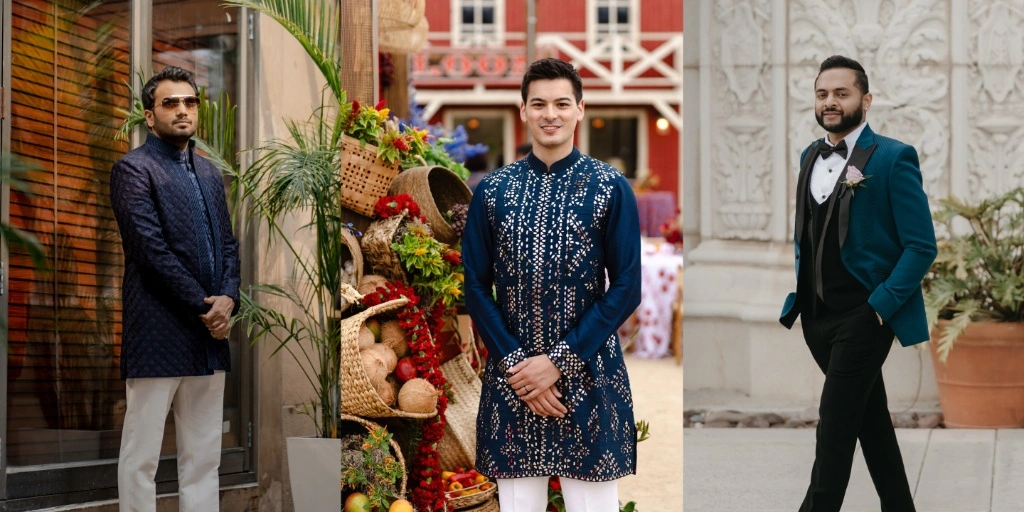
Image Source: Styl inc
Occasion-Matched Lookbook — Mehendi
Mehendi functions are among the easiest occasions to experiment with fusion dressing because the mood is relaxed, colourful, playful, and movement-focused. However, that does not mean the groom should go overboard with dramatic drapes, excessive layering, or overly embellished silhouettes. The best mehendi looks strike a balance between comfort and thoughtful styling. Fabric selection becomes especially important for outdoor weddings. Colour palettes also tend to be softer and more playful during this function. Olive greens, warm peach tones, muted yellows, sage greens, navy florals, and subtle pastels photograph beautifully in natural daylight while still feeling celebratory.
Mojaris, a subtle brooch, tinted sunglasses, or even rolled sleeves can elevate the outfit without making it feel overly formal. The best mehendi looks feel polished but easygoing at the same time.
Occasion-Matched Lookbook — Sangeet
If there is one wedding function where Indo-Western styling truly thrives, it is the sangeet. Modern sangeet styling gives grooms complete freedom to experiment with asymmetry, layered tailoring, dramatic textures, and richer colour palettes.
One of the most popular sangeet looks in Indian groom fashion 2026 is the asymmetric kurta paired with slim trousers and draped hemlines. Evening fabrics play a huge role in making sangeet outfits visually impactful. Velvet, brocade, textured silk, layered blends, and subtle sheen fabrics respond beautifully to concert lighting and wedding photography. Deep jewel tones dominate this category, with midnight blue, emerald green, ruby, charcoal black, and deep plum remaining among the strongest colour choices for evening celebrations.
Accessories can become slightly bolder for sangeet styling compared to other functions. The ideal sangeet outfit should move naturally, photograph well, and still allow the groom to enjoy the celebration freely.
Occasion-Matched Lookbook — Cocktail Night
Cocktail night is the one wedding function where western tailoring genuinely takes centre stage. Unlike mehendi or pheras, cocktail styling is less about cultural tradition and more about sharp elegance, evening sophistication, and clean tailoring.
The strongest cocktail looks usually fall into two categories. The first is the sharply tailored double-breasted bandhgala, which offers structure, formality, and a distinctly Indian identity while still feeling contemporary. The second is the classic tuxedo styled with minimal Indian accessories such as embroidered loafers, a brooch, or a subtle safa.
Pocket squares, cufflinks, polished loafers, and understated detailing elevate the outfit without making it feel costume-like. If you are wearing a safa, avoid oversized brooches or layered detailing.
Occasion-Matched Lookbook — Reception
The wedding reception often acts as the visual transition between traditional ceremony dressing and modern evening elegance. Reception styling in 2026 is moving strongly toward cleaner tailoring, sharper fits, and understated luxury rather than overwhelming embroidery or maximalist detailing.
Contemporary sherwanis with slimmer cuts, tonal embroidery, and modern tailoring also work exceptionally well for receptions, especially when paired with slim trousers instead of traditional churidars. Softer luxury colour palettes are especially popular for receptions, including ivory, champagne gold, midnight blue, blush tones, and warm neutrals.
Accessories should remain minimal and sophisticated. A clean pocket square, an understated brooch, polished footwear, or a classic watch is often enough to complete the look. Modern reception styling prioritises sharpness over excess. In 2026, the most stylish reception looks are not the loudest — they are the most polished.
When to Stay Traditional — Non-Negotiable Functions
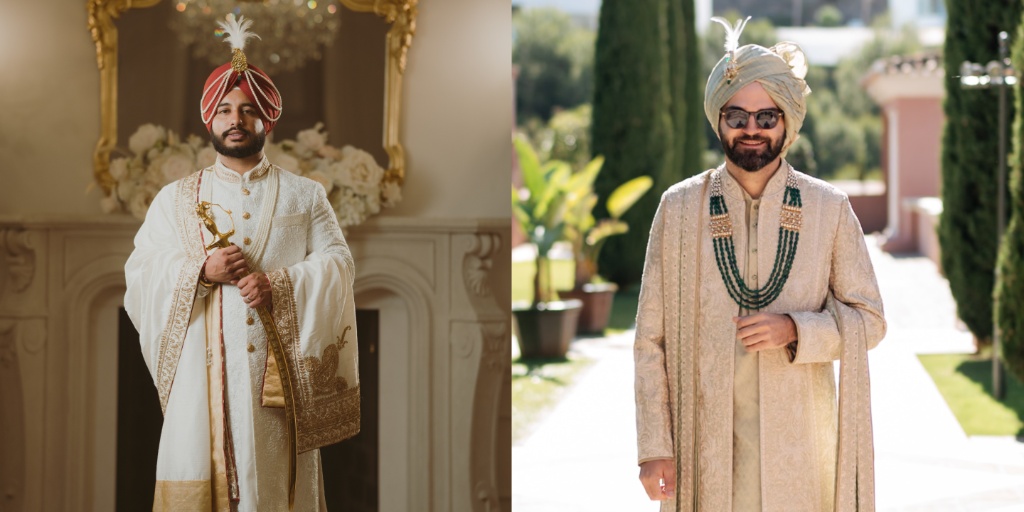
Image Source: Styl Inc
Despite the rise of the Indo-Western groom look in 2026, some functions still strongly favour traditional styling.
Wedding Ceremony & Pheras
For most Indian weddings, the pheras remain culturally sacred. Traditional sherwanis continue to feel emotionally and visually appropriate for this moment. A classic sherwani creates timeless photographs and aligns naturally with ceremonial rituals.
Religious or Regional Ceremonies
Certain ceremonies carry cultural dress expectations that fusion wear may disrupt.
For example:
- Temple weddings
- South Indian ceremonies
- Sikh Anand Karaj weddings
- Traditional family rituals
In these cases, staying rooted in traditional silhouettes often feels more respectful and cohesive.
Multi-Generational Family Expectations
Many modern grooms want contemporary fashion while still respecting family expectations. The solution is not abandoning tradition — it is modernising it thoughtfully.
How to Modernise a Traditional Sherwani
- Choose cleaner tailoring
- Use tonal embroidery
- Opt for structured fits
- Select muted contemporary colours
- Pair with slimmer churidars or trousers
This approach keeps the outfit timeless while still feeling current.
The 5 Golden Rules of Indo-Western Groom Styling
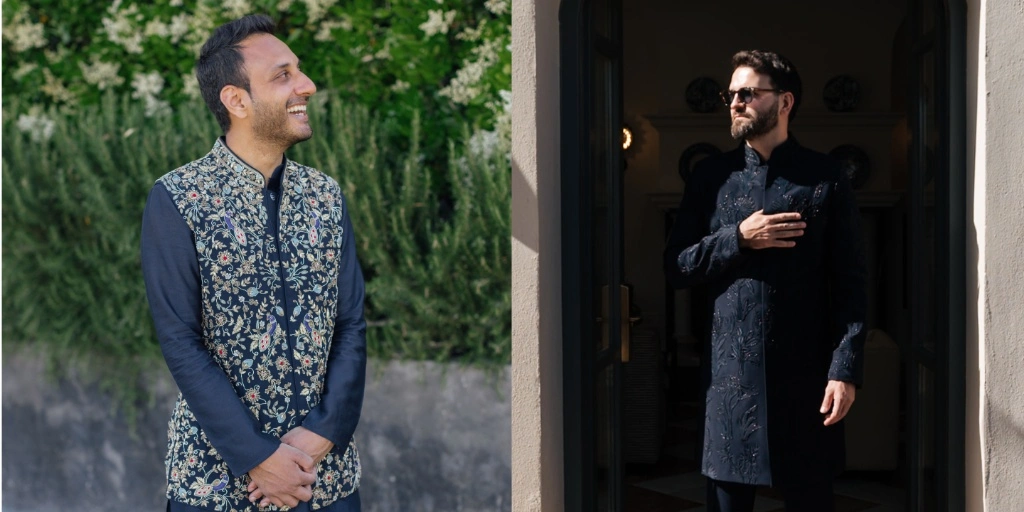
Image Source: Styl Inc
1. The Bride’s Outfit Sets the Ceiling
The groom should never out-experiment the bride. If the bride is wearing a heavily traditional lehenga, an ultra-dramatic fusion silhouette may feel visually disconnected.
2. Venue Aesthetic Dictates Silhouette
A palace venue demands regal styling. A rooftop cocktail allows sharper western tailoring. Always dress for the space.
3. One Fusion Element at a Time
Great Indo-Western styling mixes influences carefully instead of combining everything at once. Choose one: asymmetry OR dramatic embroidery OR statement accessories.
4. Fit Is Everything
Fusion outfits fail fastest when tailoring is poor. Bandhgalas, asymmetric kurtas, and structured sherwanis rely heavily on clean proportions. Tailoring matters more than trend.
5. Accessories Create the Bridge
Accessories help connect traditional and western styling seamlessly.
Examples:
- Juttis with tuxedos
- Brooches with bandhgalas
- Safas with modern sherwanis
- Pocket squares with embroidered jackets
Coordinating an Indo-Western Groom Look with the Bride’s Outfit
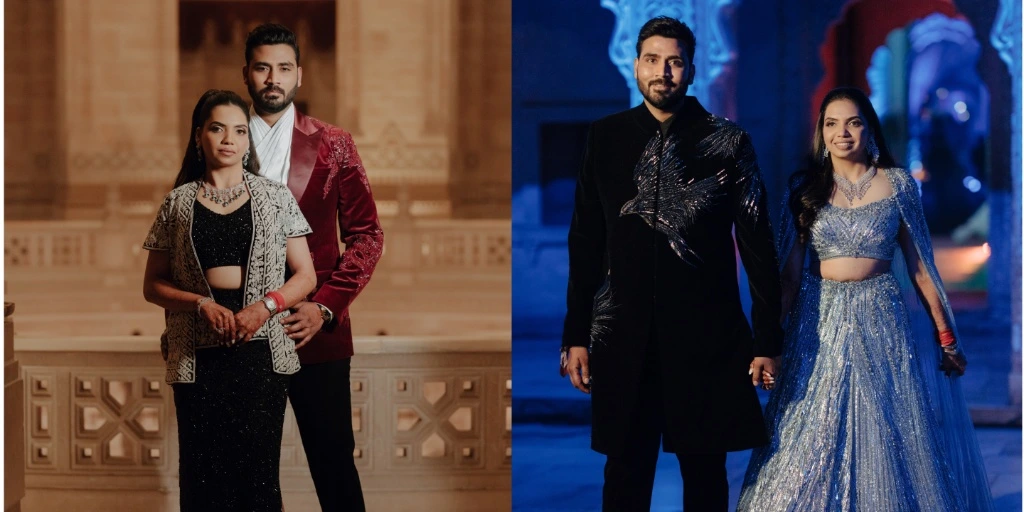
Image Source: Styl Inc
Modern wedding styling is no longer about matching colours exactly. It is about creating visual harmony.
When the Bride Goes Traditional & the Groom Goes Fusion
Balance becomes important. If the bride is wearing a classic red lehenga with heritage embroidery, the groom’s Indo-Western look should remain structured and refined rather than overly avant-garde.
When Both Bride & Groom Go Indo-Western
Coordination becomes easier, but restraint still matters. Choose common visual threads:
- Similar embroidery motifs
- Matching metallic tones
- Coordinated colour families
- Shared fabric textures
Colour Bridges Matter
Subtle coordination photographs beautifully.
- Matching stole tones
- Similar embellishment finishes
- Shared jewel tones
- Consistent embroidery metals
Always Schedule a Joint Trial Session
One of the biggest mistakes couples make is trying on outfits separately. Joint fittings help evaluate:
- Visual balance
- Photography compatibility
- Colour harmony
- Silhouette coordination
Coordinated bride and groom Indo-Western looks work best when planned together, not independently.
How Styl Inc. Approaches Indo-Western Groom Styling
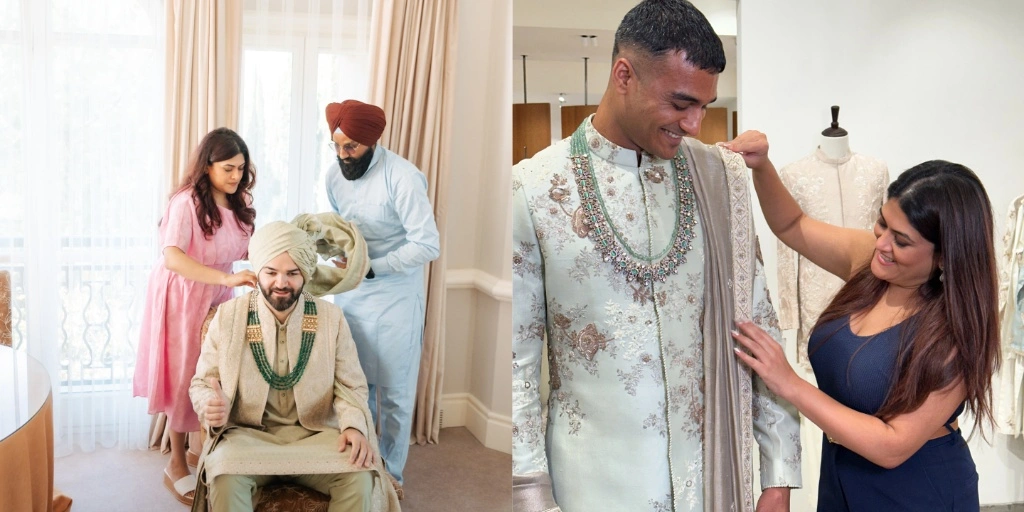
Image Source: Styl Inc
Styl Inc. approaches groom styling through personality-led curation instead of trend replication. Rather than forcing every groom into a heavily experimental silhouette, the focus remains on identifying:
- Personal comfort
- Wedding atmosphere
- Function-specific dressing
- Family dynamics
- Bride-groom coordination
Modern groom outfit planning is not about creating one “hero look.” It is about building a wardrobe journey across every wedding function.
Final Thoughts: The Best Groom Look Is the One That Feels Like You — Just Elevated
The future of Indian groom fashion is not fully traditional or fully western. It is selective fusion. The best Indo-Western groom looks in 2026 understands context. They respect the ceremony, adapt to the venue, coordinate with the bride, and reflect the groom’s personality rather than simply following trends. Some functions deserve heritage elegance. Others deserve experimentation. The smartest modern grooms know the difference.
Until next time, keep it styl’ish,
Lakshita Vohra Manchanda
No Comments