
Handlooms for Diwali: Celebrating Indian Weaves This Festive Season
Last Updated on October 5, 2026 by gradienteye
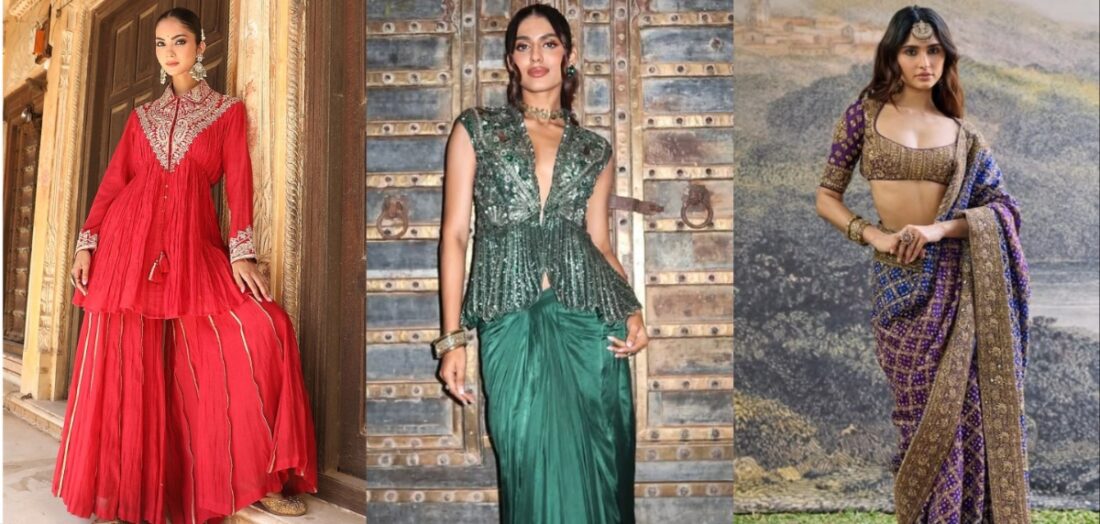
Diwali has always been associated with beautiful clothes, sparkling jewellery, festive colours and celebrations that bring families together. From elaborate silk sarees to embroidered lehengas, the festival offers plenty of opportunities to dress up. But among the many festive fashion choices, handloom has a special place. A handwoven saree, a beautifully textured dupatta or a classic silk kurta brings a sense of heritage and individuality to a festive wardrobe.
Handloom is not simply about traditional dressing. It is about appreciating the craftsmanship, regional identity, and hours of work that go into creating a piece of fabric. Every weave carries its story, whether it is the intricate brocade of Banaras, the rich silk of Kanjeevaram, or the distinctive patterns of an Ikat textile.
For those exploring handloom sarees for Diwali 2026, the possibilities extend far beyond a single traditional look. Lightweight cottons and silk-cottons can work beautifully for daytime celebrations, while rich silk weaves can become the centerpiece of an evening outfit. Handwoven fabrics can also be styled into contemporary kurta sets, jackets and coordinated family outfits.
This guide explores the Indian handloom weaves worth knowing, how to style them for different Diwali occasions, what to consider when buying authentic pieces and how to care for them so they remain part of your wardrobe for years to come.
Why Handloom Belongs in Diwali Styling
Diwali is a celebration of light, tradition and togetherness. Handloom fits naturally into this setting because it combines cultural significance with the beauty of skilled craftsmanship. Unlike clothing chosen only for a particular trend, a handwoven piece can become something you return to for several festive seasons.
The Difference Between Handloom and Power Loom, and Why It Matters
Both handloom and power loom fabrics are woven textiles, but they differ in their method of production. Handloom fabric is woven using a loom operated by hand, often requiring considerable skill to manage the warp, weft, tension and pattern. Depending on the weave, artisans may also create intricate motifs through additional weaving techniques. Some designs require multiple stages of preparation and weaving before the fabric is complete.
Power loom fabric is produced using mechanised looms. These machines can manufacture fabric at greater speed and in larger quantities, making them suitable for mass production.
The distinction does not automatically determine the quality of a fabric. Power loom textiles can also be well-made, while handloom quality varies according to materials, workmanship, and finishing. However, authentic handloom offers a particular connection to traditional weaving knowledge and the individual techniques used by artisans. When choosing handloom for Diwali, understanding this difference helps you appreciate what you are purchasing. The appeal lies not only in the finished garment but also in the process and craftsmanship behind it.
Supporting Weaver Communities Through Festive Buying Choices
India’s handloom traditions connect closely with regional weaving communities. Generations of artisans have developed distinctive techniques, motifs and textile identities that continue to shape the country’s clothing heritage.
Choosing an authentic handwoven piece from a reliable source can help support this craft ecosystem. Buying directly from a weaver, a cooperative or a verified artisan-led organisation may also give you greater transparency about where and how someone created the textile.
Festive purchases offer an opportunity to explore the story behind a garment. Ask about the weave, region, material and artisan who created it. These details add meaning to your outfit and help you make an informed purchase.
Why Handloom Pieces Work as Investment Wardrobe Choices
A well-made handloom garment does not have to remain reserved for one Diwali. Its versatility depends on the weave, colour, design and how you style it. A traditional silk saree can return for weddings, anniversaries and family celebrations. You can style a cotton handloom saree for work, festive lunches or cultural events. A handwoven dupatta can add texture to a simple kurta set, while a silk jacket can complement both traditional and contemporary outfits. Instead of thinking of handloom as a one-season purchase, consider how often you could wear the piece in different ways. Choose classic colours, comfortable fabrics and adaptable designs to build a festive wardrobe that remains relevant beyond the season.
Regional Handloom Weaves to Know
India has a remarkable variety of handloom traditions, each shaped by its region, materials, weaving techniques and cultural influences. Exploring an Indian handloom weaves list offers a wonderful way to discover textiles that suit different festive occasions, personal styles and budgets. Here are six distinctive weaves to consider when planning your Diwali wardrobe.
Banarasi: Rich Brocade Silk from Varanasi
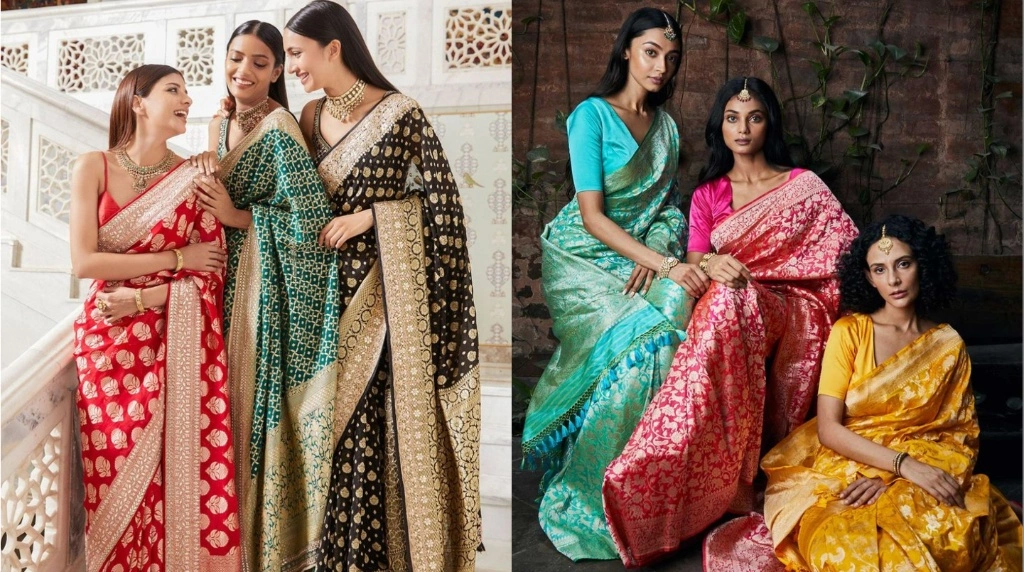
Image Source: Instagram/Anita Dongre; Instagram/Sacred Weaves
A Banarasi saree is a classic choice for celebrations that call for rich textures and intricate detailing. Varanasi’s weaving tradition produces Banarasi textiles with elaborate brocade patterns, often featuring floral motifs, intricate borders and metallic zari work.
Traditional Banarasi silk sarees can feature detailed pallus and all-over patterns, making them particularly suited to festive occasions. Their rich appearance also means that even a relatively simple blouse can complement the saree beautifully. For a Banarasi saree Diwali look, consider deep red, maroon, emerald green or traditional gold tones. A contrasting blouse, statement earrings and a neatly draped pallu can complete the outfit without competing with its intricate design.
Kanjeevaram: South Indian Silk with Distinctive Borders
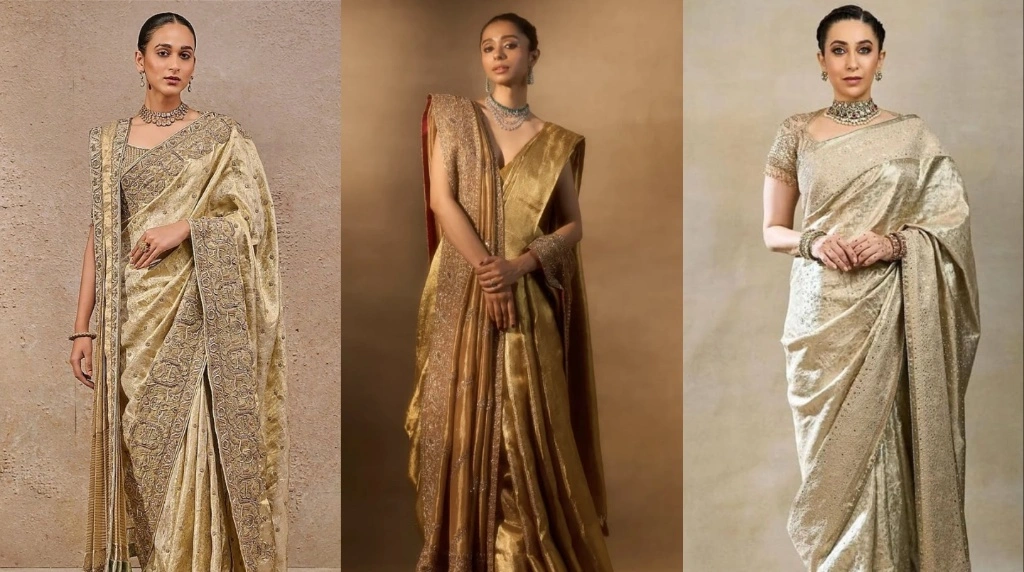
Image Source: Pinterest/PerniasPopUp/ Instagram/tarun tahiliani
Kanjeevaram silk, also known as Kanchipuram silk, stands out for its rich texture, lustrous appearance and distinctive borders. Weavers in Tamil Nadu traditionally create these sarees with contrasting borders, elaborate pallus and motifs inspired by temple architecture, flowers and traditional symbols.
The fabric’s substantial feel makes it a popular choice for weddings and major family celebrations. For Diwali, a Kanjeevaram silk saree can create a beautiful statement without requiring elaborate additional styling. Pair it with a well-fitted blouse, traditional gold jewellery and a classic hairstyle. If the saree features a heavily decorated border, keep the jewellery balanced so the weave remains the focus.
Chanderi and Maheshwari: Lightweight Elegance from Madhya Pradesh
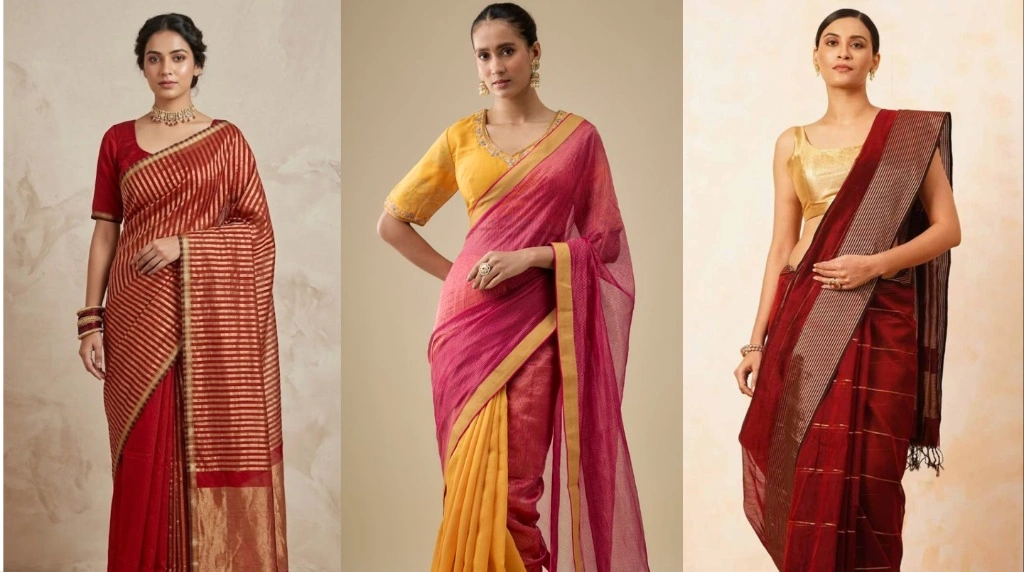
Image Source: Instagram/Pernia’s Pop Up Shop
Chanderi and Maheshwari are two celebrated textile traditions from Madhya Pradesh, offering a lighter alternative to heavier festive silks. Chanderi fabrics have a lightweight, often sheer texture and a delicate appearance. Weavers may incorporate fine zari borders, small motifs and a subtle sheen. This makes them suitable for daytime pooja, family lunches and gatherings where comfort matters as much as festive dressing.
Maheshwari textiles, associated with Maheshwar, feature distinctive borders and come in a range of silk, cotton and silk-cotton fabrics. Their designs can include geometric patterns and traditional motifs. You can style a Chanderi or Maheshwari saree with delicate jewellery, a contrasting blouse and comfortable footwear. These fabrics also suit those who prefer understated Diwali outfit ideas handloom rather than heavily embellished clothing.
Jamdani: Fine Muslin with Intricate Motifs
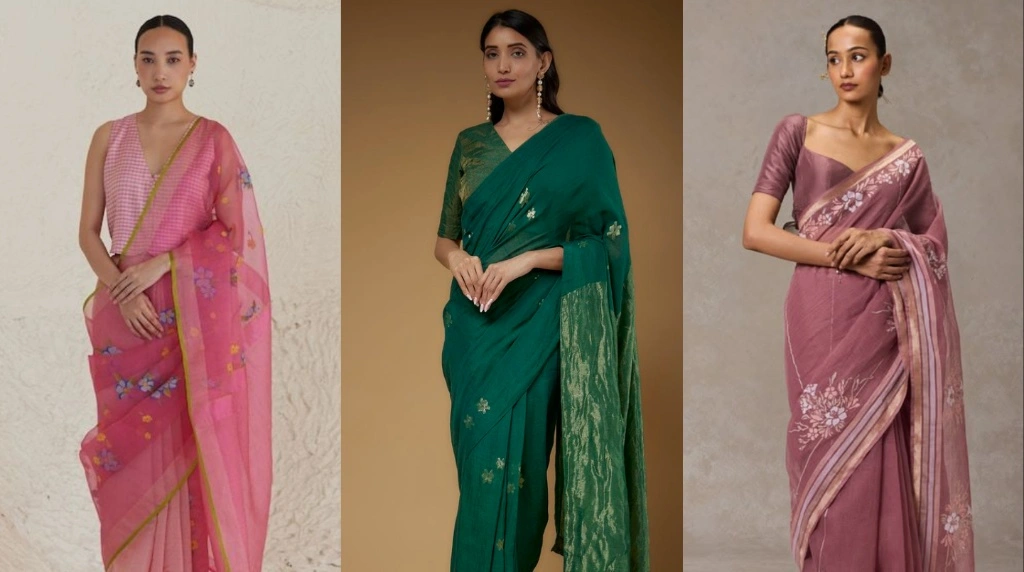
Image Source: Instagram/AzaFashion; Instagram/Pernia’spopupshop; Pinterest/Tilfi
Jamdani is a fine weaving tradition associated with Bengal and the wider Bengal textile heritage. It is recognised for its intricate motifs, which are created through supplementary weft weaving rather than simply printed onto the fabric. Traditional Jamdani textiles can feature floral, geometric and nature-inspired patterns. The motifs often appear to float across the fabric, creating a delicate, detailed effect. For a daytime Diwali celebration, a Jamdani saree in a soft or jewel-toned colour can look elegant with minimal jewellery. A structured blouse can add a contemporary element, while traditional accessories can keep the outfit rooted in its heritage.
Ikat: Distinctive Patterns from Odisha, Telangana and Gujarat
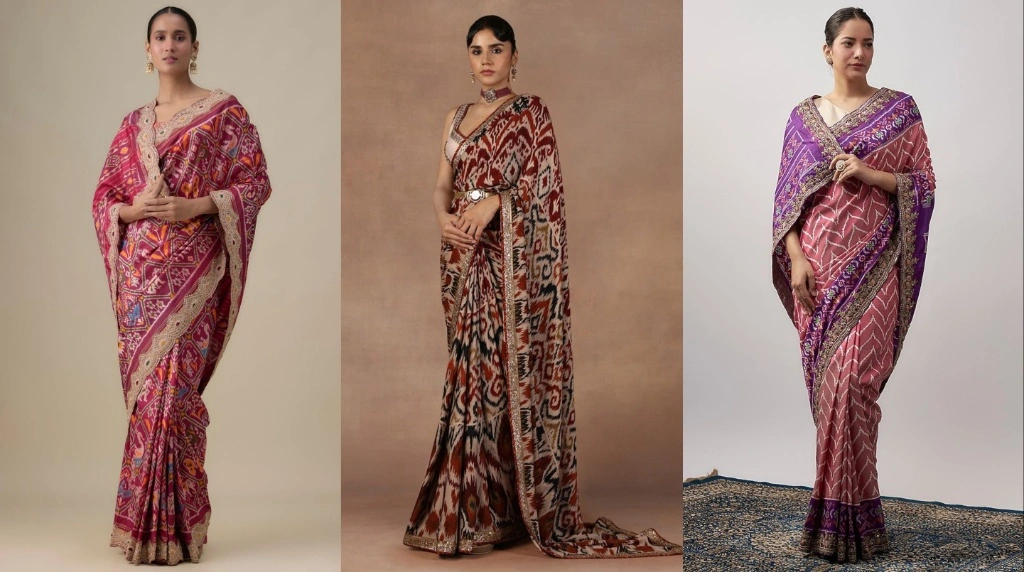
Image Source: Pinterest/Aashni & Co; Pinterest/Pernia’sPopUpShop
Ikat is a textile technique in which yarns are resist-dyed before weaving to create distinctive patterns. The resulting designs often have characteristic blurred or feathered edges. India has several Ikat traditions, including Odisha’s Sambalpuri textiles, Telangana’s Pochampally Ikat and Gujarat’s Patola. These traditions differ in their techniques, patterns and complexity.
Ikat is a particularly interesting choice for those who enjoy graphic prints and distinctive colour combinations. A handwoven Ikat saree can be styled with a simple blouse and minimal accessories, allowing its patterns to take centre stage. For a contemporary Diwali outfit, consider pairing an Ikat saree with a solid-coloured blouse, modern earrings and a sleek hairstyle.
Paithani: Maharashtrian Silk with Artistic Pallus
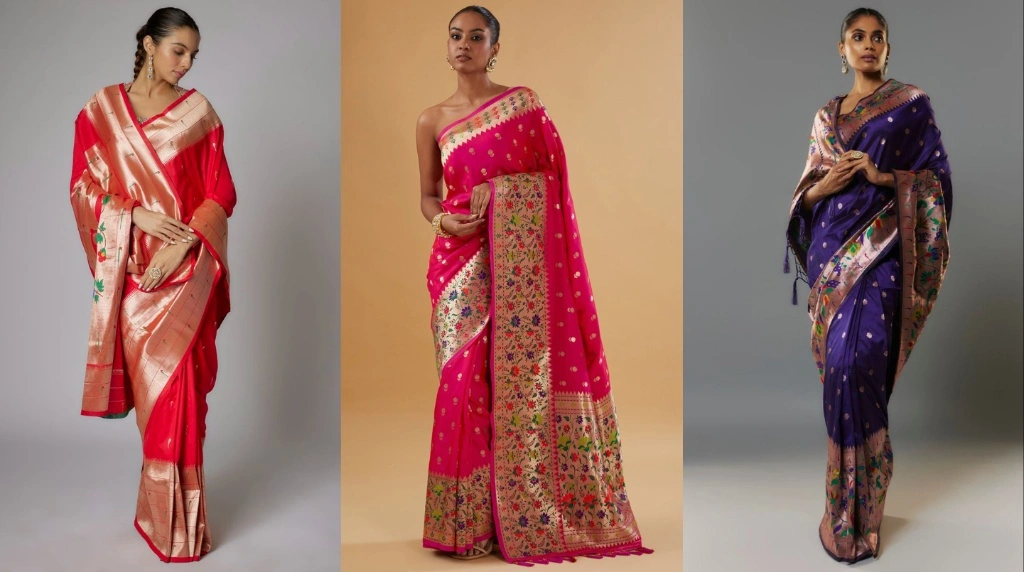
Image Source: Instagram/NARMADESHWARI; Instagram/Pernia’s Pop Up Shop
Paithani is a traditional silk weaving style from Maharashtra, particularly associated with Paithan. It is known for richly decorated pallus, traditional motifs and intricate borders. Peacocks, flowers and other nature-inspired designs are commonly associated with Paithani textiles. The pallu often becomes the centrepiece of the saree, making the drape an important part of styling. For Diwali, a Paithani saree can be paired with a traditional blouse, gold jewellery and classic footwear. If the pallu is heavily patterned, a simple blouse can create a balanced look.
How to Style Handloom for Different Diwali Occasions
Source: Zever King, Anana
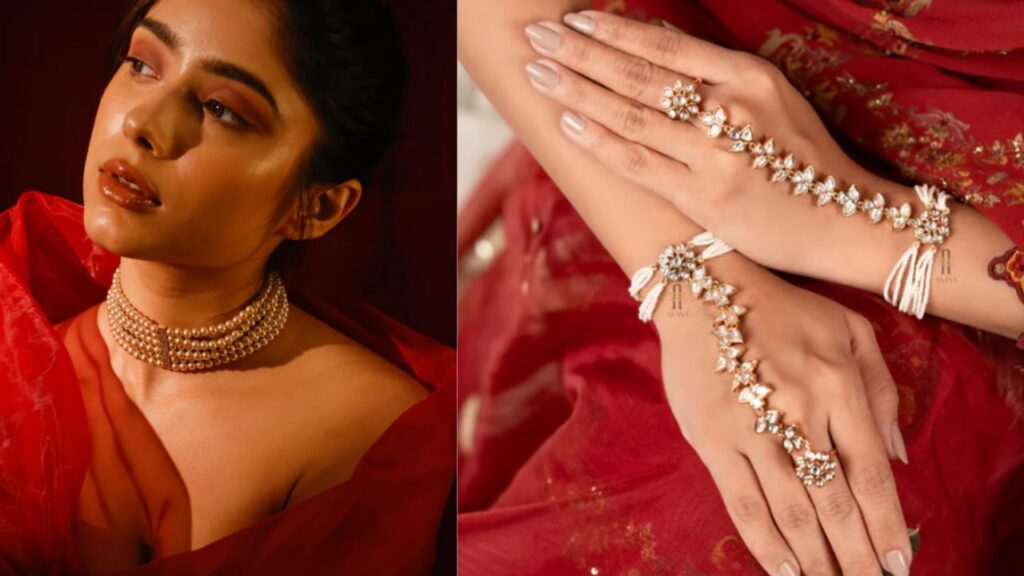
The beauty of handloom lies in its versatility. The same textile tradition can create different looks depending on the occasion, the drape and the accessories you choose.
Daytime Pooja and Family Gatherings
For daytime celebrations, lightweight cotton, silk-cotton and lighter silk sarees can be comfortable options. Chanderi, Maheshwari and suitable cotton handlooms work well when you want a festive look without feeling weighed down.
Choose colours such as mustard, soft pink, ivory, green or powder blue. Pair the saree with a comfortable blouse, small earrings and flat footwear.
If you prefer not to wear a saree, a handwoven kurta set with a coordinated dupatta can create an equally festive look.
Evening Diwali Parties
Evening celebrations offer an opportunity to explore richer textures and deeper colours. Banarasi, Kanjeevaram and Paithani sarees can work beautifully for parties, dinners and family gatherings. Choose a saree with a rich border or detailed pallu and style it with statement earrings, a clutch and elegant footwear. A sleek bun or soft waves can complement the look. For those who prefer contemporary silhouettes, a handwoven silk skirt paired with a structured blouse or a tailored jacket can bring a modern dimension to festive dressing.
Handloom Beyond the Saree
Handloom is not limited to sarees. Handwoven fabrics can be used for kurta sets, dupattas, jackets, skirts and other festive separates.
A handwoven dupatta can transform a simple solid-coloured kurta into a festive outfit. A silk-cotton jacket can add texture to a plain dress or kurta set. Men can also explore handloom kurtas and jackets for family celebrations. These options make it easier to incorporate traditional textiles into a wardrobe that reflects your personal style.
Pairing Handloom with Contemporary Blouses and Jackets
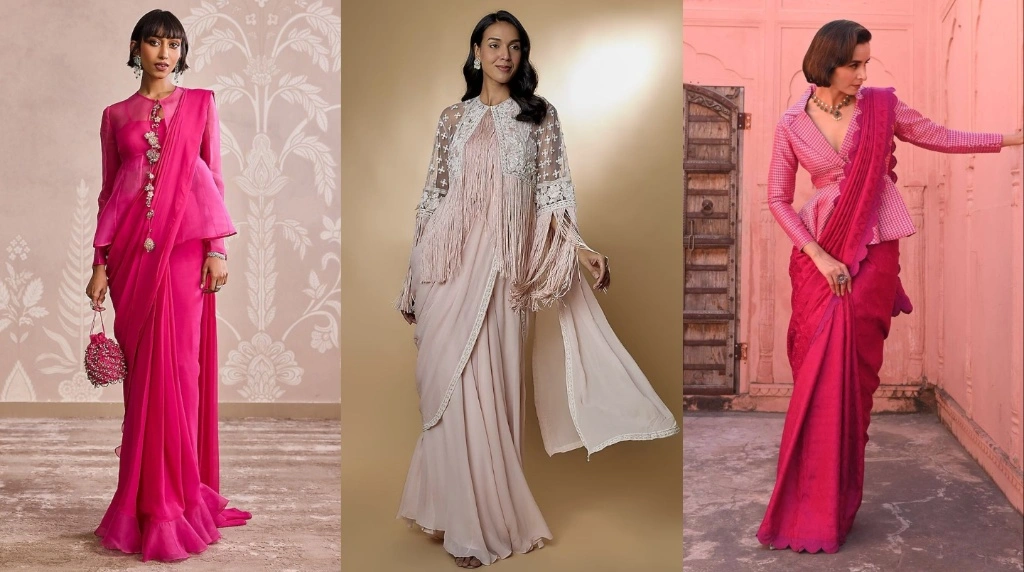
Image Source: Instagram/RidhiMehra; Instagram/AzaFashion
A contemporary blouse can change the overall mood of a traditional saree. Depending on the fabric and occasion, you could explore a square neckline, a high-neck blouse, a sleeveless design or a structured silhouette.
For a more layered look, consider a tailored jacket over a saree or a handwoven blouse with a contemporary skirt. The key is to balance the details. If the saree has elaborate motifs, choose simpler accessories and clean silhouettes.
Colour Choices Within Handloom Weaves
Colour plays an important role in festive dressing, but the most suitable shade depends on the textile, occasion and personal preference.
Traditional Festive Colours
Deep red, maroon, emerald green, royal blue and gold are popular choices for Diwali. These shades work particularly well with rich silk weaves and traditional zari detailing.
A red Banarasi saree can create a classic festive look, while an emerald Kanjeevaram can offer a rich contrast with gold jewellery. Maroon and wine tones can also work beautifully for evening celebrations.
Natural and Vegetable-Dyed Colours
Some handloom textiles use natural or vegetable-based dyes, while others use synthetic dyes. Natural dyeing can create distinctive colour variations, but it should not automatically be assumed that every naturally dyed fabric is more durable, sustainable or colourfast.
If you are interested in naturally dyed textiles, ask the seller about the dyeing process, care requirements and any known limitations.
Soft indigo, earthy brown, muted green and natural ivory can offer an alternative to traditional festive colours.
Choosing Colours That Complement the Weave
Rather than selecting a colour in isolation, consider how it works with the textile’s traditional design.
A Banarasi saree with elaborate zari may already have considerable visual detail, while an Ikat saree can make a statement through its pattern and colour contrast. A Chanderi saree may benefit from a softer palette that highlights its lightweight texture.
The aim is to choose a colour that complements the weave while making you feel comfortable and confident.
Styling Handloom for the Whole Family
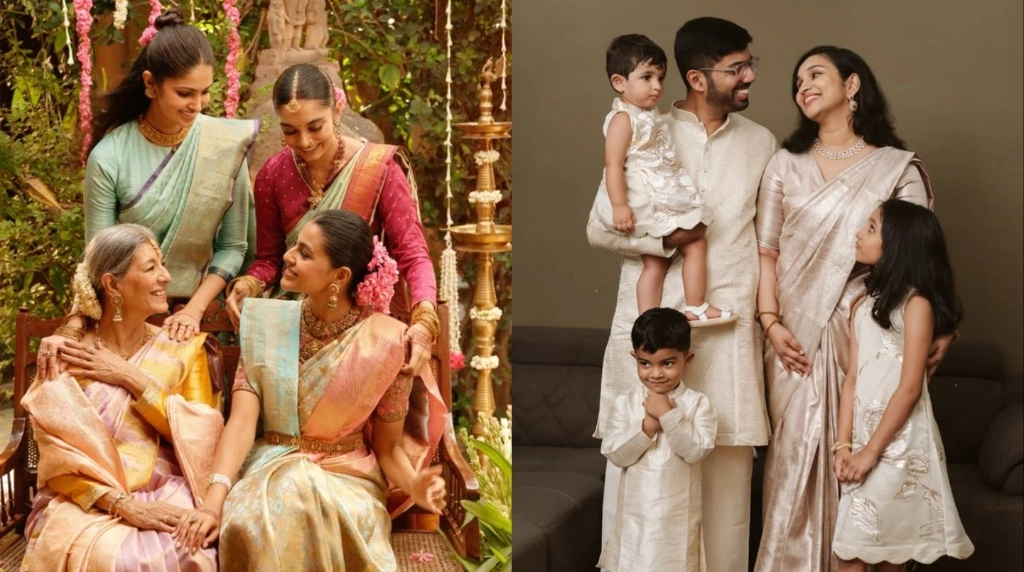
Image Source: Pinterest/kankatala
Diwali is often celebrated across generations, making family styling an important part of festive planning. Handloom offers plenty of ways to coordinate outfits without making everyone wear identical colours or designs.
Coordinating Without Matching
Instead of choosing the same colour for every family member, build a shared palette. For example, one person could wear a maroon saree, another a cream kurta with a maroon jacket, and children could wear outfits featuring small accents of the same colour.
This approach creates a coordinated appearance while allowing everyone to express their personal style.
Handloom Kurtas and Dhotis for Men
Men can explore handloom cotton kurtas, silk-cotton kurtas, Nehru jackets and traditional dhotis for Diwali celebrations.
A solid kurta paired with a textured handloom jacket can create a festive look without feeling overly formal. For evening occasions, silk or silk-blend handwoven fabrics can add richness.
Introducing Children to Handloom
For children, comfort and ease of movement should come first. Lightweight cottons and soft fabrics can be suitable choices for daytime celebrations.
Simple kurta sets, comfortable dresses and easy-to-wear festive separates allow children to enjoy the occasion without feeling restricted by their outfits.
Buying Authentic Handloom: What to Look For
If you plan to buy authentic handloom sarees in India, understanding the textile and its source can help you make an informed decision.
Identifying Genuine Handloom
A handloom mark or a reliable certification can provide useful information about a textile’s authenticity. However, not every genuine handloom piece will carry the same label, and visual inspection alone cannot conclusively establish how a fabric was made.
Look for clear product descriptions that specify the weave, fibre composition, origin and production method. Ask the seller whether the fabric is handwoven, power-loomed or a combination of techniques.
Buying from Verified Artisan Sources
Weaver cooperatives, established handloom retailers and verified artisan-led organisations can provide greater transparency about the textile’s origin.
When purchasing online, review the seller’s product information, return policy and authenticity details. If possible, ask for close-up images of the weave and border before making a purchase.
Understanding the Cost of Authentic Handloom
Authentic handloom prices can reflect the fibre used, weaving complexity, time involved, artisan skill and finishing. Intricate silk brocades or detailed motifs may require considerably more work than simpler woven fabrics.
However, a higher price alone does not prove authenticity or quality. Compare the materials, craftsmanship, source and product details before deciding.
Caring for Handloom Pieces So They Last
Handloom garments can remain part of your wardrobe for years when they receive appropriate care. The right method depends on the fibre, dye, embellishments and weaving technique.
Storage Practices
Store sarees in a clean, dry space away from direct sunlight. Avoid leaving them in damp areas, as moisture can damage natural fibres and encourage mildew.
Fold sarees carefully and refold them occasionally to reduce prolonged stress along the same crease. For delicate silk, consider breathable storage bags rather than tightly sealed plastic.
Washing and Dry-Cleaning Guidance
Always check the care label before washing a handloom garment. Some cotton pieces may be suitable for gentle handwashing, while delicate silk, zari work and embellished fabrics may require professional cleaning.
Avoid harsh detergents, excessive wringing and prolonged exposure to direct sunlight. If a garment has colour bleeding or delicate metallic work, consult a professional cleaner familiar with traditional textiles.
Preserving Handloom Beyond Diwali
A handloom saree does not have to remain packed away after the festival. Re-style it for weddings, family occasions or cultural events. Pair a traditional blouse with contemporary separates, or use a handwoven dupatta to refresh a simple outfit.
With thoughtful styling and appropriate care, a festive purchase can become a long-term wardrobe favourite.
How Styl Inc. Sources and Styles Handloom for Diwali
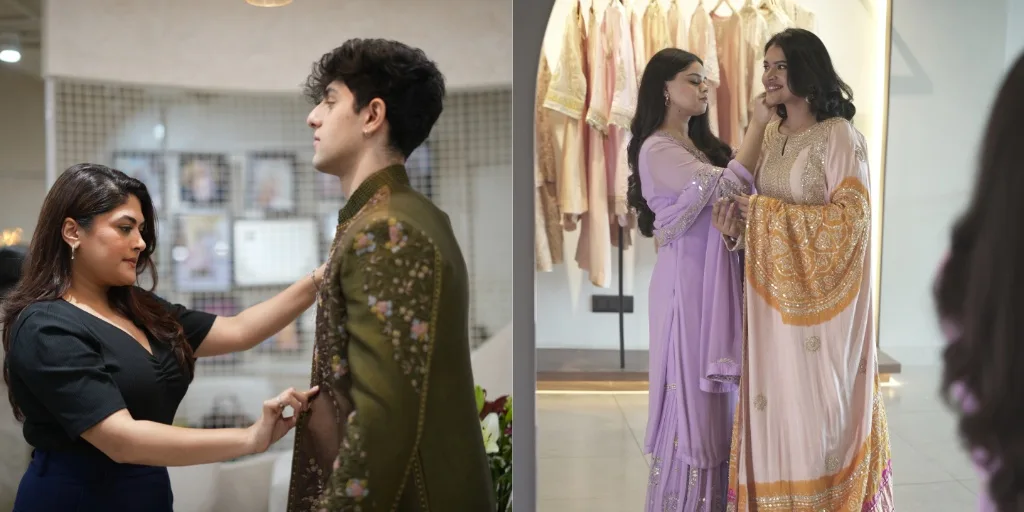
Image Source: Styl Inc
Styl Inc. brings together traditional craftsmanship and contemporary festive styling to help families create outfits that feel personal, coordinated and occasion-appropriate.
Through trusted weaver and artisan sources, Styl Inc. helps clients explore handloom pieces that suit their preferences, celebrations and wardrobe requirements. From selecting a traditional saree to coordinating family outfits, the styling process considers fabric, colour, silhouette and the occasion.
Whether you are planning a daytime pooja look, an evening Diwali party outfit or a coordinated family wardrobe, handloom offers a range of possibilities that celebrate Indian textile traditions while reflecting individual style. Book your Diwali handloom styling consultation with Styl Inc. and explore festive looks that bring together craftsmanship, comfort and personal expression.
Until next time, keep it styl’ish,
Lakshita Vohra Manchanda
No Comments