
Navratri Colours 2026: Day-Wise Colour Guide and What to Wear
Last Updated on September 25, 2026 by gradienteye
Navratri is one of the few festivals where colour isn’t just a styling choice; it becomes part of the celebration itself. Across nine days, devotees come together for prayer, fasting, family gatherings, and Garba and Dandiya nights, with each day traditionally associated with a different colour.
For 2026, Sharad Navratri begins on 11 October and continues through 19 October, followed by Vijayadashami on 20 October. The widely followed Navratri colour sequence for the year is orange, white, red, royal blue, yellow, green, grey, purple, and peacock green.
Whether you’re dressing for a morning pooja, heading to work before an evening Garba event, or planning coordinated looks with your family, the colour calendar makes dressing for all nine days easier. This guide breaks down the Navratri colours 2026 day-wise, along with outfit ideas, silhouettes, accessories, and practical styling tips.
Why Colour Matters So Much During Navratri
The tradition of dressing according to each day’s assigned colour
Wearing a particular colour for each day of Navratri has become a popular festive tradition, especially in western India. The colour gives devotees an easy way to participate in the celebration while bringing a sense of continuity to all nine days. The colour sequence changes every year rather than remaining fixed. It is commonly determined by the weekday on which the first day of Navratri falls, which is why the Navratri colour chart 2026 differs from previous years.
For 2026, Navratri begins on a Sunday, giving the nine-day sequence its orange-to-peacock-green progression.
How the nine colours connect to the nine forms of the goddess
Navratri celebrates nine forms of Goddess Durga, collectively known as Navadurga. These include Shailputri, Brahmacharini, Chandraghanta, Kushmanda, Skandamata, Katyayani, Kalaratri, Mahagauri and Siddhidatri. Each day of the festival is dedicated to one of these forms. The colours worn during Navratri are often discussed alongside these forms and their symbolic qualities. However, it is useful to distinguish the two traditions. The popular annual colour calendar is a regional custom that changes according to the weekday, while the nine forms of the goddess follow the Navratri tithi sequence.
Why you should check the year’s colour list
If you’ve saved a Navratri colour list from a previous year, don’t automatically use it for 2026. The sequence changes annually, and colour lists can also vary between regions, communities, and publications. For this reason, anyone planning a complete Navratri outfit for 9 days should check the current year’s calendar before shopping or planning outfits. For 2026, the widely followed sequence is: Day 1 – Orange | Day 2 – White | Day 3 – Red | Day 4 – Royal Blue | Day 5 – Yellow | Day 6 – Green | Day 7 – Grey | Day 8 – Purple | Day 9 – Peacock Green.
Day-Wise Colour Guide for Navratri 2026
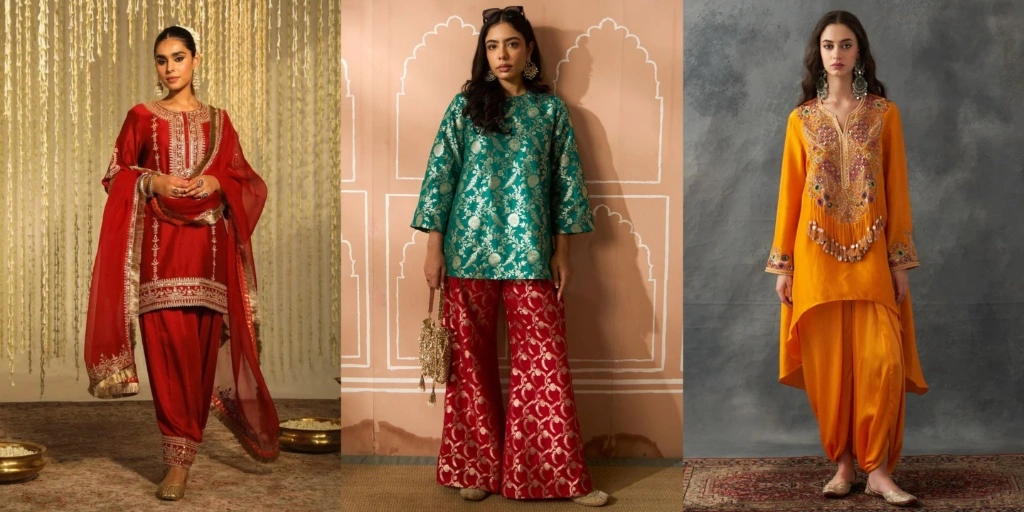
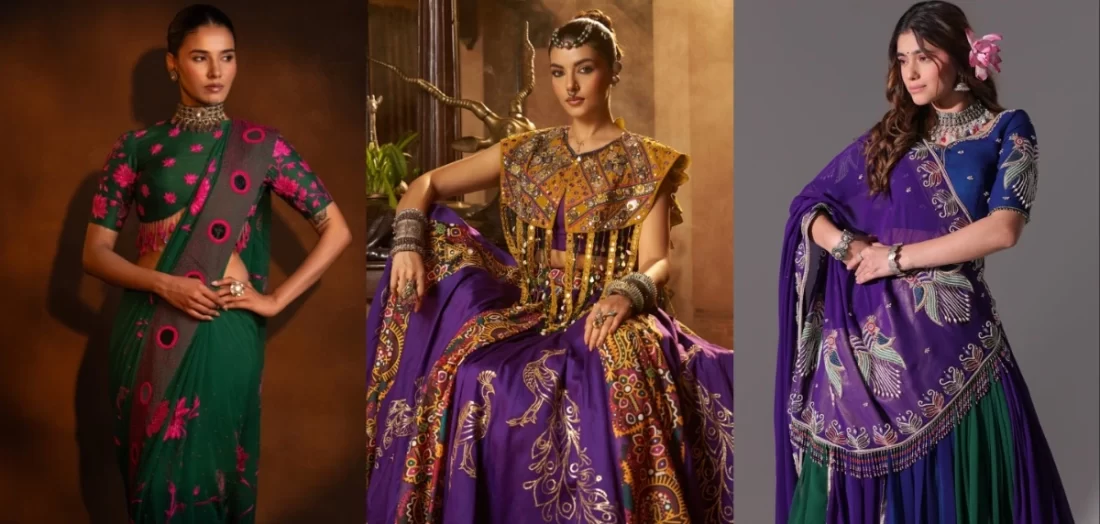
Image Source: Instagram/sheetal Batra; Instagram/CharuMakkar
The following Navratri 9 days colour list 2026 gives you a simple starting point for planning your festive wardrobe.
Day 1 – 11 October: Orange
Navratri begins with orange, a warm and energetic shade that immediately brings a festive feel to your wardrobe. For a daytime pooja, try an orange cotton kurta set, a lightweight saree, or a straight-cut suit. For an evening celebration, an orange chaniya choli with mirror work can create a traditional Garba-ready look. If bright orange feels too intense, experiment with burnt orange, rust, tangerine, or a softer mango tone while keeping the overall look within the day’s color family.
Styling idea: Orange kurta + gold jhumkas + neutral juttis for the day, or orange chaniya choli + mirror-work accessories for Garba.
Day 2 – 12 October: White
White brings an effortless elegance to festive dressing. It also works particularly well for daytime celebrations. A white chikankari kurta set, ivory saree or white Anarkali can create a polished pooja look without feeling overly dressed. For the evening, choose white with colourful embroidery, mirror work or Bandhani details. Don’t be afraid to layer white with silver jewellery, oxidised accessories or colourful dupattas.
Styling idea: Ivory saree + silver jewellery for daytime or white-and-multicolour chaniya choli for Dandiya night.
Day 3 – 13 October: Red
Red is one of the easiest festive colours to style because it naturally feels celebratory. For a classic look, choose a red saree with a contrasting blouse or a red kurta set with traditional jewellery. For Garba, a red lehenga with mirror work, colourful thread embroidery or Bandhani detailing can create a more dramatic silhouette. If head-to-toe red isn’t your style, use red through your dupatta, blouse, skirt or accessories.
Styling idea: Red silk saree + statement earrings for pooja or red-and-multicolour chaniya choli for Garba.
Day 4 – 14 October: Royal Blue
Royal blue gives festive dressing a richer, more contemporary feel. For daytime, consider a royal blue kurta set in cotton, Chanderi or silk-blend fabric. For an evening event, a royal blue lehenga or chaniya choli can be paired with silver or oxidised jewellery. Royal blue also works beautifully with mirror work because the deeper base allows the embellishments to stand out.
Styling idea: Royal blue Anarkali + minimal jewellery for the day or royal blue chaniya choli + oxidised silver accessories for Dandiya.
Day 5 – 15 October: Yellow
Yellow is naturally suited to daytime festivities. Choose mustard, marigold, sunshine yellow or softer pastel yellow depending on your personal style. A yellow cotton saree or kurta set is practical for pooja and family gatherings. For the evening, move towards brighter yellow with mirror work, embroidered borders or colourful accessories.
Styling idea: Yellow kurta + colourful dupatta for daytime or yellow lehenga + multicolour mirror-work blouse for Garba.
Day 6 – 16 October: Green
Green offers plenty of styling flexibility, from pistachio and sage to emerald and bottle green. For a daytime look, a green linen or cotton saree keeps the outfit comfortable. Emerald or bottle-green chaniya cholis can create a richer festive look for evening celebrations. Pair green with silver for a contemporary combination or with traditional colourful embroidery for a more classic Garba aesthetic.
Styling idea: Sage green suit + delicate jewellery for pooja or emerald chaniya choli + silver accessories for Dandiya.
Day 7 – 17 October: Grey
Grey may not be the first colour that comes to mind for Navratri, but it can make for one of the most sophisticated looks. A grey saree with a statement blouse, a charcoal Anarkali or a silver-grey kurta set can work beautifully during the day. For evening celebrations, look for grey fabrics with mirror work, sequins or colourful embroidery.
Styling idea: Grey saree + statement earrings for a refined daytime look or charcoal chaniya choli with colourful mirror work for Garba.
Day 8 – 18 October: Purple
Purple is made for evening festivities. From lavender and lilac to plum and deep violet, there are plenty of ways to interpret the shade. A soft purple suit or saree keeps things elegant during the day. At night, a deeper purple chaniya choli with mirror work or traditional embroidery can become the statement outfit.
Styling idea: Lilac kurta set + pearl jewellery for the day or deep purple chaniya choli + oxidised jewellery for Dandiya.
Day 9 – 19 October: Peacock Green
The final colour of the 2026 sequence is peacock green, a rich shade that sits beautifully between blue and green. This is an ideal colour for a statement Navratri outfit. Choose a peacock-green saree, lehenga or chaniya choli with traditional embroidery for the final evening. Since the colour itself is distinctive, keep the rest of the styling balanced with silver jewellery, colorful bangles, or a contrasting dupatta.
Styling idea: Peacock-green saree + statement earrings for a family celebration or peacock-green chaniya choli + mirror-work jewellery for the final Garba night.
Daytime Navratri Outfit Ideas
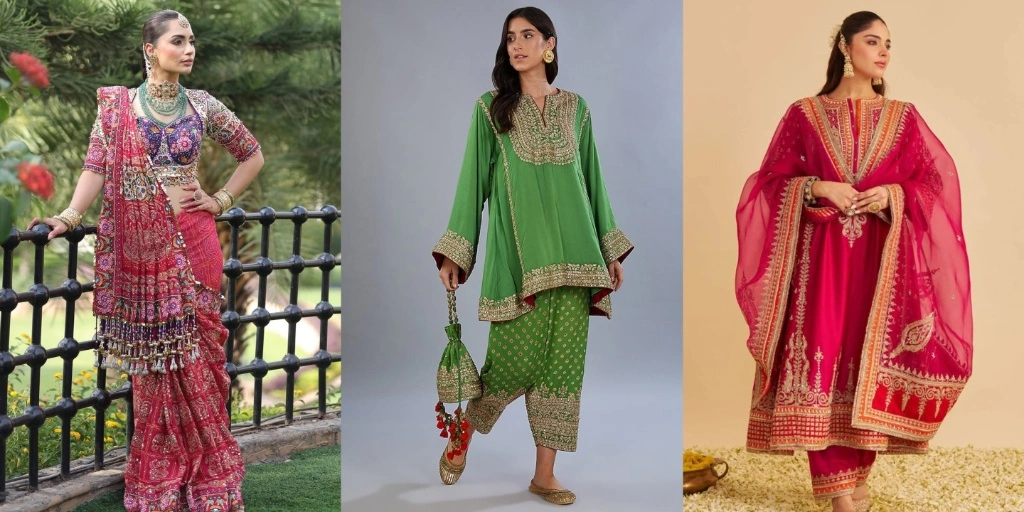
Image Source: Instagram/chitravali01; Instagram/Sheetal Batra; Instagram/Perniapopup
Not every Navratri day involves an elaborate evening celebration. You may have a morning pooja, office, family lunch, errands, or a temple visit before changing for an evening event. This period is where comfortable festive dressing becomes important.
Simple kurta sets and sarees
A kurta set is one of the easiest ways to follow the Navratri colour chart without investing in nine completely different festive outfits. Choose straight kurtas, Anarkalis, co-ord sets or lightweight sarees in the colour of the day. You can change the look with a dupatta, jewellery or footwear rather than buying a new outfit every day. Sarees work particularly well when you want something traditional but versatile. Cotton, Chanderi, organza, and lightweight silk blends can transition from family celebrations to more formal festive settings.
Comfortable fabrics for pooja and busy days
Navratri can involve long days, particularly if you’re fasting, travelling between celebrations, or heading directly from work to Garba. Look for breathable fabrics such as cotton, mulmul, linen blends, Chanderi, and lightweight silk. Avoid outfits that require constant adjustment, especially if you have a long day ahead. A practical festive outfit should allow you to sit comfortably during pooja, move around easily, and still look polished.
Minimal jewellery and easy hairstyles
Daytime styling does not need to compete with the outfit. Small jhumkas, pearl earrings, delicate bangles, or a simple necklace can add enough festive detail. For hair, try a low bun, braid, ponytail, or soft waves. You can always add statement jewellery before heading to an evening celebration.
Evening Garba and Dandiya Outfit Ideas
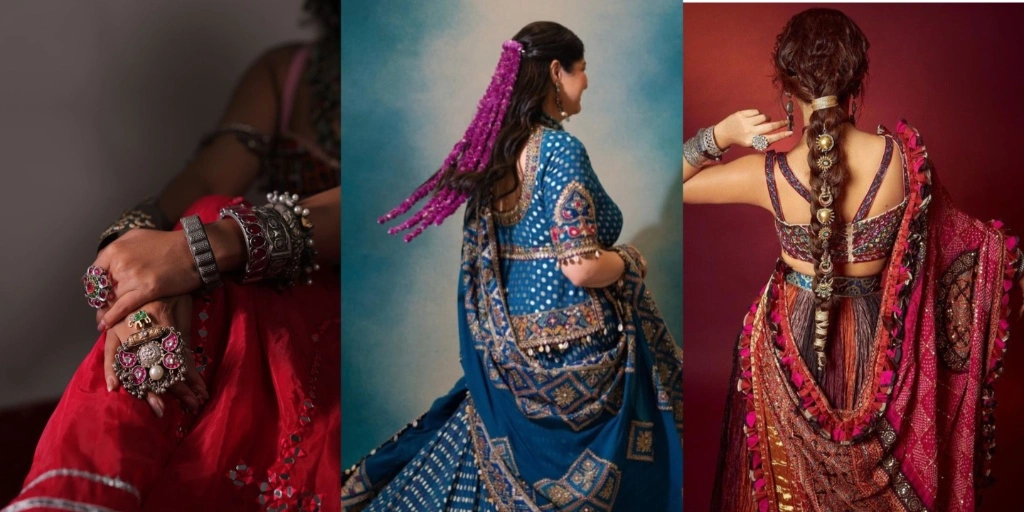
Image Source: Instagram/Samarpanjewellery&fashion; Instagram/arpitamehtaofficial
Garba and Dandiya nights call for outfits that are festive but also functional.
The chaniya choli remains the classic silhouette
The chaniya choli continues to be one of the most recognizable Garba outfit ideas for 2026. Its flared skirt creates movement while dancing, while the blouse and dupatta allow plenty of scope for colour and embellishment. For a contemporary take, look for crop-top-inspired blouses, asymmetric dupattas, lighter skirts, or coordinated separates.
Mirror work, Bandhani and Gujarati embroidery
If you want your outfit to immediately feel connected to the occasion, traditional surface details are a fantastic place to start. Mirror work, Bandhani, colourful thread embroidery, patchwork, tassels, and traditional Gujarati-inspired motifs can add character without requiring excessive embellishment. You can also mix traditional and contemporary pieces. Pair a heavily embroidered skirt with a simpler blouse or style a traditional chaniya with a modern cropped top.
Think about movement
A beautiful Garba outfit still needs to work when you’re dancing for several hours. Check the length of your skirt before leaving home. Make sure the dupatta is secure and avoid excessively heavy embellishment if you know you’ll be dancing throughout the evening. The same applies to sleeves, blouse straps and waistbands. The top outfit ideas for Dandiya night combine visual impact with freedom of movement.
Choose accessories that can keep up
Oxidised jewellery, colourful bangles, jhumkas, layered necklaces and statement earrings are popular choices for Garba styling. However, more accessories don’t always mean a better outfit. If your chaniya choli already has substantial mirror work, choose one or two statement jewellery pieces rather than layering everything at once. Footwear is equally important. Juttis, mojaris or comfortable embellished flats are generally easier to manage than delicate heels when you’re dancing for hours.
Outfit Ideas for Men
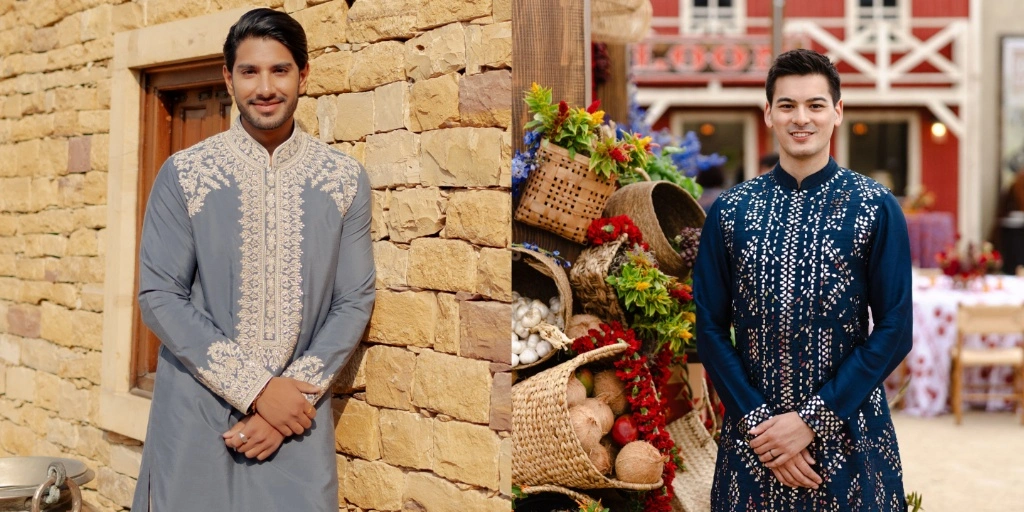
Image Source: Styl Inc
Navratri styling isn’t limited to women’s festive wear. Men can follow the colour of the day while choosing silhouettes that suit their personal style.
Kediyu and dhoti sets
The kediyu and dhoti combination is a classic choice for Garba and Dandiya celebrations. Choose the day’s colour through the kediyu, jacket, dhoti or accessories. A colourful embroidered kediyu can make a strong statement without needing additional layers.
Kurta and Nehru jacket combinations
For a more versatile look, pair a kurta in the day’s colour with a contrasting or tonal Nehru jacket. This combination works particularly well for daytime celebrations and can be adapted for family gatherings, office festivities, and evening events.
Coordinate without matching completely
If you’re dressing as a couple or group, you don’t need identical outfits. One person can wear the primary colour while another uses it through a dupatta, jacket, blouse, scarf or accessories. This creates coordination without making everyone look like they’re wearing a uniform.
Coordinating Colours as a Group or Family
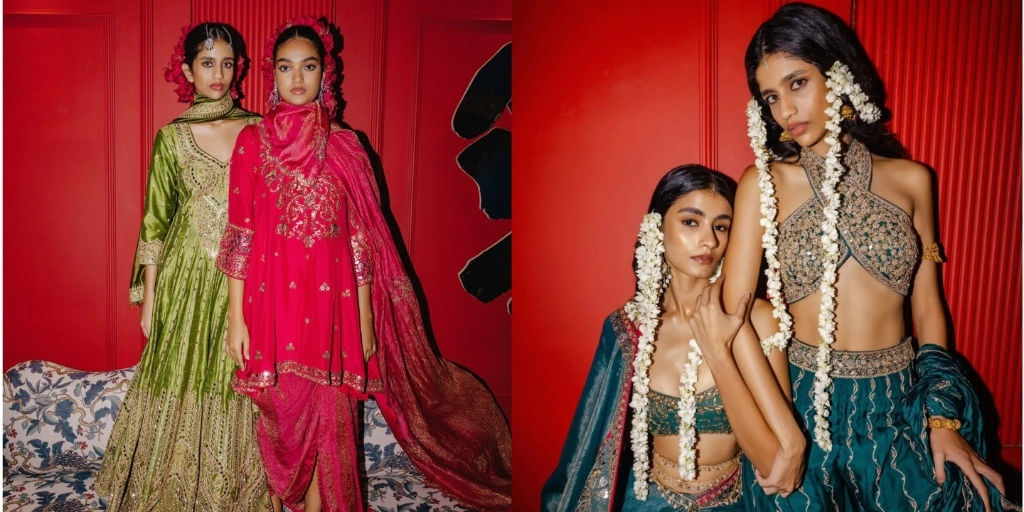
Image Source: Instagram/ogaanindia
Matching family outfits can make festive photographs look cohesive, but there is a difference between coordination and identical dressing. Start with the day’s assigned colour. Then let every person interpret it differently. For example, on Orange Day, one person could wear an orange saree, another an orange kurta, a child could wear an orange lehenga and another family member could incorporate orange through a jacket or dupatta. This approach works particularly well for large families because everyone can maintain their individual style while still belonging to the same colour story.
Plan your wardrobe before Navratri begins
Nine days of dressing can quickly become stressful if you wait until the previous night to decide what to wear.
Create a simple wardrobe calendar before the festival:
- Day 1: Orange
- Day 2: White
- Day 3: Red
- Day 4: Royal Blue
- Day 5: Yellow
- Day 6: Green
- Day 7: Grey
- Day 8: Purple
- Day 9: Peacock Green
Then decide which days require a complete festive outfit and which can be handled with separates or accessories.
Practical Styling Tips for Nine Days of Dressing
Build a capsule wardrobe
You don’t need nine entirely new outfits.Instead, invest in a few versatile pieces that you can restyle throughout the festival. A neutral skirt, plain blouse, versatile dupatta and statement jewellery can work with several colour stories. You can also use tonal variations. For example, on Green Day, emerald, sage, olive or pastel green can create very different looks while remaining within the colour family.
Choose fabrics that can handle repeated wear
If you’re attending several Garba nights, prioritise lightweight and breathable fabrics. Cotton blends, lightweight silk, georgette and comfortable lining can make a significant difference when you’re moving around for several hours. Avoid choosing an outfit only because it photographs well. Think about how it feels after two or three hours of dancing.
Prioritise comfortable footwear
Festive footwear doesn’t have to mean uncomfortable footwear. Embellished juttis, mojaris, cushioned flats and block heels can provide a more practical alternative to very high stilettos. Break in new footwear before the event. A pair that looks perfect but causes discomfort after 30 minutes won’t be your best Garba companion.
Carry a practical evening kit
If you’re attending a long Dandiya night, keep a few essentials handy: safety pins, hair ties, a compact mirror, tissues, comfortable flats if required and a small touch-up kit. The goal is to spend the evening enjoying the celebration rather than constantly fixing your outfit.
How Styl Inc. Helps with Navratri Styling
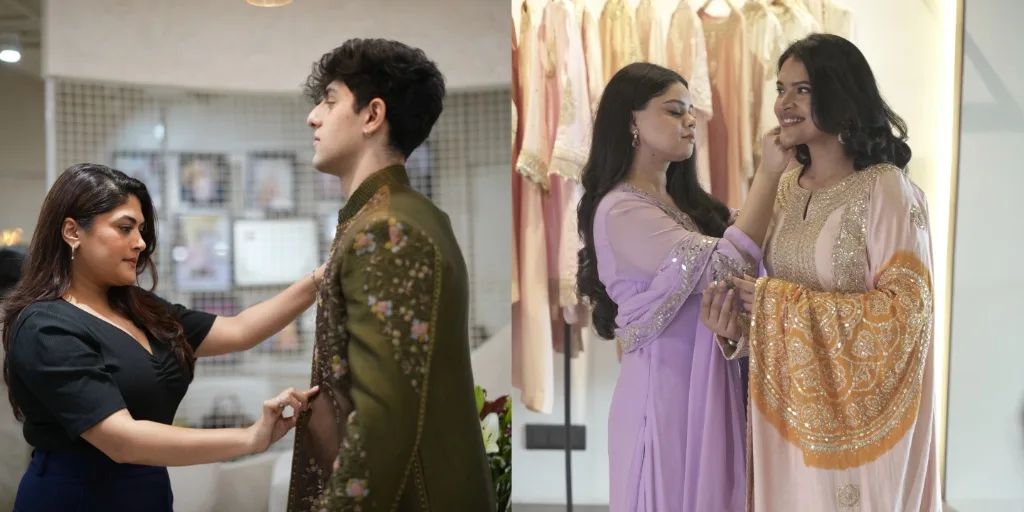
Image Source: Styl Inc
Planning nine festive looks can be exciting, but it can also become overwhelming when you are balancing colour traditions, personal style, comfort, and multiple events. Styl Inc. approaches festive styling by bringing structure to the process. Instead of treating each outfit as an isolated look, a stylist can help create a cohesive day-wise Navratri dress guide based on your schedule, wardrobe, personal aesthetic, and the type of celebrations you’re attending. That could mean creating an elegant saree look for a daytime pooja, a movement-friendly chaniya choli for Garba, a coordinated family wardrobe, or modern festive looks for someone who doesn’t typically wear traditional Indian clothing. The idea is simple: follow the spirit of the festival while still making the clothes feel like you.
Final Thoughts
Navratri dressing is not about having nine elaborate outfits. It is about finding ways to bring the colour of the day into your wardrobe while staying comfortable, confident, and true to your personal style. For 2026, the popular colour sequence gives you plenty of scope to experiment: orange, white, red, royal blue, yellow, green, grey, purple, and peacock green.
You can interpret those colours through sarees, kurta sets, chaniya cholis, lehengas, jackets, or even small accessories. The key is to plan ahead, choose pieces you can actually move in, and let your individual style shape the final look. After all, the best festive outfit is one that lets you enjoy the festival instead of worrying about it. Ready to plan your Navratri wardrobe? Book your festive styling consultation with Styl Inc. and create a nine-day wardrobe that brings together tradition, comfort, and your personal style.
Until then, keep it styl’ish,
Lakshita Vohra Manchanda
No Comments