
Festive Season Styling 2026: What to Wear from Ganesh Chaturthi, Karva Chauth, Navratri to Diwali
Last Updated on September 14, 2026 by gradienteye
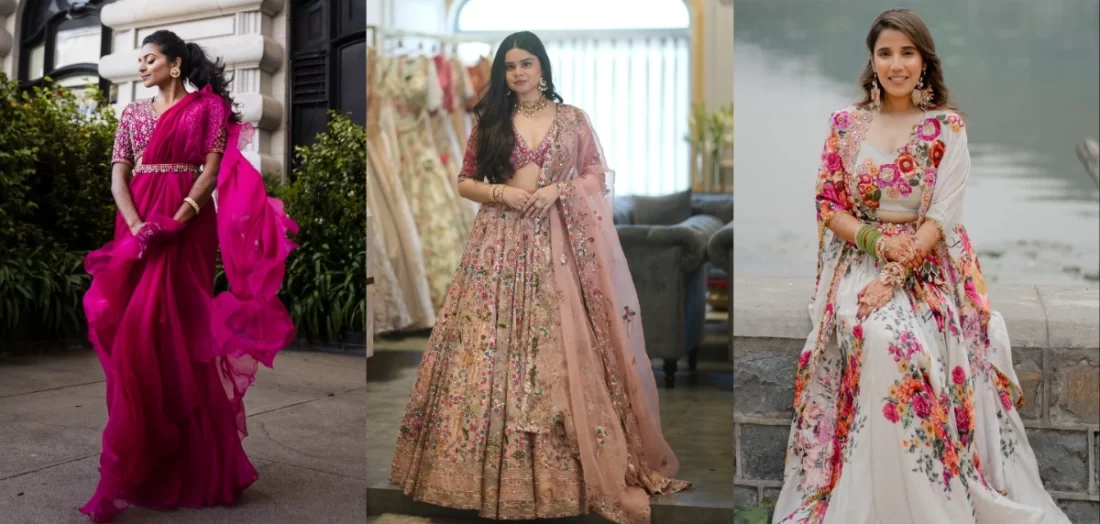
Festive season in India isn’t one event. It’s a stretch of months filled with family gatherings, pujas, office celebrations, traditional rituals, late-night Garba plans, wedding invitations, and Diwali parties. Ganesh Chaturthi sets the festive mood, Karva Chauth brings its own beautiful traditions. Navratri turns dressing into a nine-day celebration, and Diwali closes the season with lights and reasons to get dressed up. Planning outfits festival by festival at the last minute can quickly become expensive, exhausting, and repetitive.
This festive season outfit guide 2026 brings the major celebrations together in one place, with outfit ideas, colour directions, practical styling tips, and family wardrobe planning advice. Whether you prefer a cotton saree for a morning puja, a comfortable kurta set for family visits, a Garba-ready lehenga, or a statement Diwali outfit, the idea is to make every look feel festive without making every purchase entirely new.
The 2026 Indian festival season moves from Ganesh Chaturthi in September to Navratri, Karva Chauth, and Diwali in October and November. The most useful way to approach the season is to plan ahead and understand what each occasion calls for. And choose outfits that make you feel comfortable, confident, and ready to celebrate.
Why Plan the Festive Season as One Wardrobe, Not Separate Events?
How festival dates cluster together in 2026 and why that affects planning
The biggest advantage of festive wardrobe planning 2026 is knowing that the season is not spread evenly across the year. Once Ganesh Chaturthi arrives in September, the celebrations build towards October and November. Navratri, Dussehra, Karva Chauth, Dhanteras, Diwali, Govardhan Puja, and Bhai Dooj follow within a relatively short period. That means shopping for each occasion separately can quickly fill your wardrobe with outfits that you wear only once.
It can also create unnecessary pressure to buy something new every time. Instead, think of the season as a styling journey. Start with a few versatile pieces, and decide which occasions need traditional dressing. And which can be more relaxed, and then add accessories or small styling changes to create variety.
A wardrobe plan also gives you time to consider comfort. A look that works beautifully for a seated puja may not be the right choice for a long outdoor procession. Similarly, an outfit that looks perfect for a Diwali dinner may not be practical for a full evening of dancing at a Navratri event. Planning ahead helps you dress for the actual occasion rather than only for the photograph.
It is also worth remembering that festive dressing is not limited to one type of Indian outfit. Sarees, kurta sets, anarkalis, lehengas, shararas, handloom separates, and contemporary fusion looks can all work beautifully. The right choice depends on the celebration, your personal style, and how you want to spend the day.
Reusing and re-styling pieces across festivals instead of buying new for every event
The most useful festive wardrobe pieces are not necessarily the most heavily embellished ones. A silk-cotton saree, a well-fitted kurta set, a versatile lehenga skirt, a plain blouse, or a lightweight dupatta can be styled in several ways throughout the season.
A cotton saree works beautifully for Ganesh Chaturthi. Pair it with a contrasting blouse, jhumkas, and a simple bindi for a traditional look. Later in the season, style the same saree with a statement blouse or contemporary jewellery. This approach lets you reuse the piece without making the outfit feel repetitive.
The same principle works for separates. A lehenga skirt can be paired with a simple blouse for one event and a contrasting kurta or shirt for another. A plain silk blouse can work with a saree, a skirt, or even a pair of tailored trousers for a contemporary festive look. The goal is not to make every outfit look identical. It is to make every piece earn its place in your wardrobe.
You can also change the styling details rather than the entire outfit. A different drape, a new pair of earrings, a statement belt, or a contrasting dupatta can entirely change the mood of a look. This is especially useful when you have several celebrations close together and want to avoid repeating the same outfit combination.
Building a loose colour and silhouette plan for the whole season upfront
Before shopping, create a simple colour and silhouette map. You do not need to decide every outfit immediately. Just identify the broad direction you want to follow.
For example, you could begin the season with soft yellows, ivory, and green for Ganesh Chaturthi, move towards red and jewel tones for Karva Chauth, explore the traditional day-wise colours of Navratri, and finish with deeper festive shades, metallics, and rich neutrals for Diwali.
A silhouette plan is equally useful. You might choose comfortable sarees and kurta sets for daytime celebrations, lehengas and anarkalis for larger gatherings, and lighter separates for office events. This prevents you from buying several outfits that all serve the same purpose.
The best festive season styling is not about having the biggest wardrobe. It is about having enough variety to feel dressed for every occasion while still being able to move, sit, eat, dance, and enjoy the celebration.
Ganesh Chaturthi: What to Wear
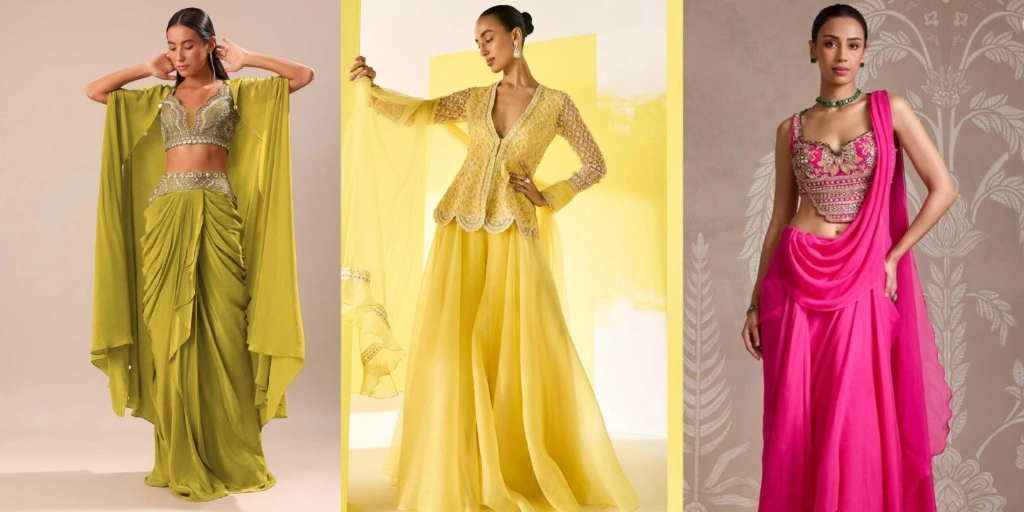
Image Source: Pinterest/Aza Fashion; Pinterest/Ridhi Mehra; Instagram/Kalki Fashion
Ganesh Chaturthi is a beautiful way to begin the festive season, with home pujas, community celebrations, family visits, and, in many places, elaborate visarjan processions. It is an occasion where traditional dressing feels especially natural, but that does not mean you need to choose something heavy or difficult to wear.
Traditional, comfortable silhouettes for pooja and family visits
For a morning puja or a family gathering at home, traditional dressing does not have to mean heavy dressing. Cotton sarees, silk-cotton sarees, simple kurta sets, and lightweight anarkalis are all excellent choices.
A yellow cotton saree with a contrasting blouse creates a classic festive look without feeling overly formal. A simple kurta set in ivory, mustard, or green can be dressed up with jhumkas and a dupatta. If you prefer a more contemporary outfit, try a straight kurta with wide-leg trousers, a short kurta with a long skirt, or a handloom-inspired co-ord set.
For those who enjoy wearing sarees but want something easy to manage, choose a lightweight fabric and a comfortable drape. A pre-pleated saree or a saree with a secure petticoat can also make getting ready simpler, especially when the day involves moving between home, temple, and family gatherings.
A simple cotton saree can look just as festive as a heavily embroidered outfit when styled thoughtfully. Add a traditional blouse, a pair of earrings, a bindi, and comfortable footwear, and the look is complete. If you prefer a kurta set, choose one with a small print, delicate embroidery, or a festive border to create a similar effect.
Colour choices: yellow, red, and other auspicious tones associated with the festival
Yellow, red, orange, and green are popular choices for Ganesh Chaturthi styling. Yellow is especially associated with auspiciousness, warmth, and celebration, making it an easy choice for a daytime puja. Red and orange can add a more vibrant festive feel, while green works beautifully for a softer, nature-inspired look.
You do not have to wear a bright colour from head to toe. A yellow blouse with an ivory saree, a red dupatta over a neutral kurta, or green jewellery with a simple outfit can create the same festive effect. If your wardrobe already includes these colours, use accessories to bring them into the look rather than buying a new outfit.
For a modern interpretation, try a muted version of a traditional colour. Mustard instead of bright yellow, rust instead of orange, or sage instead of emerald can feel understated while still looking festive. These shades also work well with gold jewellery and neutral accessories, making them easy to re-style later in the season.
Dressing for visarjan day and outdoor processions
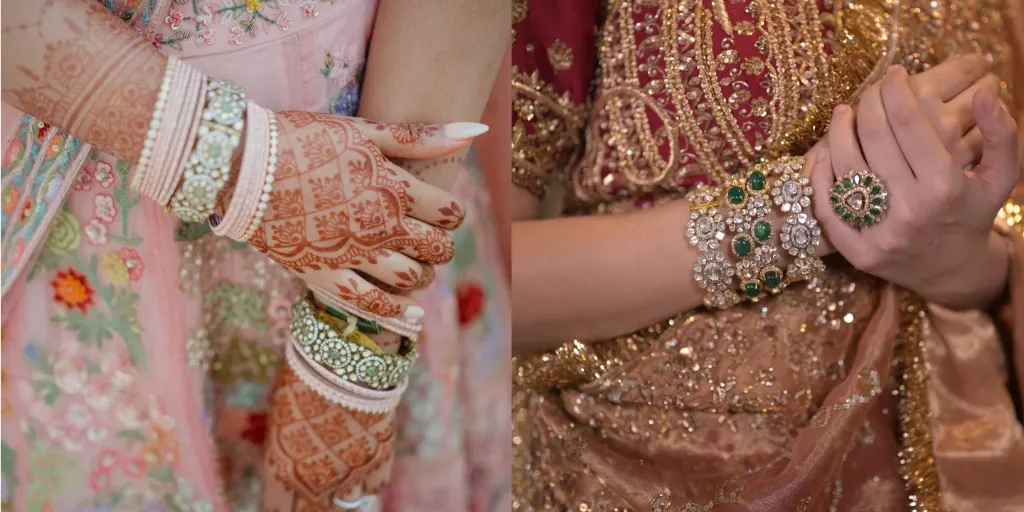
Image Source: Styl Inc
Visarjan day often involves more movement, crowds, walking, and time outdoors than a home puja. This is where practical fabric and footwear choices become important.
Choose breathable fabrics such as cotton, cotton-silk, or lightweight blends. Avoid outfits that are difficult to walk in or require constant adjustment. If you are wearing a saree, secure the pleats well and choose footwear that you can comfortably walk in. A lightweight kurta set with trousers can be an excellent alternative for a long day outside.
Keep accessories practical too. Statement earrings are beautiful, but very heavy jewellery can become uncomfortable over several hours. A small crossbody bag or a secure sling bag is useful for carrying essentials without needing to hold a large handbag.
If you are attending a community celebration, consider the weather and the amount of time you will spend outdoors. A breathable outfit, comfortable shoes, and a secure hairstyle can make the day much more enjoyable. Festive dressing should add to the experience, not make you spend the entire day worrying about your outfit.
Karva Chauth: What to Wear
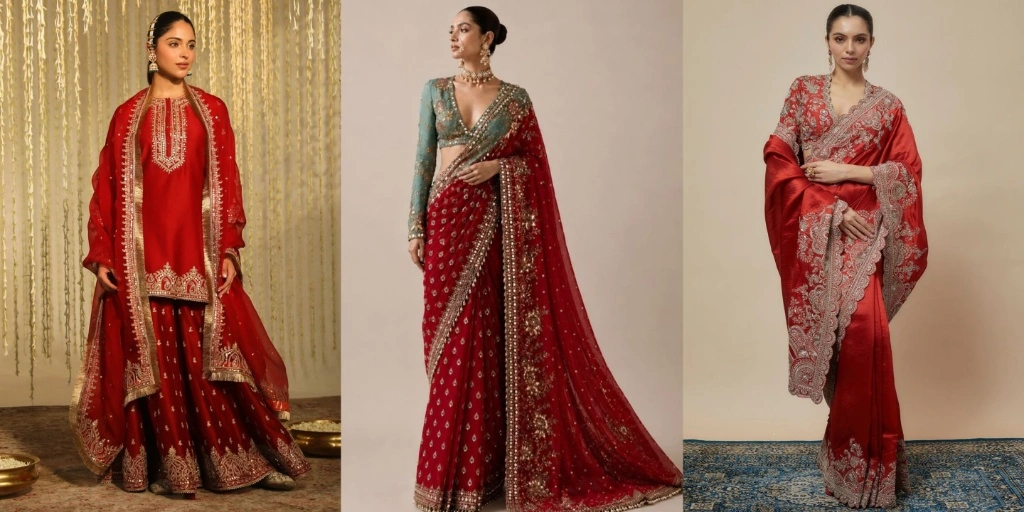
Image Source: Pinterest/pernia pop up store; Instagram/Sheetal Batra
Karva Chauth has a distinct visual identity, with traditional outfits, red and bridal-adjacent colours, jewellery, mehendi, and evening puja rituals. It is an occasion where many women choose to dress in a more traditional and celebratory way, often incorporating personal or family customs into their outfits.
Traditional red and bridal-adjacent tones for the day
Red is one of the most recognisable colours associated with Karva Chauth, particularly for women who choose to follow traditional dressing customs. Maroon, wine, rust, pink, magenta, and deep rose can offer a similar festive feeling while giving you more options beyond bright red.
A red saree with a contrasting blouse is a classic choice. If you prefer a lighter silhouette, try a red anarkali, a sharara set, or a lehenga with a simple blouse. For a more contemporary look, a jewel-toned kurta set with traditional jewellery can feel festive without being overly bridal.
Newly married women may choose to wear outfits and accessories that hold personal or family significance. Others may prefer a simpler look that reflects their style. There is no single way to dress for the occasion; the most meaningful outfit is one that feels comfortable and appropriate for your celebration.
If you already own a red saree or lehenga, the festival is a good occasion to bring it back into your wardrobe. Change the blouse, add a different dupatta, or style it with jewellery you do not usually wear. A familiar outfit can feel entirely new when the styling is different.
Daytime versus evening puja outfit considerations
Karva Chauth often involves a long day, followed by an evening puja and moon-viewing ritual. If you are dressing in the morning, consider fabrics that remain comfortable for several hours. Lightweight silk, cotton-silk, georgette, and breathable blends can work well.
For the evening, you can add more festive elements through jewellery, a dupatta, a brighter lip colour, or a more embellished blouse. If you are wearing a saree, choose a drape that stays secure and allows you to move comfortably. If you are wearing a lehenga or sharara, consider the weight of the fabric, especially if you will be standing or walking outdoors.
Layering can also be useful. A lightweight dupatta or shawl can add to the look without making the outfit too heavy. If the evening is expected to be warm, choose breathable fabrics and avoid unnecessary layers. A practical approach is to choose an outfit that can transition from daytime to evening. A simple saree can be styled with minimal jewellery during the day and elevated with a statement necklace or a more festive blouse for the evening. This saves time and avoids the need for a complete outfit change.
Jewellery and accessory customs specific to the occasion
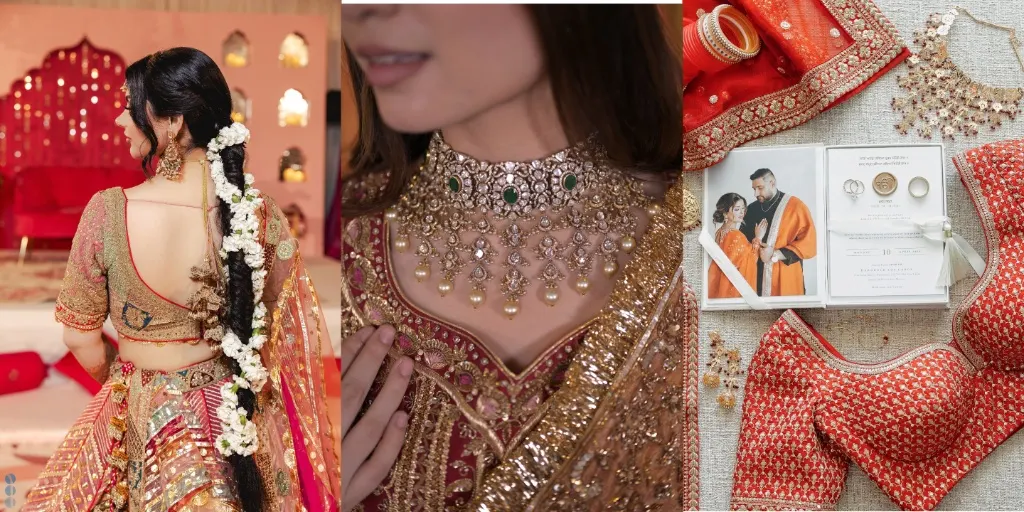
Image Source: Styl Inc
Karva Chauth styling often includes traditional jewellery such as bangles, earrings and depending on family customs, other bridal accessories. These details can make even a simple outfit feel special.
If your outfit is heavily embroidered, you may not need every accessory at once. Choose one or two statement pieces and keep the rest balanced. A pair of jhumkas and bangles can be enough to elevate a simple saree. A statement necklace can work beautifully with a plain neckline.
You can also use accessories to bring personal meaning into the look. Family jewellery, or a dupatta passed down through generations, can make the outfit feel more connected to the occasion. The most important part of Karva Chauth styling is that it should feel like your celebration. Whether you prefer a traditional red saree, a modern sharara, or a simple kurta set, choose pieces that reflect your style and allow you to enjoy the rituals comfortably.
Navratri: What to Wear
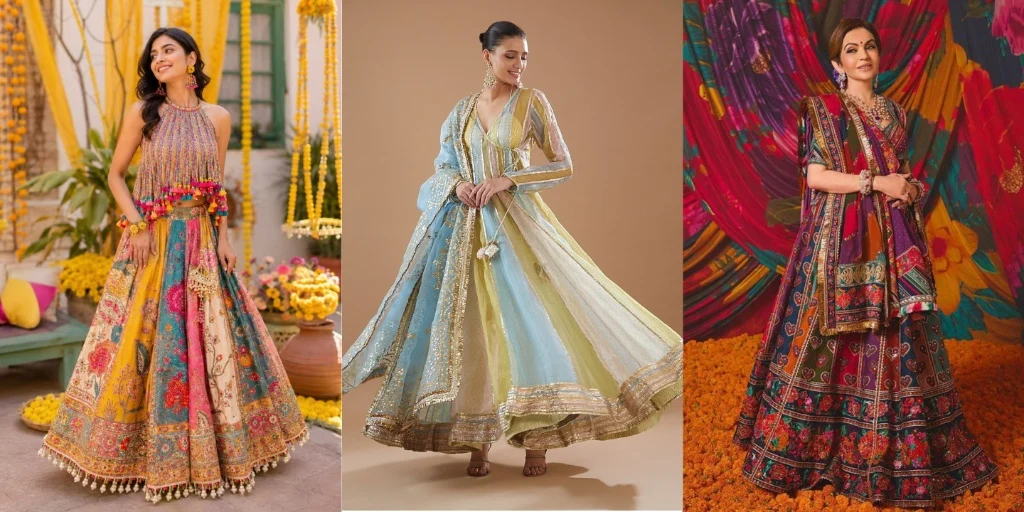
Image Source: Pinterest/Svarne; Pinterest/Pernia’s Pop Up Shop
Navratri is one of the most exciting parts of the Indian festive season for anyone who loves colour, movement, and traditional dressing. With nine days of celebrations, it offers plenty of opportunities to experiment with outfits while still following the spirit of the festival.
A quick summary of the day-wise colour tradition and Garba-ready outfit ideas
The traditional Navratri colour sequence is widely followed in many parts of India, although the exact colour order can vary by region and calendar. The festival is also a wonderful opportunity to explore different silhouettes, from colourful chaniya cholis and lehengas to comfortable kurta sets and contemporary fusion outfits.
For a Garba or Dandiya night, lehengas, chaniya cholis, mirror-work skirts, embroidered blouses, and colourful dupattas are popular choices. If you prefer a more relaxed outfit, a kurta with a flared skirt or a colourful co-ord set can create a festive look without the weight of a traditional lehenga.
The key is to choose an outfit that allows movement. Garba involves dancing for long periods, so comfortable footwear, secure draping, and breathable fabrics matter. A lightweight lehenga with a well-fitted blouse can be just as effective as a heavily embellished outfit. For daytime Navratri celebrations, consider cotton sarees, printed kurta sets, or simple anarkalis. You can bring in the day’s colour through a dupatta, blouse, jewellery, or even a small accessory rather than buying a completely new outfit.
If you are attending several Garba nights, create variety through styling rather than purchasing nine new outfits. A colourful skirt can be paired with different blouses, while a simple kurta can be transformed with a mirror-work dupatta or statement jewellery. This is a practical way to enjoy the festival while keeping your wardrobe manageable.
Diwali: What to Wear
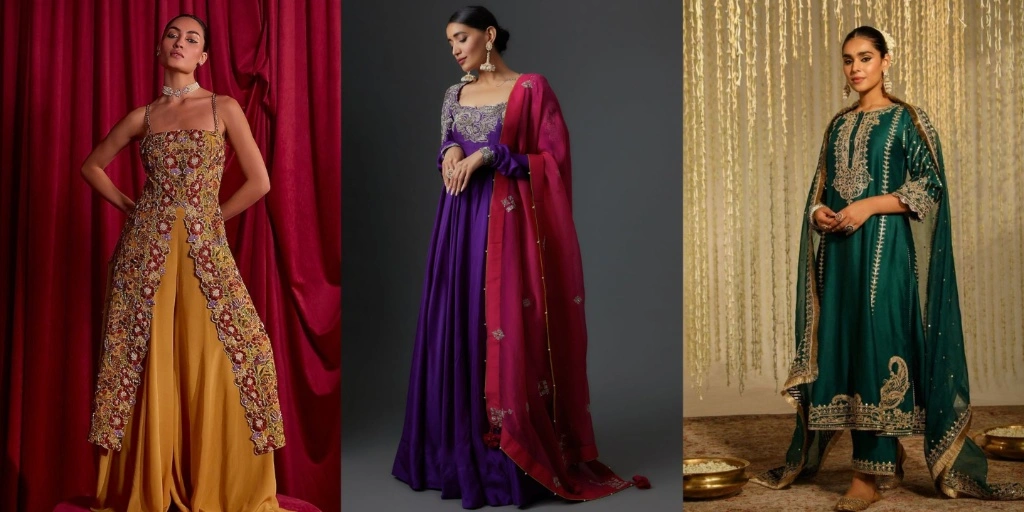
Image Source: Instagram/Mrunalini Rao; Instagram/Toyhar
Diwali is often the grand finale of the festive season, but it is also a series of celebrations rather than just one evening. There may be office parties, family pujas, card nights, festive lunches, Diwali dinners, and gatherings with friends. That makes it useful to have a few different styling directions ready.
A quick summary of puja, office, and party dressing across the Diwali season
For a home puja, traditional silhouettes such as sarees, kurta sets, anarkalis, and lightweight lehengas work beautifully. Choose fabrics that are comfortable for sitting and moving around the house. Silk, cotton-silk, and soft blends can offer a festive feel without being too heavy.
For office Diwali celebrations, you can choose a more polished and wearable look. A silk saree with a simple blouse, a printed kurta set, or a festive co-ord set can work well. If your office environment is more relaxed, a statement dupatta or a festive blouse can transform an everyday outfit.
For Diwali parties, you can experiment with more dramatic silhouettes, richer colours, and statement accessories. A metallic saree, a jewel-toned lehenga, a velvet blouse, or a contemporary draped skirt can create a more evening-ready look.
The important thing is to dress for the type of celebration. A heavily embellished outfit may be perfect for a party but unnecessary for a daytime office gathering. Similarly, a very casual outfit may feel underdressed for a formal family puja.
Where handloom fits into Diwali styling
Handloom pieces are a wonderful way to bring texture, craft, and individuality into festive dressing. A handloom saree can feel elegant without relying on heavy embellishment, while a handwoven dupatta can add depth to a simple kurta set.
If you prefer a more contemporary look, try pairing a handloom saree with a modern blouse, a belt, or minimal jewellery. A handloom skirt can also be styled with a plain silk blouse or a contrasting crop top for a festive look that feels personal.
Handloom is especially useful for investing in pieces that you can wear beyond the festive season. A saree or dupatta can work for weddings, family gatherings, office celebrations, and other occasions throughout the year.
Choosing outfits for different Diwali celebrations
For a Diwali puja, think of elegant and comfortable. For an office celebration, think of polished and practical. For a family dinner, think of festive but easy to wear. For a party, think of statement details and a silhouette that makes you feel confident.
A useful approach is to choose one main outfit for each category and then change the styling. The same saree can look traditional with a classic blouse and jewellery, or contemporary with a belt and statement earrings. The same lehenga can feel different with a contrasting dupatta or a new blouse.
You can also plan your Diwali wardrobe around the type of celebration you are most likely to attend. If you have several family gatherings, invest in versatile traditional pieces. If you have more office parties and evening events, focus on polished separates, statement blouses, and accessories that can elevate existing outfits.
For a full breakdown of outfits for puja, office celebrations, family gatherings, and parties, explore [Diwali Outfit Guide 2026: What to Wear for Every Diwali Celebration].
Building a Season-Wide Colour and Wardrobe Plan
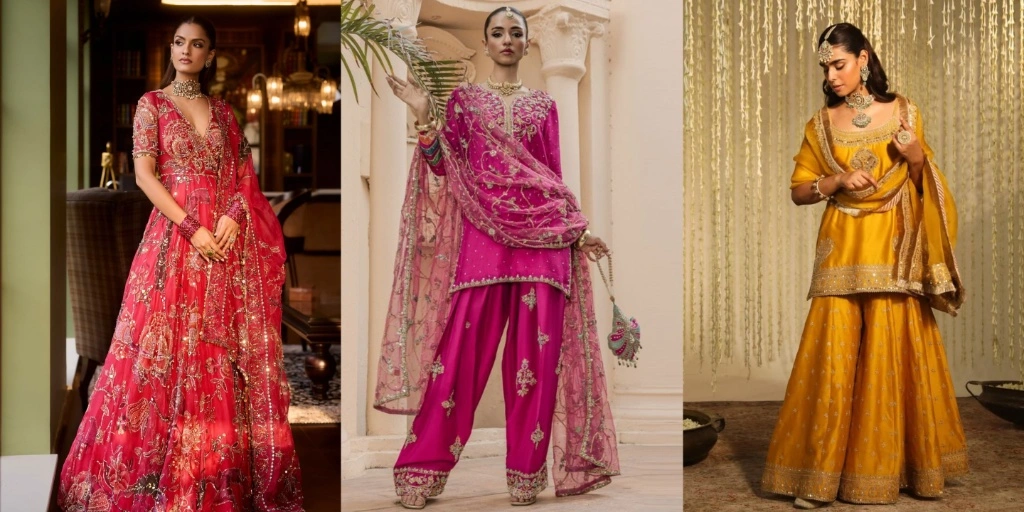
Image Source: Pinterest/Sheetal Batra, Pinterest/Sanjh Conture; Pinterest/Mahima Mahajan
Choosing a core palette that flexes across all four festivals
A season-wide colour palette does not mean wearing the same colours repeatedly. It means choosing colours that work together so that your wardrobe feels cohesive.
A useful festive palette could include one or two bright colours, a few rich neutrals, and one or two metallic accents. For example, yellow, red, green, ivory, gold, and deep maroon can work across Ganesh Chaturthi, Karva Chauth, Navratri, and Diwali.
You can also create a softer palette with mustard, blush pink, sage green, ivory, rust, and gold. This can feel festive without being overly bright. If you prefer jewel tones, emerald, wine, sapphire, and rose can create a more evening-focused wardrobe.
The best palette is one that works with the colours you already own. Before buying anything, look at your existing sarees, kurtas, blouses, skirts, and accessories. You may already have most of the pieces needed for a complete festive wardrobe.
Identifying versatile pieces that can be re-styled festival to festival
Start with a few pieces that can be worn in different ways. A neutral saree, a versatile blouse, a simple kurta set, a festive dupatta, and a pair of comfortable statement earrings can create several looks.
A saree can be styled traditionally for Ganesh Chaturthi, with a different blouse for Karva Chauth, and with a belt or contemporary accessories for Diwali. A kurta set can be worn with a colourful dupatta for Navratri and with more understated accessories for an office celebration.
You can also use layering to create variety. A lightweight jacket, a cape, a dupatta, or a statement belt can change the feel of an outfit without requiring a completely new purchase.
The most important thing is to choose pieces that work together. If you buy a blouse that only matches one skirt, it may not be as useful as a blouse that works with a saree, lehenga, and trousers.
Budgeting the season instead of spending per event
Festive wardrobe planning becomes much easier when you decide on a season-wide budget. Instead of asking, “What should I buy for this festival?” ask, “What do I need for the whole season?”
Start by listing the occasions you expect to attend. Then identify what you already own and what is missing. You may need one traditional outfit, one more relaxed outfit, and a few accessories rather than four completely new looks.
Set aside a small amount for tailoring, alterations, footwear, and accessories. These details can make a bigger difference to the final look than buying another outfit.
If you are shopping for the whole family, plan the budget together. This helps avoid last-minute purchases and makes it easier to coordinate colours without buying matching outfits for everyone.
A useful way to stay within budget is to divide your spending into three categories: investment pieces, styling additions, and practical essentials. Investment pieces could include a saree or lehenga that you can wear for years. Styling additions could include jewellery, dupattas, or blouses. Practical essentials could include comfortable footwear, tailoring, and bags.
Styling the Whole Family Across the Festive Season
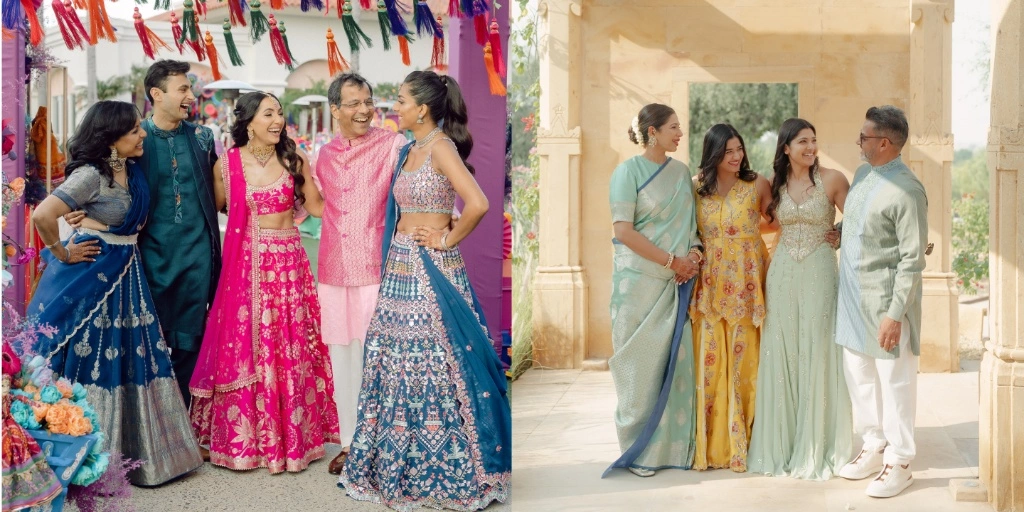
Image Source: Styl Inc
Coordinating a loose family palette that holds across multiple festivals
Family styling does not have to mean identical outfits. In fact, coordinated colours often look more natural and photograph beautifully.
Choose a broad palette and let each person interpret it differently. For example, one person could wear mustard, another ivory, another green, and another a small red accent. The outfits will feel connected without looking like uniforms.
For Ganesh Chaturthi, softer colours and comfortable fabrics may work well. For Diwali, you can bring in richer colours, metallics, or more embellished details. The same palette can be adapted across different festivals without making everyone wear the same shade.
If you are coordinating a family photo, think about the overall balance rather than matching every outfit. Too many identical colours can make the look feel flat, while a mix of complementary shades creates more visual interest.
Adjusting formality and comfort for outdoor events like Ganesh visarjan versus indoor Diwali parties
Outdoor celebrations require a different approach to indoor events. For Ganesh visarjan, choose breathable fabrics, comfortable footwear, and outfits that allow movement. For a Diwali party, opt for more structured silhouettes, statement accessories, and dressier fabrics.
If you are coordinating outfits for children, comfort should be a priority. Choose fabrics that are easy to move in and avoid accessories that may become uncomfortable during long celebrations. For older family members, consider easy-to-wear silhouettes, comfortable footwear, and lightweight fabrics. A festive outfit should make it easier to participate in the celebration, not create extra discomfort. It is also important to consider the time of day. Daytime celebrations may call for lighter fabrics and softer colours, while evening events can accommodate richer tones, metallics, and more dramatic accessories.
Involving kids in festive dressing without overcomplicating it
Kids’ festive outfits can be colourful, playful, and comfortable. Instead of buying a new outfit for every festival, you can choose a few versatile pieces and style them differently.
A simple kurta can work for Ganesh Chaturthi, Navratri, and Diwali. A lehenga skirt can be paired with different tops. A festive jacket can transform an everyday outfit into something more celebratory. Let children have a say in colours and accessories. If they enjoy what they are wearing, they are more likely to feel comfortable and participate in the celebration. For younger children, avoid outfits with too many layers, heavy embellishments, or accessories that may get in the way of movement. Comfortable footwear and breathable fabrics can make a big difference, especially during long family gatherings.
How Styl Inc. Plans Festive Season Styling End to End
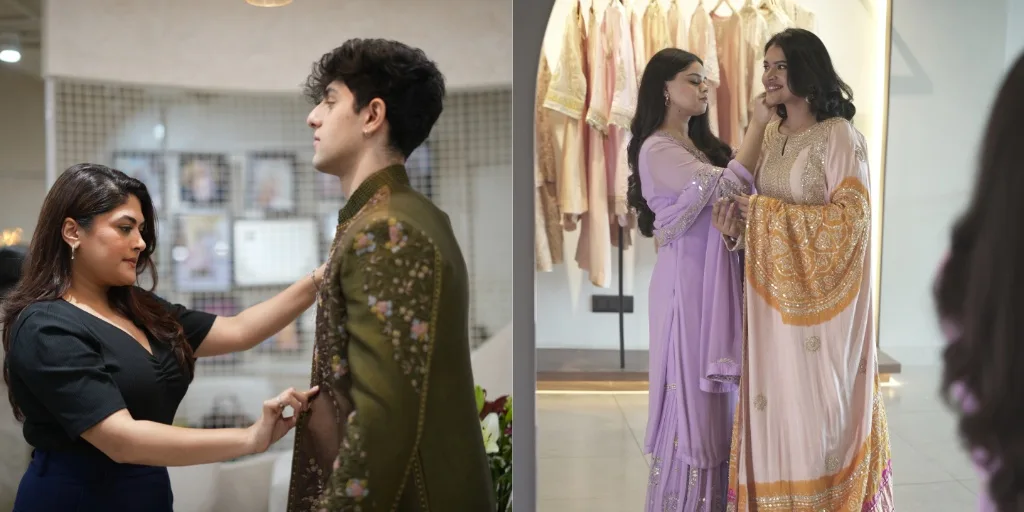
Image Source: Styl Inc
Planning festive season styling as one wardrobe, rather than a series of separate shopping trips, makes the process much easier. Styl Inc. approaches the season with this bigger picture in mind, helping clients create a wardrobe plan that works across multiple celebrations.
Styl Inc. begins by understanding the occasions, personal style, comfort preferences, and existing wardrobe. From there, the focus is on identifying versatile pieces, building a colour direction, and choosing outfits that can be re-styled across the season.
Instead of buying a completely new look for every festival, the aim is to create a wardrobe that feels cohesive and practical. A saree may work for Ganesh Chaturthi and Diwali. A kurta set may work for Navratri and a family gathering. A statement blouse can take an existing outfit and make it feel fresh and new.
Budget planning is also an important part of the process. When the season is planned upfront, it becomes easier to decide where to invest, where to re-style, and where to keep things simple.
Whether you are planning your own festive wardrobe or coordinating outfits for the whole family, the goal is to make the season feel exciting rather than overwhelming.
Ready to plan your festive wardrobe? Book your festive season styling consultation with Styl Inc.
Until then, keep it styl’ish,
Lakshita Vohra Manchanda
No Comments