
How to Brief Your Stylist: By Ritual, Mood & Destination

Last Updated on October 16, 2026 by gradienteye
Before a stylist can build a mood board, shortlist outfits, or ask about your budget, they need three things from you that have little to do with outfits directly: what rituals your wedding includes, where it’s happening, and the mood you want for the celebration. These three inputs form the foundation of a useful styling conversation. When they are clear from the beginning, every outfit decision that follows has context. Without that clarity, even the most beautiful moodboard can feel disconnected from the actual wedding.
This is especially important for Indian weddings, where a single celebration can include several days, multiple ceremonies, regional traditions, different venues and completely different dress codes. A beach wedding in Goa does not need the same styling logic as a winter wedding in Jaipur. Meanwhile, a Bengali wedding calendar cannot simply be reduced to “mehendi, haldi, sangeet and wedding. A bride who wants a romantic, intimate celebration needs a different styling language from one planning a maximalist, old-world palace wedding.
This guide explains how to brief your stylist by ritual and destination, while translating your personal mood into information they can actually work with. Think of it as the context-setting stage of wedding outfit planning, the part that happens before the first moodboard is built.
For the moodboard, budget, and fitting-feedback side of briefing, see How to Brief Your Stylist: Communicating a Clear Vision.
Why Context Comes Before the Moodboard
Couples often think a moodboard is where wedding styling begins. You collect screenshots, save Instagram posts, send Pinterest references, and tell your stylist, “This is the vibe.” But a stylist cannot accurately interpret a vibe without knowing what that vibe needs to fit into. As a result, these three inputs allow a stylist to make decisions instead of simply collecting references.
- Rituals: What exactly is happening, and in what order?
- Destination: Where is it happening, and what are the physical conditions?
- Mood: How do you want the wedding to look and feel?
Together, these three inputs form the first version of your styling brief for the destination wedding.
The three inputs a stylist needs before styling can even start
Begin with your complete ritual calendar, including every ceremony, family gathering, procession, puja, lunch, welcome dinner or smaller event where styling may matter. The destination comes next: note whether the wedding is taking place in your home city, another Indian city, a resort, a beach, the hills or an international location. Your mood completes the foundation, giving your stylist a clearer idea of how you want the wedding to look and feel.
“Elegant” is a start, but it is not enough. Your stylist needs to understand whether elegant means minimal and architectural, romantic and soft, traditional and regal, or modern with restrained embellishment. These three inputs allow a stylist to make decisions instead of simply collecting references.
Why “I like this lehenga” is not enough
Saving a beautiful outfit is easy. Explaining why you like it is much more useful.
Perhaps the silhouette is what catches your attention. The muted colour might be the real reason you saved the image, or you may simply love the way the fabric moves. In some cases, you may even like the overall feeling without wanting the exact outfit.
Without that context, an outfit reference can easily become a literal instruction.
For example, you might send ten heavily embroidered bridal lehengas because you love their colour palettes and photography. If your actual preference is for muted tones and an old-world atmosphere, your stylist may otherwise interpret the references as a request for heavy embroidery.
That is why a good wedding stylist brief by function does not simply say what you like. Instead, it explains why you like it and where that aesthetic belongs within your wedding.
How this fits alongside your wider styling brief
This context-setting process does not replace conversations about budget, designers, measurements, shopping preferences, fitting feedback or your existing wardrobe. Instead, it comes before those discussions.
Think of the process as a foundation:
Ritual → Destination → Mood → Outfit direction → Moodboard → Budget → Shopping → Fittings → Final styling
Once the first three elements are clear, the remaining decisions become much easier to organise. Your stylist has a better understanding of what each outfit needs to achieve, where it will be worn and how it should contribute to the overall wedding story.
Briefing by Ritual: Mapping Your Actual Function Calendar
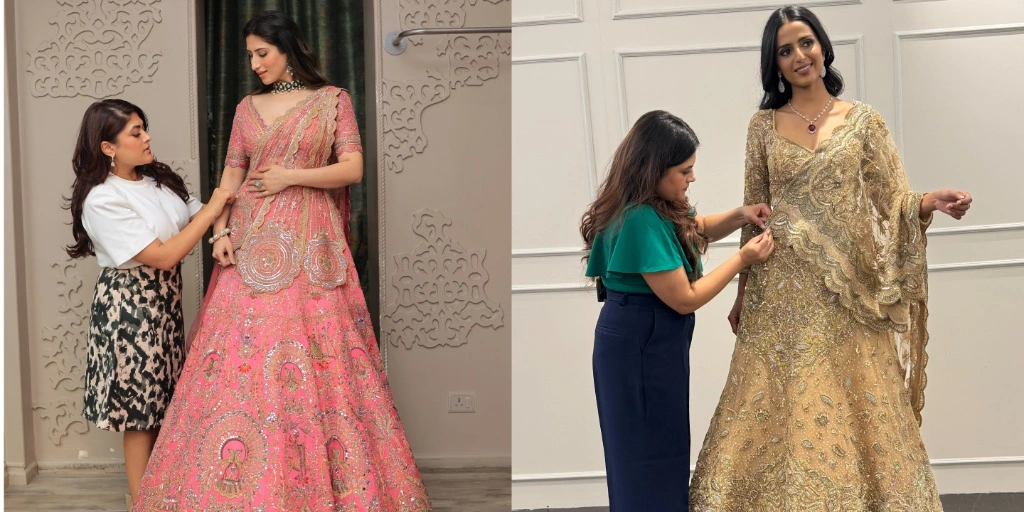
Image Source: Styl Inc
The first step in a wedding ritual-wise styling brief is to stop thinking about the wedding as one event. It is a series of moments. While some may be large and photographed extensively, others could last only twenty minutes and involve immediate family. Certain ceremonies, meanwhile, may have strict cultural or religious requirements, while others are relaxed gatherings where you have complete freedom.
List every function and ritual before discussing outfits
Create a chronological list of every event. For example:
Day 1
- Family welcome
- Mehendi
- Cocktail evening
Day 2
- Pithi
- Lunch
- Sangeet
Day 3
- Wedding ceremony
- Vidaai
- Reception
But your actual calendar may be entirely different.
Perhaps there is a morning puja before the mehendi. Perhaps your family follows a regional ceremony that guests do not attend. Perhaps there is a temple visit, a haldi procession or a post-wedding lunch. Include it. This is one of the most important parts of a wedding styling checklist because smaller rituals often have practical or cultural styling requirements that become difficult to accommodate when they are remembered at the last minute.
Why regional and community-specific rituals matter
Indian weddings cannot be styled effectively using a generic function template.
Pithi, for example, is not simply another name for Haldi. Depending on the family and community, its ritual, setting, participation and dress expectations can differ.
Regional traditions add another layer. A Bengali wedding may include ceremonies such as Ashtamangala, while a Gujarati wedding may include Garba or other pre-wedding traditions with their own cultural and visual language.
Punjabi, Marwari, South Indian, Maharashtrian, Kashmiri, Assamese and other wedding traditions can also introduce rituals that fundamentally change the styling brief.
For that reason, your stylist should know what the ritual actually involves, rather than only seeing its name on a calendar.
If a ceremony has a specific traditional garment, jewellery expectation, seating arrangement or religious significance, mention it in the initial brief.
Flag rituals with practical dress constraints
Some ceremonies are beautiful but not particularly outfit-friendly.
For example, rituals involving turmeric, flowers, water or other materials may not be the ideal setting for an extremely delicate outfit. Ceremonies involving fire can also require consideration of sleeve volume, dupatta placement and fabric movement. Meanwhile, seated ceremony can change how a lehenga, saree or dupatta feels and photographs over several hours.
Tell your stylist these things upfront. A useful ritual entry could look like:
Pithi — 11 AM — Outdoor — Family only — Turmeric application — Hot weather — Casual festive mood — Movement important — Outfit should be easy to clean
That single line tells your stylist significantly more than “Haldi outfit.”
Give your stylist a written, sequenced list
Do not rely entirely on a verbal explanation. Wedding planning involves dozens of conversations. Details that feel obvious to you may not remain obvious weeks later. A written ritual calendar gives your stylist one reference document they can return to while building the styling plan. It also makes gaps easier to spot. If you have listed the sangeet, wedding and reception but forgotten a morning ceremony, the omission becomes obvious before shopping begins.
Briefing by Destination: Venue, Climate and Setting
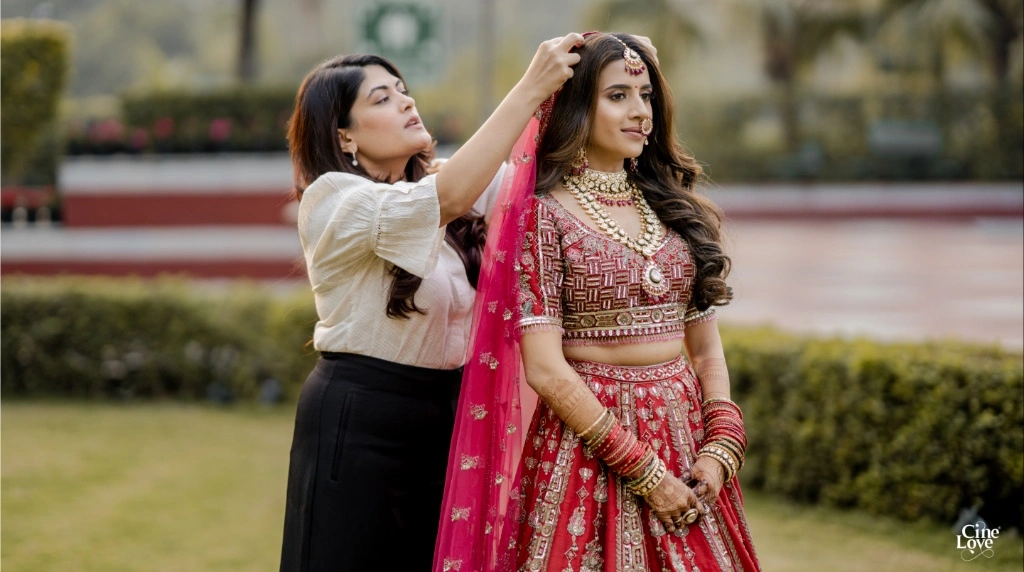
Image Source: Styl Inc
Once you map your ritual calendar, the next layer is the destination. Planning outfits for destination weddings in India requires more than choosing clothes that look good in photographs. The destination affects fabric, layering, footwear, accessories, logistics and sometimes even the silhouette. Your stylist needs to know where the celebration is taking place and what conditions to expect.
Home city, another Indian city or an international destination
Start with the broadest information. Is the wedding happening:
- In your home city?
- In another Indian city?
- At a resort or hotel?
- At a private property?
- On a beach?
- In the mountains?
- In a heritage venue?
- Outside India?
Each creates a different styling context. For instance, a winter palace wedding in Jaipur may support structured fabrics, heavier embroidery and dramatic layering. By comparison, humid beach celebrations call for lighter fabrics, breathable construction and footwear that can handle the terrain. Mountain destinations introduce another consideration: evening temperatures may require a beautiful layering solution. International weddings bring additional factors, including local weather, customs, luggage restrictions, transport and the availability of emergency alterations.
Climate and season belong in the styling brief
Do not assume that your stylist will automatically know how the destination will feel on your wedding date. Instead, mention the month, expected temperatures and whether the celebration will take place primarily indoors or outdoors.
For a summer wedding, discuss:
- Breathability
- Fabric weight
- Sweat management
- Layering
- Makeup and hair considerations
- Outdoor exposure
Winter celebrations may require a different approach. Consider evening temperatures, shawls and outer layers, full-sleeve options, structured fabrics and jewellery that works comfortably with additional layers.
Humidity creates another styling consideration. Lightweight, breathable fabrics may become more practical than heavily embellished pieces, particularly for ceremonies lasting several hours outdoors. Rather than choosing between aesthetics and comfort, discuss how both can work together from the beginning.
Indoor versus outdoor changes the styling equation
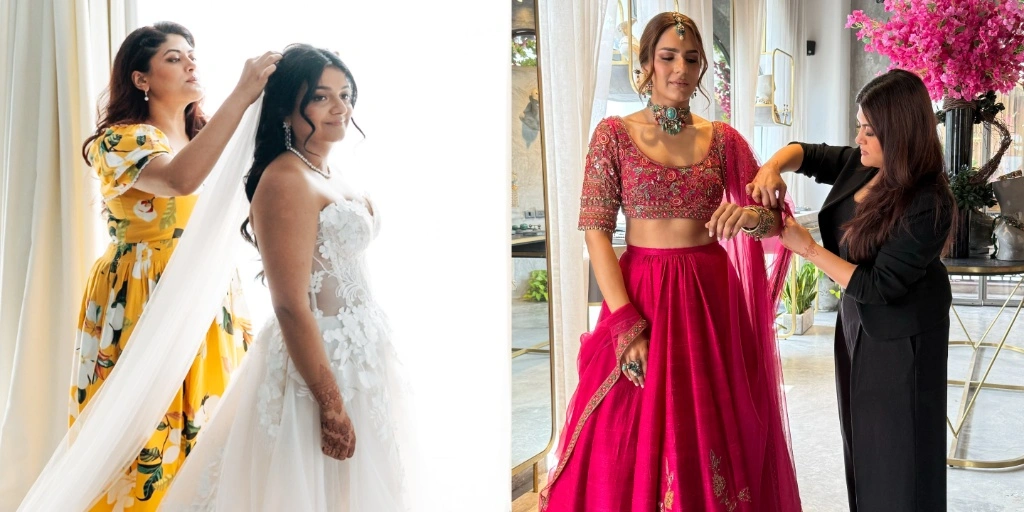
Image Source: Styl Inc
The venue’s physical setting matters just as much as its location.
Ask yourself:
Where will I actually be standing, walking, sitting and dancing?
An indoor ballroom gives you different styling freedom from a lawn ceremony. A beach ceremony introduces wind and sand. A garden sangeet may require footwear that works on grass. A palace venue may have stairs, courtyards and long walking distances. An outdoor evening wedding may require a layer that becomes part of the look rather than an emergency addition. These details belong in the initial brief for destination wedding styling.
Destination weddings also create logistical constraints
Destination styling is not only about aesthetics.
It is also about getting everything there safely.
Consider:
- How many outfits are travelling?
- Who is carrying the jewellery?
- Which garments need special packing?
- Are delicate pieces being shipped?
- How much luggage is practical?
- Does an outfit need steaming on arrival?
- Are alterations possible at the destination?
- Which pieces need to be finalised earlier?
- Is there a backup for important garments?
A stylist planning a local wedding may have access to last-minute fittings and alterations. A destination wedding may not offer the same flexibility.
This is why briefing a stylist for a destination wedding should happen early.
Briefing by Mood: Translating a Vague Vibe into Something Usable
Ritual tells your stylist what is happening. Destination tells them where it is happening. Mood tells them how it should feel. This is often the most difficult part of the conversation.
“I want it to feel special” is not a styling brief
Most couples know how they want their wedding to feel, but struggle to describe it.
You may say:
“I want it to be elegant.”
“I want it to feel luxurious.”
“I want something modern.”
“I don’t want it to look too traditional.”
These are useful starting points, but they need another layer.
Ask yourself:
What does “luxurious” mean to me?
Does it mean rich jewel tones and intricate embroidery? Or does it mean ivory, clean tailoring and very little visible embellishment? Does “modern” mean contemporary silhouettes? Or does it mean traditional garments styled with unexpected accessories? This is how you turn how to explain your wedding vibe to a stylist into something actionable.
Useful mood language and what it can imply
Regal
A regal mood may suggest rich textiles, structured silhouettes, dramatic jewellery, traditional techniques, deep colours and a sense of grandeur. It does not necessarily mean “more embroidery.”
Minimal
Minimal styling often relies on silhouette, fabric, colour and proportion rather than decoration. A minimal wedding aesthetic may involve clean lines, tonal palettes, restrained jewellery and carefully selected details.
Romantic
Romantic styling can lean into softness, movement, delicate embellishment, floral references, pastel or muted palettes and fluid silhouettes.
Fusion
A fusion aesthetic creates room to combine traditional and contemporary elements. That might mean a traditional textile with a modern blouse, an unconventional drape or contemporary accessories with an otherwise classic outfit.
Old-money
“Old-money” is increasingly used as a shorthand, but your stylist still needs to know what you mean by it. Perhaps you are imagining heritage architecture, muted colours, heirloom jewellery, classic tailoring and understated luxury. In that case, simply sending an “old-money” Pinterest board may not be enough. Explain the visual references behind it.
Maximalist
Maximalism can involve colour, texture, jewellery, embroidery, layered accessories or dramatic silhouettes. But even maximalism needs editing. The stylist needs to know what you want to maximise. Colour? Jewellery? Print? Embroidery? Silhouette?
Use references outside fashion
One of the most effective ways to describe your wedding aesthetic is to stop looking only at wedding outfits.
Share references from:
- Films
- Architecture
- Interiors
- Art
- Travel
- Vintage photographs
- Flowers
- Table settings
- Textures
- Jewellery
- A specific decade
- Hotel interiors
- Landscapes
Perhaps your wedding mood is inspired by a Mediterranean villa. Perhaps you love the muted palette of a particular film.
Perhaps you want the grandeur of a heritage haveli without making the outfits heavily traditional. These references give your stylist access to the emotional and visual language behind your choices. That can be more useful than sending twenty nearly identical lehenga screenshots.
Decide whether the mood stays consistent or evolves
Not every function needs to look identical. In fact, the wedding wardrobe can become more interesting when the mood evolves intentionally. For example:
Mehendi: playful, colourful, relaxed
Sangeet: glamorous, energetic, dramatic
Wedding: timeless, traditional, regal
Reception: modern, polished, sophisticated
The key is to explain the relationship between these moods. Your stylist should understand that the outfits are different because the functions are different — not because the overall wedding aesthetic is inconsistent. This is where a function-wise wedding styling brief becomes especially valuable.
Bringing Ritual, Destination and Mood Together Into One Brief
Once you have these three inputs, combine them into one document. This should become your stylist’s foundation.
A simple format can be:
| Function | Ritual | Destination/Setting | Climate | Mood | Practical Notes |
| Mehendi | Mehendi ceremony | Outdoor lawn | Warm | Playful, colourful | Easy movement |
| Sangeet | Performances | Indoor ballroom | Cool evening | Glamorous | Dance-friendly |
| Wedding | Main ceremony | Outdoor heritage venue | Evening | Regal, timeless | Long ceremony |
| Reception | Dinner | Indoor | Cool | Modern, sophisticated | Comfortable for mingling |
This is your wedding styling checklist at the context level. You can later add outfit references, designers, budgets and accessories, but this first version should focus on what each event actually requires.
Why this document should exist before the moodboard
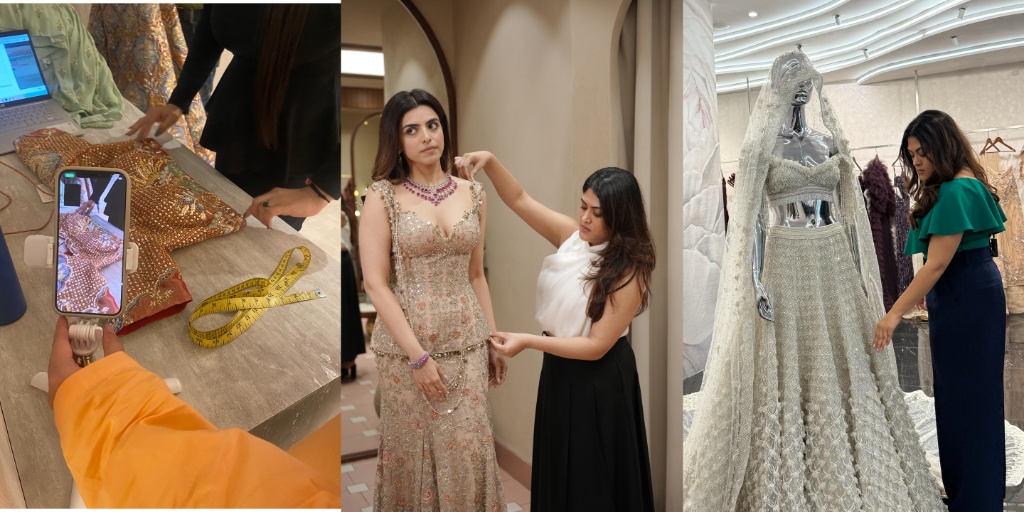
Image Source: Styl Inc
A moodboard shows possibilities. However, a context document explains requirements. If your stylist sees the moodboard first, they may begin interpreting your wedding through the images you selected. If they see the ritual, destination and mood framework first, those images can be interpreted within the right context. That distinction matters. For example, a heavily embellished lehenga may look beautiful in isolation. But if the wedding ceremony is outdoors in a hot climate and lasts three hours, your stylist may need to reinterpret the idea rather than replicate the reference.
Also read: https://styl-inc.com/blogs/handloom-sarees-for-diwali-2026/
Hand it over as the foundation
Think of this document as the brief that everything else sits on.
Your stylist can use it to:
- Build moodboards
- Suggest silhouettes
- Plan function-wise wardrobes
- Identify practical concerns
- Create shopping priorities
- Coordinate colours
- Plan accessories
- Sequence fittings
- Flag missing pieces
- Build a destination packing strategy
The more complete the context is at the beginning, the fewer decisions need to be reinvented later.
Common Mistakes When Briefing by Context
Even well-planned weddings can develop styling problems because the context was never formally documented.
Forgetting a smaller regional ritual
One of the most common mistakes is only briefing the stylist on the “headline” functions. A smaller family ritual can suddenly become important two weeks before the wedding. If it has a cultural, religious or family-specific requirement, include it from day one.
Ignoring climate until the outfits arrive
A destination can look beautiful in photographs and still be challenging to dress for. Instead of waiting until arrival, discuss the destination’s climate during the initial briefing. Do not wait until you discover that an outfit planned for an outdoor afternoon ceremony is too heavy for the weather.
Describing mood only through outfits
If every reference you send is another bride wearing another lehenga, your stylist may struggle to understand the aesthetic underneath the clothing. Beyond fashion, add references from interiors, architecture, film, art, flowers and travel.
Tell them what you want the wedding to feel like.
Treating the brief as a one-time conversation
Your wedding brief should be a living reference document. As the venue changes, update it. If a ritual shifts from outdoors to indoors, make sure to update it. If the season or timing changes, revisit the climate notes. If your mood evolves, communicate that before the stylist begins final selections. A good brief is not something you send once and forget. It is something the styling process can return to.
How Styl Inc. Builds the Ritual, Destination, and Mood Brief
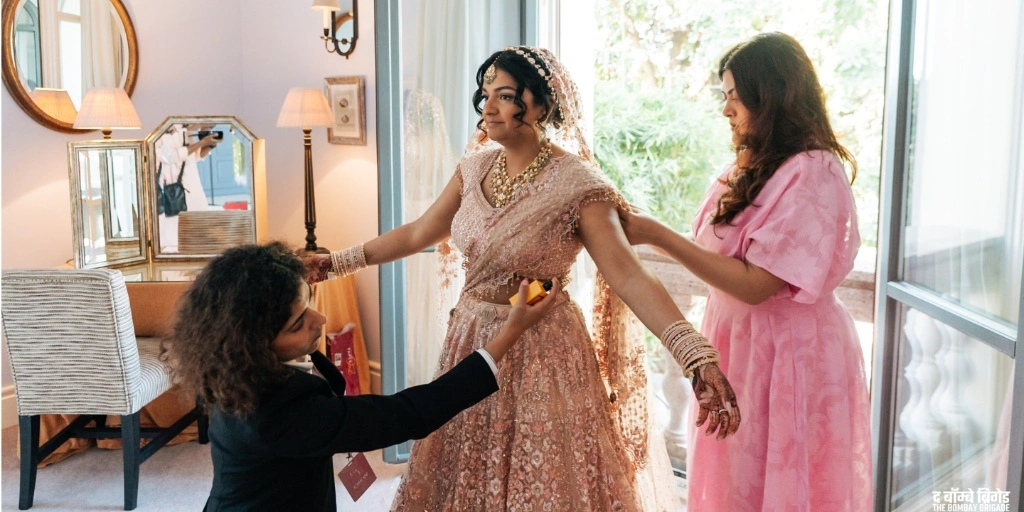
Image Source: Styl Inc
Styl Inc. approaches wedding styling by first understanding the context in which every outfit will exist. The process begins by mapping the full ritual calendar, including the smaller ceremonies and family-specific traditions that can influence styling. The destination is then considered alongside practical constraints such as venue type, climate, indoor and outdoor settings, travel and logistics.
Finally, the wedding mood is translated into concrete visual language, not just broad words such as “elegant” or “modern”, but the colours, silhouettes, textures, styling direction and overall feeling those words represent. Only after these foundations are established does the styling conversation move into moodboards, shopping and outfit selection.
The result is a styling process where each look has a reason for being there.
Your mehendi outfit is not simply different from your wedding outfit because the functions are different. It reflects the ritual, setting and mood. Your destination wardrobe is not simply a collection of beautiful clothes. It is planned around the realities of travelling, changing venues, weather and multiple days of celebrations.
And your moodboard is not simply a collection of pretty images. It becomes a visual expression of the wedding you have already defined. That is the real purpose of a strong how to brief your stylist by ritual and destination process: to give every later styling decision a clear context.
Ready to turn your wedding calendar, destination and aesthetic into a cohesive styling plan? Book your styling consultation with Styl Inc.
Until then, keep it styl’ish,
Lakshita Vohra Manchanda
No Comments