
Beyond Red: Unique Bridal Colour Palettes
Last Updated on September 4, 2026 by gradienteye
Red has carried the weight of Indian bridal tradition for generations. It is associated with love, prosperity, fertility, celebration, and auspicious beginnings, making it a natural choice for wedding ceremonies across many communities. For countless brides, a red lehenga or saree still feels timeless, deeply personal, and unmistakably bridal.
But red is not the only colour that can make a bride feel like a bride.
Today, more women in India are exploring bridal colours beyond red, choosing shades that reflect their personality while still respecting wedding traditions. From deep wine and emerald to champagne, blush, mustard, and even ivory, the modern bridal wardrobe is becoming more expressive.
The key is not to choose a colour simply because it is different. The most successful bridal palettes feel intentional. They work with your skin tone, jewellery, venue, lighting, embroidery, groom’s outfit, and the overall visual story of the wedding.
So, if you are wondering what colour should an Indian bride wear beyond the obvious red, here is how to find a shade that feels both personal and bridal.
Why Red Became the Default and Why That’s Changing
The cultural and symbolic roots of red in Indian bridal wear
Red has a long-standing place in Indian wedding traditions. Its associations with prosperity, energy, passion, fertility, and auspiciousness have helped establish it as one of the most recognisable bridal colours.
There is also a practical reason for its staying power. Rich reds pair beautifully with traditional gold embroidery, kundan jewellery, polki, zari, and other forms of Indian bridal embellishment. A red outfit naturally creates the visual richness many brides associate with their wedding day.
However, Indian bridal dressing has never been completely limited to one shade.
How regional traditions already include non-red bridal colours
Indian weddings are incredibly diverse, and bridal colours have always varied by region, community, ceremony, and family tradition. Green, yellow, pink, gold, ivory, maroon, orange, and other shades have all had a place in wedding wardrobes.
This is why choosing non red bridal lehenga styles in India does not necessarily mean abandoning tradition. In many cases, it simply means looking beyond the most common version of it.
The shift toward personal style within tradition
The modern bride is increasingly interested in creating a wedding look that feels like her rather than simply recreating a familiar bridal image.
That does not mean tradition is disappearing. Instead, personal style is being incorporated into tradition. A bride may choose a contemporary silhouette but traditional embroidery, an unusual colour with classic jewellery, or a pastel lehenga with heritage-inspired detailing.
The result is a bridal look that feels current without feeling disconnected from the occasion.
Colours With Strong Cultural Precedent Beyond Red
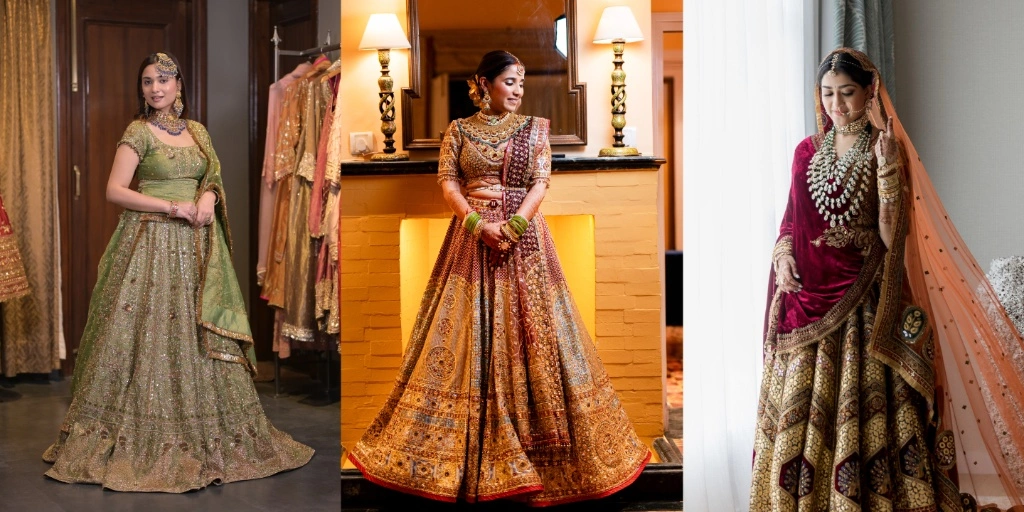
Image Source: Styl Inc
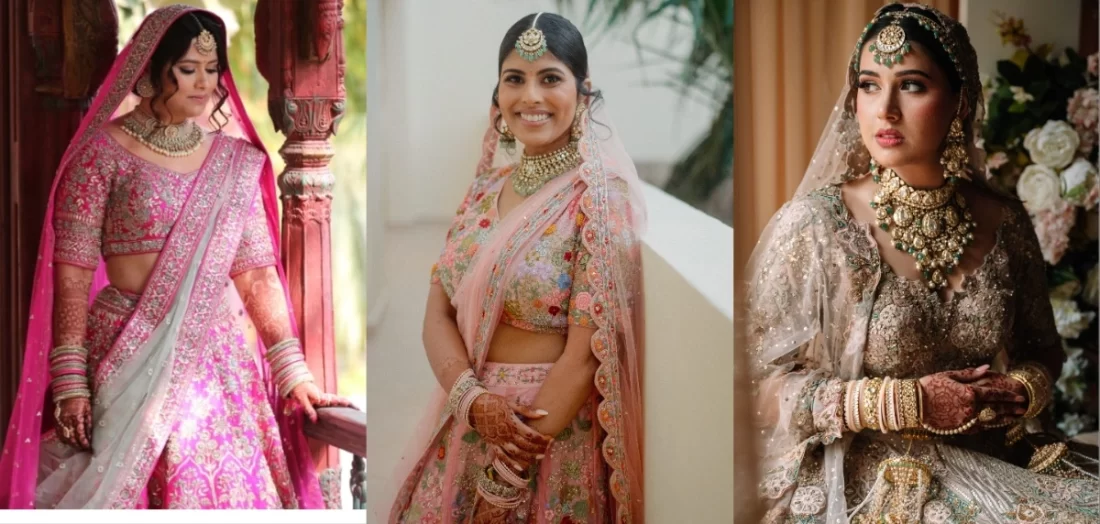
If you want an alternative to a red bridal lehenga but are worried about choosing something too unconventional, start with colours that already have a strong presence in Indian wedding dressing.
Maroon and deep wine: close enough to tradition, distinct enough to stand out
Maroon and wine are among the easiest transitions away from bright red. They retain the richness associated with traditional bridal dressing while introducing a deeper, more sophisticated mood.
A wine lehenga with antique gold embroidery can look especially striking for evening ceremonies. Maroon also works beautifully with gold, champagne, emerald jewellery, and traditional bridal accessories.
For brides who want something different without going too far from convention, this can be a comfortable middle ground.
Gold and champagne: associated with prosperity and celebration
Gold is practically synonymous with Indian festive dressing. As a bridal colour, it can range from bright metallic gold to muted champagne, antique gold, and soft beige-gold. A champagne lehenga covered in tonal embroidery can create an elegant, luxurious look without relying on a saturated colour. It also gives jewellery more room to shine. For a bride who prefers understated glamour, this is one of the strongest unique wedding colour palettes for brides.
Green: significant across several traditions
Green has a strong place in Indian festive and wedding dressing. It can symbolise prosperity, new beginnings, fertility, and harmony, depending on the cultural context. The beauty of green is its range. A bride can choose everything from deep bottle green and emerald to mehndi green, sage, or softer muted tones. Emerald paired with gold is especially effective for a formal ceremony, while softer greens can work beautifully for daytime functions.
Deep pink and rani pink: a natural alternative to red
If you love the energy of red but want something more playful, deep pink and rani pink can be excellent choices. They retain the vibrancy expected from traditional bridal wear while feeling youthful and distinctive. Rani pink also photographs beautifully when balanced with gold or contrasting jewellery. For brides searching for bridal colour ideas for 2026 in India, rich pinks are a particularly easy way to experiment without making the outfit feel disconnected from tradition.
Unconventional but Increasingly Popular Choices
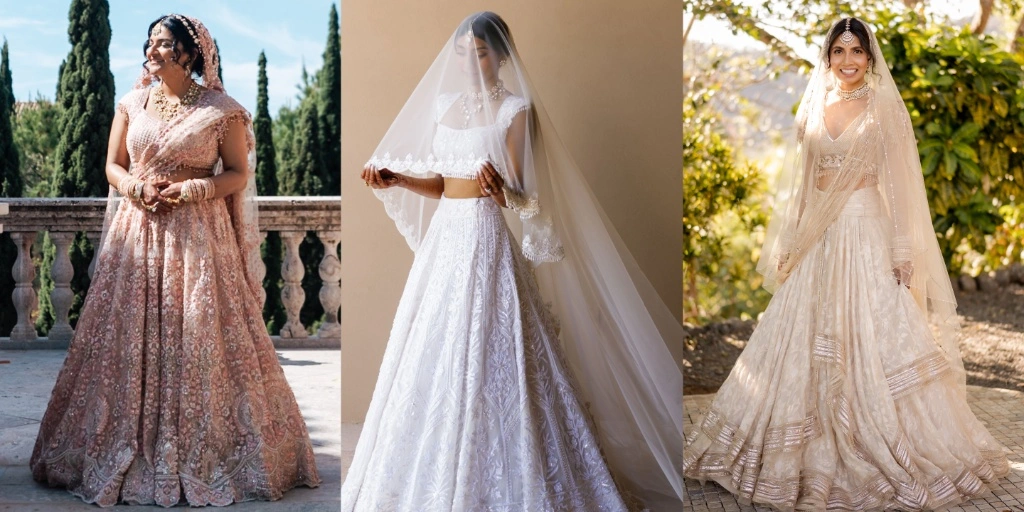
Image Source: Styl Inc
For brides who want to make a stronger statement, there are plenty of colours beyond the traditional spectrum.
Ivory and off-white with heavy embellishment
Ivory and off-white bridal outfits can look incredibly sophisticated when paired with substantial embroidery. Think intricate gold work, silver embellishment, pearls, sequins, or traditional motifs. The secret is richness. A very plain ivory outfit can sometimes look more like occasionwear than bridalwear. But an ivory lehenga with detailed craftsmanship, a statement dupatta, and bridal jewellery can look every bit as ceremonial. This is also a versatile palette because ivory works well with almost every metallic and many jewel tones.
Mustard and deep yellow
Yellow is already closely connected with Indian wedding celebrations, particularly haldi ceremonies. Taking it into the main bridal wardrobe creates a brighter, more unconventional look. Mustard, turmeric, marigold, and deep yellow can work particularly well for daytime weddings. Pairing the colour with antique gold jewellery and contrasting embroidery keeps the outfit sophisticated rather than overly casual.
Emerald and jewel-toned blues
Jewel tones are an excellent option for brides who want drama without red. Emerald, sapphire, cobalt, teal, and deep blue can create a striking bridal silhouette, especially for evening celebrations. They also provide a beautiful backdrop for diamonds, polki, pearls, and gold jewellery. A deep blue lehenga with metallic embroidery, for example, can look regal without relying on conventional bridal red.
Blush and dusty rose pastels
Pastels have become a popular choice for modern Indian brides, especially for outdoor weddings, daytime ceremonies, and contemporary venues. Blush, dusty rose, powder pink, lavender, peach, and soft mauve can create a romantic aesthetic. However, the challenge with pastels is ensuring the outfit still feels substantial enough for the ceremony. Heavier embroidery, layered fabrics, textured embellishment, and statement jewellery can give a pastel bridal outfit the visual weight it needs.
How to Choose a Bridal Colour Based on Skin Tone
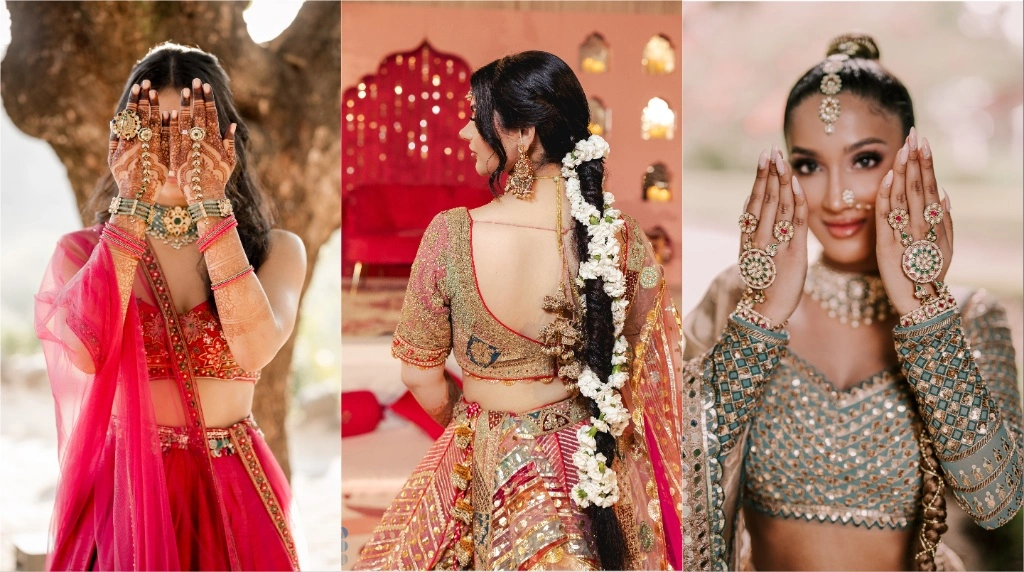
Image Source: Styl Inc
Finding the right bridal colour by skin tone is less about following rigid rules and more about understanding undertones, contrast, and lighting.
Warm undertones: colours that bring out richness
If your skin has warm or golden undertones, shades such as maroon, wine, mustard, rust, emerald, warm pink, peach, coral, and antique gold can complement your complexion beautifully. Warm metallic embroidery can also add depth without making the overall look feel too harsh. However, don’t treat this as a strict colour chart. The exact fabric, finish, embroidery, makeup, and lighting can dramatically change how a shade appears.
Cool undertones: jewel tones and deeper shades
Cooler undertones can work particularly well with shades such as sapphire, royal blue, emerald, berry, plum, magenta, dusty rose, and cooler pinks. Silver, platinum, and cooler-toned embellishments can also create contrast. But once again, the goal is not to restrict yourself. If you love a warm colour, styling can often make it work beautifully.
Why lighting matters as much as the swatch
One of the biggest mistakes brides make is choosing a colour after looking at it only indoors. Your bridal outfit may be photographed in direct sunlight, under warm venue lights, beneath stage lighting, and with flash photography. A shade that looks soft in a showroom can look completely different in wedding photographs. Always test the actual fabric in multiple lighting conditions before finalising your colour.
Balancing Personal Style With Family Expectations
Choosing a non-red bridal outfit can sometimes create more discussion than choosing the outfit itself.
Start the conversation early
If you know you want something different, discuss it with your family before the shopping process begins. Presenting a non-red outfit after everyone has already imagined you in traditional red can create unnecessary resistance. Instead, explain why the colour matters to you and show examples of how traditional embroidery, jewellery, and styling can keep the overall look bridal.
Make the outfit visibly bridal
Colour is only one part of the equation. A deep green lehenga with traditional zardozi, a champagne outfit with intricate embroidery, or a blush lehenga with a heavily embellished dupatta can still look unmistakably bridal. If family members are concerned that an unconventional colour will look too simple or Western, craftsmanship can help bridge that gap.
Use compromise when it makes sense
You don’t always have to choose between completely traditional and completely unconventional. A bride could wear a non-red Nikah or wedding-day outfit while incorporating a red dupatta, red bridal bangles, red accents in the embroidery, or traditional red footwear. Another option is to reserve red for a different function while wearing your preferred colour for the main ceremony.
Know when to hold firm
Your wedding outfit is ultimately personal. If you have thoughtfully considered your colour, tested it in different lighting, and know that it represents your style, you do not need to choose red simply because it is expected. At the same time, a small styling adjustment that keeps your family comfortable does not necessarily compromise your vision.
How Colour Choice Changes Across Functions
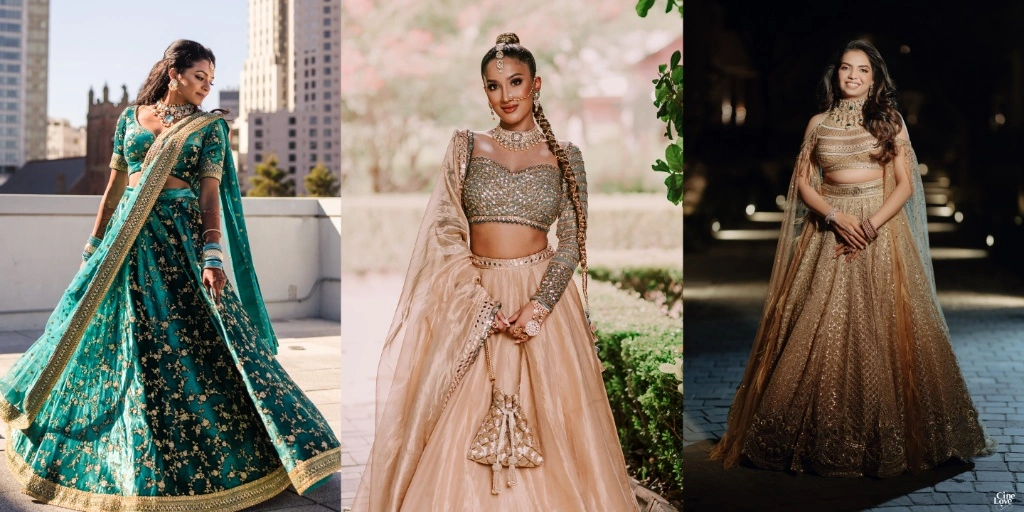
Image Source: Styl Inc
Mehndi: the most freedom to experiment
The Mehndi is often the perfect occasion for brighter and more playful colours. Yellow, green, orange, pink, coral, lilac, and even colour-blocked combinations can work beautifully. Since the function itself is generally colourful and energetic, you have more freedom to experiment.
Main ceremony: where tradition carries the most weight
The main ceremony is usually where cultural and family expectations matter most. If you want a non-red look here, consider choosing a colour with traditional associations such as green, pink, gold, maroon, or deep wine. This allows you to express your personal style while maintaining a familiar bridal aesthetic.
Reception or Walima: an easy place to go bold
The reception or Walima can often be the ideal occasion for a dramatic departure from traditional bridal colours. Deep blue, emerald, champagne, silver, ivory, plum, or monochromatic jewel tones can create a sophisticated evening look.
Common Mistakes When Choosing a Non-Red Palette
The biggest mistake is choosing a colour solely because it looked beautiful in someone else’s wedding photograph. Your skin tone, venue, lighting, jewellery, makeup, and photography style are all different. Another common mistake is ignoring lighting. Always look at the fabric in daylight, indoor lighting, and with flash photography.
You should also consider how your outfit will photograph next to the groom. You don’t necessarily need matching colours, but the two outfits should feel visually balanced. The décor matters too. An ivory outfit against a pale ivory backdrop may lack contrast, while a deep jewel tone can stand out beautifully.
Finally, don’t ignore family concerns. If the issue is simply that a colour does not “feel bridal” to them, show them how embroidery, jewellery, silhouette, and draping can transform the overall effect.
How Styl Inc. Helps Brides Choose the Right Colour Palette
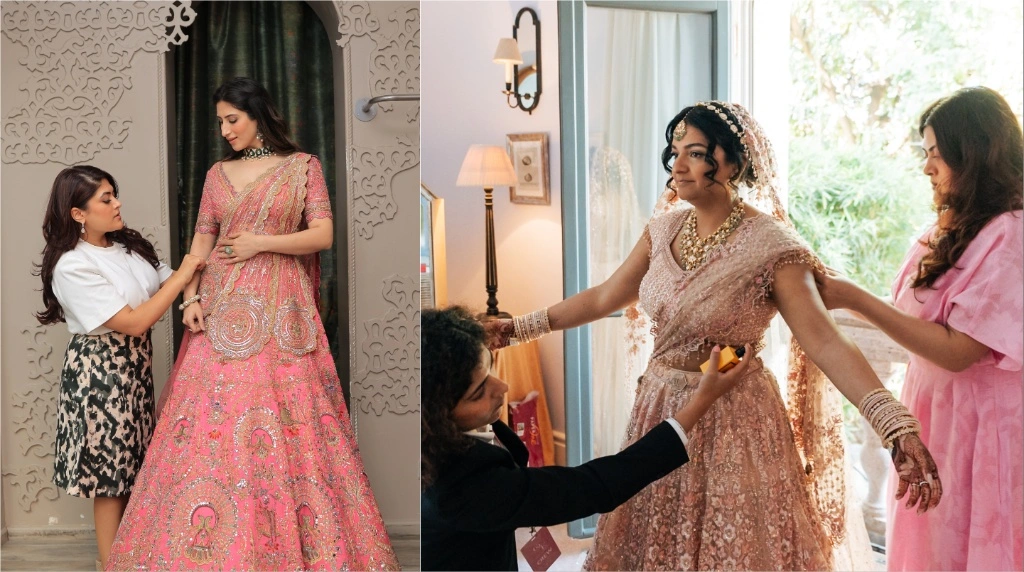
Image Source: Styl Inc
Choosing a wedding colour should be about more than picking a shade from a fabric catalogue. Styl Inc. approaches bridal colour styling as part of the larger wedding visual story. Colour choices are considered alongside skin tone, ceremony lighting, venue décor, jewellery, the groom’s outfit, and the outfits of the wider wedding party.
The goal is to help brides identify a palette that feels personal while still looking intentional and appropriate for the occasion. Whether you are drawn to a jewel-toned lehenga, a pastel bridal look, deep wine, champagne, emerald, or something completely unexpected, the right styling can make the colour feel unmistakably yours. Book your bridal colour and styling consultation with Styl Inc. and create a wedding palette that feels like you.
Until next time, keep it styl’ish,
Lakshita Vohra Manchanda
No Comments