
Canadian-Indian Wedding Styling Guide: Rituals for a Diaspora Wedding
Last Updated on November 7, 2026 by gradienteye
A Canadian-Indian wedding brings together the richness of Indian traditions and the realities of planning a celebration across borders. With family travelling between India and Canada, limited shopping windows, different vendor landscapes, and several ceremonies often scheduled within a few days, wedding styling requires careful planning. The rituals may remain rooted in family traditions, but the way couples organise their wardrobes often looks very different.
For many couples, shopping for bridal lehengas, groom’s sherwanis, jewellery, and family outfits involves coordinating with Indian designers remotely or fitting everything into a short India visit. Add Canadian weather, international shipping, customs, and alterations to the mix, and even choosing an outfit becomes a logistical decision.
This Indian wedding styling Canada guide explores how to plan a function-wise wardrobe, adapt traditional rituals to Canadian venues, and coordinate bridal, groom, and family looks across countries. Whether you are getting married in Toronto, Vancouver, or another Canadian city, the right styling strategy can help you honour your traditions without compromising on comfort, personal style, or practicality.
How a Canadian-Indian Wedding Typically Differs from One Planned in India
Indian weddings vary across regions, religions, and families. When celebrations take place in Canada, couples often need to adapt their schedules to venue availability, travel commitments, and the availability of relatives flying in from India. These factors influence both the ceremonies and the wardrobe required for each function.
The Common Three-Day Diaspora Wedding Format
Many Canadian-Indian weddings follow a compressed three-day format, although some celebrations extend over a week or include several additional functions. A shorter schedule helps accommodate international guests, work commitments, and venue bookings.
A typical format may include:
- Day 1: Haldi and Mehndi: These functions focus on pre-wedding rituals, family gatherings, and colourful celebrations. Lightweight outfits that allow easy movement are ideal.
- Day 2: Sangeet: Music, dance performances, and family celebrations call for festive outfits that look striking under stage lighting and remain comfortable throughout the evening.
- Day 3: Wedding and reception: The main ceremony requires attire suited to the couple’s traditions, followed by a reception look that may be more contemporary or formal.
Some couples combine Haldi and Mehndi into one event, while others host a separate cocktail evening or reception. The schedule depends on family preferences, religious customs, guest availability, and venue arrangements.
This compressed format makes wardrobe planning particularly important. Brides may need multiple outfits within a short period, while grooms and family members must coordinate their looks without unnecessary repetition. A function-wise styling plan helps establish the right balance between traditional attire, statement pieces, and versatile outfits.
Adapting Jaimala, Kanyadaan, and Saptapadi to Canadian Venues
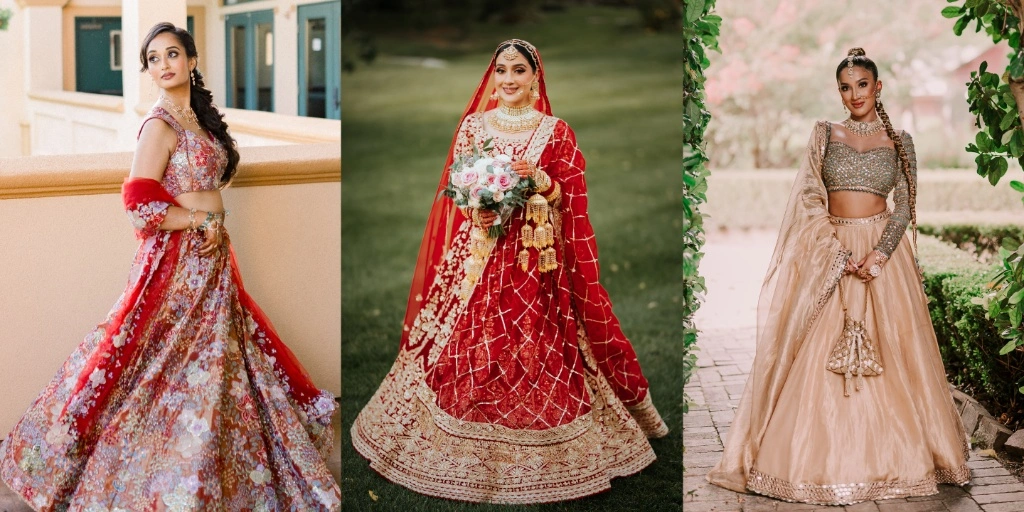
Image Source: Styl Inc
In Canada, couples can celebrate traditional Indian wedding rituals while accommodating local venue arrangements and schedules. The key is to understand the requirements of each ceremony before finalising the outfits.
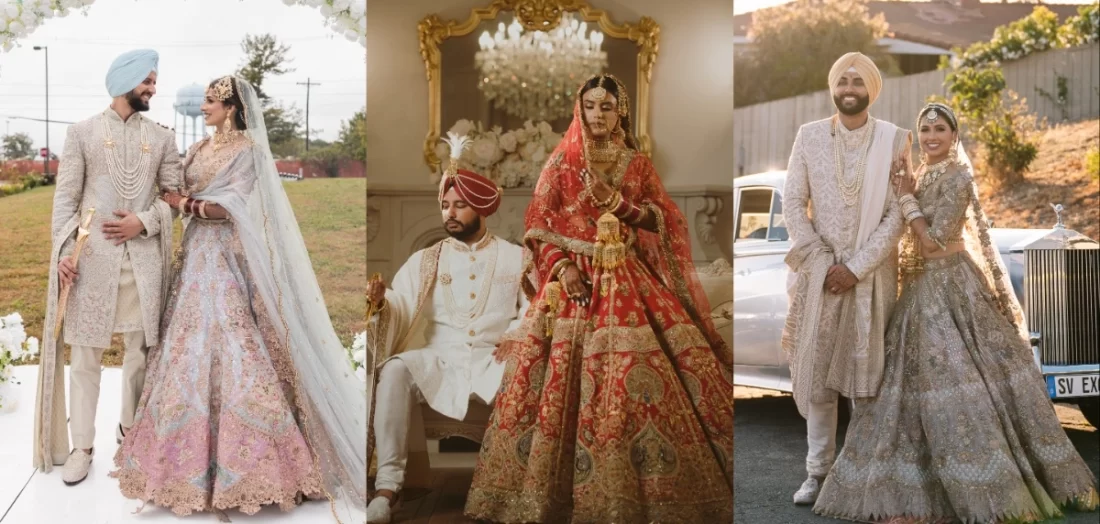
Jaimala, also known as Varmala, involves the couple exchanging garlands. Since this moment is often central to wedding photography, the bride’s neckline, dupatta placement, and jewellery should complement the ritual. The outfit should also allow comfortable arm movement and remain secure as the couple exchanges garlands.
Kanyadaan, where practised as part of a Hindu wedding ceremony, involves the bride’s parents or designated family members participating in a significant ritual. Brides may need to sit for an extended period, so a well-fitted blouse, manageable jewellery, and securely arranged dupatta can make the experience more comfortable.
Saptapadi, the ritual of taking seven steps together in many Hindu wedding traditions, requires particular attention to the lehenga’s length and footwear. A heavily embroidered hem can look beautiful but become difficult to manage if it catches underfoot. A trial walk in the complete outfit can help identify potential issues before the wedding.
Venue arrangements also matter. A hotel ballroom, banquet hall, private estate, or religious venue may have different rules regarding ceremonial spaces, seating, photography, and movement. Couples should confirm these details with their venue coordinator and officiant so their outfits work with the ceremony rather than against it.
Why Some Rituals, Like Tilak, Adapt More Easily to a Diaspora Setting
Some rituals can be incorporated into a shorter wedding schedule more easily than ceremonies requiring elaborate arrangements. Depending on family traditions, a Tilak ceremony may be organised as a relatively brief gathering or included within another pre-wedding event.
Other rituals may need additional preparation, designated spaces, or participation from several relatives. Haldi, for example, may require time for the ceremony, photographs, and clean-up, while a traditional wedding ceremony may involve multiple stages.
These differences influence styling choices. A brief gathering may require one coordinated outfit, whereas a ceremony involving dancing, walking, or sitting for long periods calls for more attention to fit and fabric.
There is no single format for every Canadian-Indian wedding. Families should establish which rituals are essential to their celebrations and plan the schedule and wardrobe accordingly.
Planning the Wardrobe Around a Compressed Timeline
For couples planning from Canada, one of the biggest challenges is completing shopping, fittings, and alterations within a limited timeframe. A short visit to India can provide access to designers, boutiques, and traditional markets, but preparation is essential to make the most of it.
Working Backward from the Wedding Date
Start with the wedding date and work backward. List every function, identify who needs an outfit, and determine which garments require customisation or specialist fittings.
Ideally, begin planning several months, particularly if the bride wants a customised lehenga or the groom needs a made-to-measure sherwani. Production timelines vary by designer, so confirm availability and delivery commitments before placing an order.
Before travelling to India, shortlist designers, collect inspiration images, establish a budget, and schedule appointments. Virtual consultations can help narrow down silhouettes, colours, embroidery styles, and shopping priorities. During the shopping trip, prioritise the most important purchases first. The main bridal outfit, groom’s wedding ensemble, and customised family looks should take precedence over accessories that can be sourced later.
Maintain a shared tracker containing order details, payments, fitting dates, alteration requirements, delivery timelines, and outstanding decisions. This makes it easier to coordinate with vendors and family members across different time zones.
What Can Be Sourced and Shipped to Canada?
Not every wedding outfit needs to travel in the same way. The decision to ship or carry an item depends on its value, size, fragility, delivery timeline, and importance to the ceremony.
Lighter outfits, spare garments, and non-urgent accessories may be suitable for shipping when purchased well in advance. However, customised clothing should be checked for fit and construction before dispatch whenever possible.
The primary bridal outfit, groom’s main ensemble, essential jewellery, and irreplaceable ceremonial pieces may be better candidates for personal carriage when practical. Travellers should check airline baggage policies and applicable customs requirements before deciding.
Keep the following considerations in mind:
- Packaging: Protect delicate embroidery, embellishments, and structured garments from crushing and moisture.
- Insurance: Check whether the carrier provides suitable cover for valuable garments and accessories.
- Delivery timelines: Allow for customs processing and unexpected shipping delays.
- Customs compliance: Review current Canadian import requirements and declare goods accurately where necessary.
- Backup planning: Keep order confirmations, vendor contact details, and photographs of essential outfits.
Shipping estimates can change, so avoid relying on a last-minute delivery for an outfit needed at the wedding ceremony.
Building Buffer Time for Customs and Alterations
An outfit arriving in Canada does not necessarily mean it is ready to wear. It may require adjustments after being tried on with the intended footwear, jewellery, and underlayers.
Plan to receive essential garments well before the first function. Brides should check blouse fit, lehenga length, dupatta placement, and comfort while sitting or walking. Grooms should test shoulder fit, sleeve length, fastening, and the overall fit of their sherwani or other formal attire.
Keep emergency essentials such as safety pins, spare hooks, fashion tape, and a small sewing kit. Identify a local alteration professional who can help with minor adjustments if needed.
A buffer between delivery and the wedding allows time to resolve problems without disrupting the celebrations.
What the Bride Should Wear, Function by Function
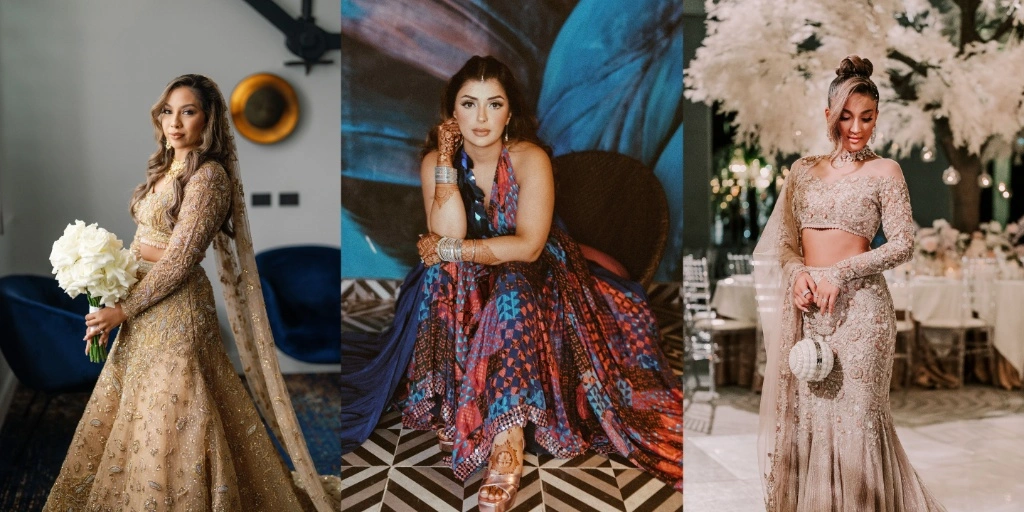
Image Source: Styl Inc
A well-planned bridal wardrobe balances tradition, comfort, photographs, and practicality. Each function can have a distinct look without requiring every outfit to be heavily embellished or difficult to transport.
Lighter, Travel-Friendly Fabrics for Haldi and Mehndi
Haldi and Mehndi often involve close family interaction, movement, and activities that may stain or crease clothing. Lightweight cotton blends, georgette, chiffon, and suitable silk blends can work well, depending on the season and event formality.
For Haldi, yellow, ivory, peach, and pastel green can complement the celebratory atmosphere. A lightweight lehenga, kurta set, sharara, or contemporary co-ord can create a festive look without unnecessary bulk. Mehndi outfits offer room for brighter greens, pinks, oranges, and contrasting colours. Since the bride may need to sit for an extended period while henna is applied, comfortable sleeves, secure fastenings, and manageable jewellery are particularly useful.
If Haldi and Mehndi take place on the same day, consider whether a second outfit is necessary. Choose garments that are easy to move in, and account for possible stains from turmeric, henna, food, and drinks.
Choosing the Statement Lehenga or Saree for the Main Wedding
The main bridal outfit is often the centrepiece of the wedding wardrobe. A traditional lehenga or saree can create a timeless look, but the choice should reflect the bride’s preferences, family customs, ceremony requirements, and venue.
When choosing a lehenga, consider embroidery placement, skirt volume, fabric weight, blouse construction, and hem length. A heavily embellished outfit may look striking in photographs, but it should still allow the bride to walk and sit comfortably throughout the ceremony. A saree offers another elegant option, particularly when its drape is secured in advance. Brides who are unfamiliar with draping may benefit from a trial with a professional draper. A pre-stitched or structured drape can also be considered if it suits the intended look and the family’s traditions.
Portability is another important consideration for NRI bridal styling. The outfit should be packed carefully, transported safely, and stored appropriately after arrival in Canada. Before finalising the look, try it with the intended jewellery, footwear, and dupatta to ensure everything works together.
Fusion Options for Canadian-Indian Brides
Many Canadian-Indian brides combine traditional craftsmanship with contemporary silhouettes. Draped gowns, sari-inspired gowns, structured lehengas, embellished capes, and modern shararas can create a distinctive look while retaining Indian design influences.
These styles can be especially suitable for receptions, cocktail evenings, or celebrations where the dress code is more flexible. A detachable cape or dupatta may also provide styling versatility, provided the construction is secure and easy to manage. However, fusion outfits should still suit the function. A gown with a long train may work beautifully for a formal reception but become inconvenient during rituals that involve walking or sitting on the floor.
The best choice is one that feels authentic to the bride. Trends can inspire, but personal style, cultural expectations, and comfort should guide the final decision.
What the Groom and Family Should Wear
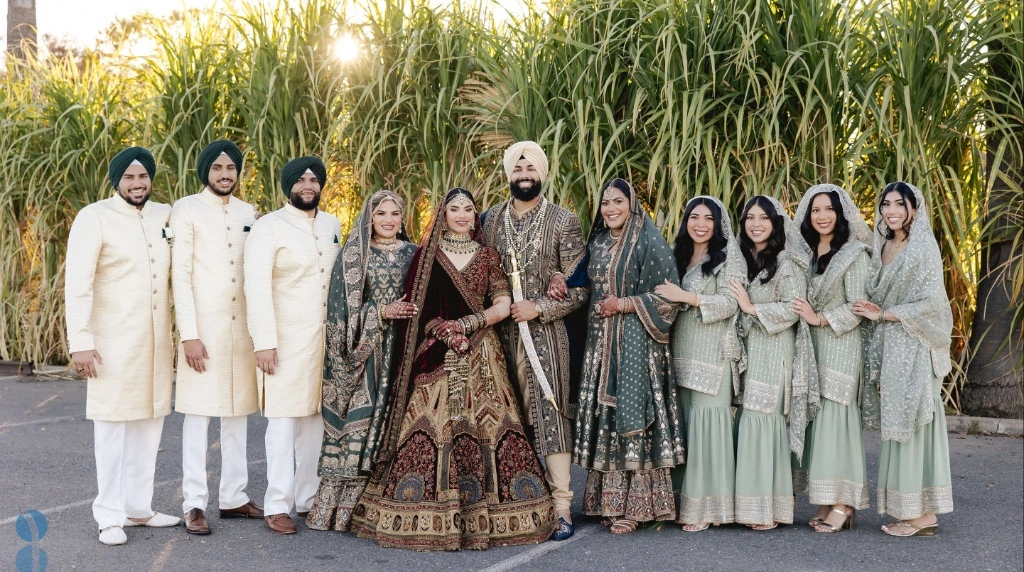
Image Source: Styl Inc
The wedding wardrobe extends beyond the couple. Groom and family styling helps create a cohesive celebration, especially when relatives are travelling from different countries or shopping independently.
Groom Wardrobe Planning Around Shipping and Timelines
Depending on the wedding traditions, the groom may choose a sherwani, achkan, bandhgala, kurta set, or another formal ensemble.
Begin by discussing the wedding schedule, colour palette, and level of formality. The groom’s outfit does not need to match the bride’s exactly; complementary colours, coordinated embellishments, or a shared design theme can create visual harmony.
For made-to-measure outfits, arrange measurements and fittings early. Remote measurements may help begin the process, but a final fitting is valuable whenever possible. Allow time for adjustments to the shoulders, sleeves, trousers, and overall length.
Consider the number of functions before purchasing multiple outfits. A versatile bandhgala or kurta set may be suitable for a smaller gathering, while a more elaborate sherwani can be reserved for the wedding ceremony.
Coordinating Extended Family Across India and Canada
Coordinating family outfits becomes challenging when relatives live in different countries and have different budgets, shopping options, and preferences.
Instead of asking everyone to wear identical outfits, create a shared colour palette and dress code for each function. Jewel tones may suit the Sangeet, while the wedding can follow a more traditional aesthetic.
A digital mood board with reference photographs, colour swatches, and outfit examples can help relatives shop independently while maintaining a consistent visual direction.
Prioritise the parents, siblings, and wedding party for important family photographs. Other relatives can follow the broader palette without needing identical garments.
Share the dress code early and maintain a list of outfit selections and pending decisions. This helps avoid last-minute confusion and makes family styling easier to manage.
Practical Choices for Canada’s Cooler Wedding Season
Canadian weather can influence wedding styling, especially during autumn, winter, and early spring. An outfit suitable for an indoor ballroom may not offer enough warmth for outdoor photographs or travel between venues.
Brides can consider coordinated shawls, wraps, capes, or elegant outer layers that complement the main outfit. Grooms and family members may need suitable coats that can be removed for indoor ceremonies.
Footwear also deserves attention. Choose shoes appropriate for the weather and walking conditions, with ceremonial footwear available for the main event where practical.
Check the forecast for the wedding location and plan for temperature changes. Treat outerwear as part of the overall look rather than an afterthought, so the complete ensemble remains comfortable and polished.
Virtual Planning vs In-Person Shopping for a Canada-Based Wedding
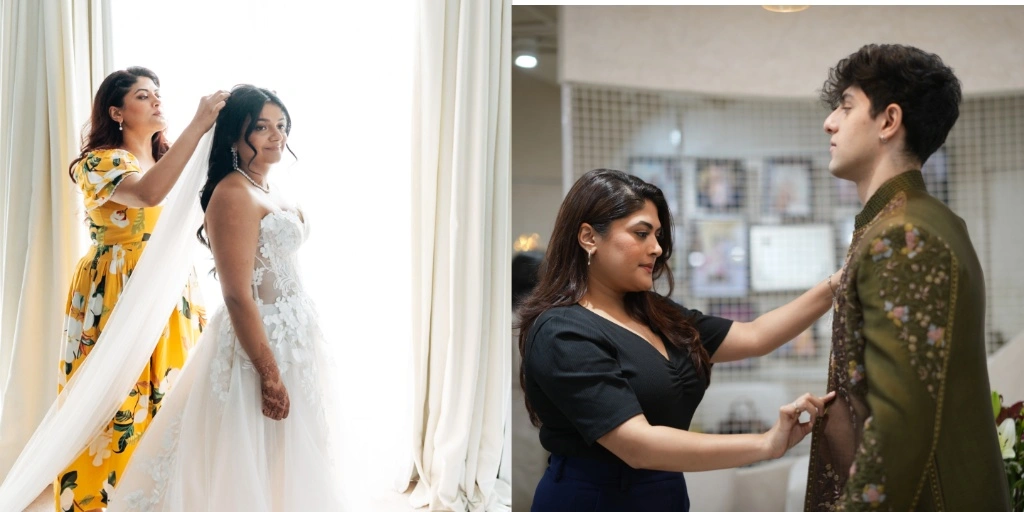
Image Source: Styl Inc
Planning an Indian wedding from Canada does not necessarily require multiple trips to India. Virtual consultations can handle many early wardrobe decisions, while a focused in-person visit can be reserved for purchases and fittings that benefit from physical inspection.
What Can Be Handled Through Virtual Consultations?
Virtual bridal styling can help couples discuss preferences, establish budgets, shortlist designers, and create a function-wise wardrobe plan. Video calls and digital mood boards make it easier to compare silhouettes, colours, and levels of embellishment.
Virtual planning can also help coordinate family outfits, identify wardrobe gaps, and establish shopping priorities before travelling. Couples can review options remotely and use consultations to resolve questions before committing to purchases.
However, photographs and video cannot always communicate the exact colour, fabric weight, texture, or fit of a garment. Measurements and production details should be confirmed with the vendor, and physical trials remain useful for customised outfits.
Making an India Shopping Trip Efficient
An India shopping trip works best when the couple arrives with a clear brief. Shortlist designers and boutiques, confirm appointments, and prioritise outfits that require physical inspection.
Carry reference images, measurements, footwear details, and a list of essential purchases. Group appointments by location where possible and leave room for additional fittings or unexpected delays.
Avoid reserving the final day for unfinished shopping. Keep sufficient time for collection, quality checks, alterations, and packing so that essential outfits are ready for international travel.
Coordinating Time Zones Between Canada and India
Canada has multiple time zones, and the time difference with India changes with daylight saving time. Confirm the current difference when arranging consultations rather than relying on a fixed conversion.
Use calendar invitations that adjust to each participant’s local time, and share reference images and questions before meetings. After each consultation, record the agreed decisions, deadlines, and next steps in a shared document.
This creates a smoother handoff between virtual planning, India shopping, and final outfit preparation.
Common Challenges for Canadian-Indian Weddings and How to Plan Around Them
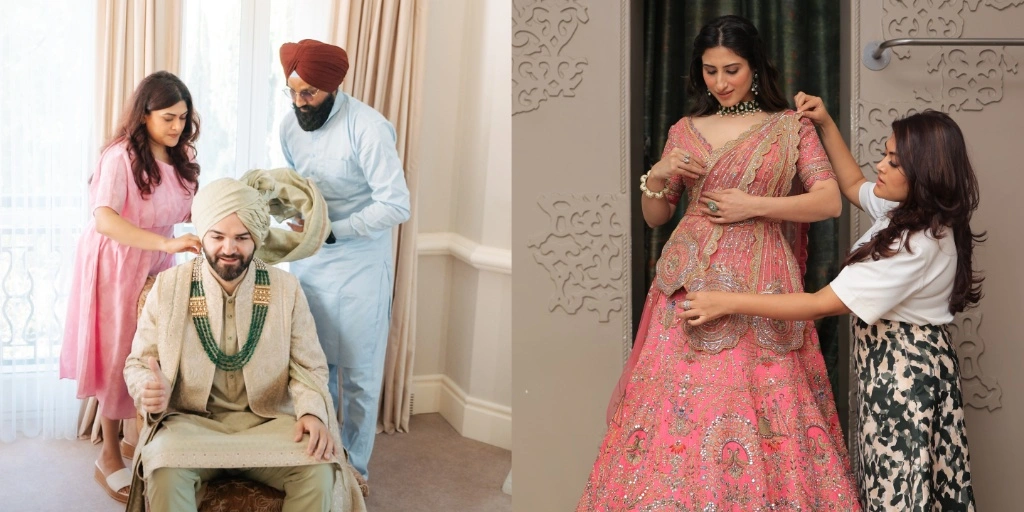
Image Source: Styl Inc
Cross-border planning can introduce challenges, but a clear process helps couples manage them before the wedding approaches.
Limited India Trip Windows
A short visit can create pressure to make every purchase quickly. Shortlist vendors, schedule appointments, and prioritise customised garments before travelling. Keep simpler accessories and supplementary outfits flexible, and confirm production timelines before placing orders.
Sourcing Traditional Pieces Without Direct Access to Indian Markets
Online shopping can provide access to Indian designers, textiles, and traditional outfits, but photographs may not reveal the garment’s exact colour or finish. Request detailed videos, fabric close-ups, measurements, and clear alteration or return policies. Ask about shipping costs and timelines before confirming an order.
Managing Family Expectations Across Countries
Relatives may have different expectations around traditional attire, regional customs, colours, and formality. Establish which elements are essential to the ceremony and which are personal preferences. A shared dress code gives everyone direction while allowing individual expression.
Consult family elders or the officiant when clarification about a ritual is needed, and communicate wardrobe decisions well before the wedding.
The Biggest Wardrobe Planning Mistake Diaspora Couples Make
One of the biggest mistakes is treating every outfit as a separate purchase without considering the complete schedule, alterations, weather, and transport.
A wardrobe tracker, early trial fittings, realistic delivery deadlines, and a contingency plan can help avoid unnecessary stress. Essential outfits should be ready well before the first function, leaving the couple more time to enjoy the celebrations.
How Styl Inc. Supports Canadian-Indian Weddings
Planning a wedding across borders involves more than choosing beautiful outfits. Couples need a wardrobe that reflects their traditions, suits each ceremony, fits their personal style, and can be organised around international travel.
Styl Inc. offers a dedicated styling service for Canada-based clients, combining virtual consultations with in-person shopping and coordination during India visits. This approach helps couples organise their wardrobe priorities and make more informed decisions before travelling.
From function-wise bridal styling to coordinating groom and family looks, the process can help establish a consistent visual direction across multiple celebrations. Virtual consultations provide an opportunity to discuss preferences and shortlist options remotely, while in-person shopping support can assist with decisions that benefit from seeing garments directly.
Whether you are planning an intimate ceremony in Vancouver, a grand celebration in Toronto, or a multi-function wedding elsewhere in Canada, thoughtful styling can make the process more organised and personal.
Book your wedding styling consultation in Canada with Styl Inc. to start planning a wardrobe that brings your traditions, personal style, and cross-border logistics together.
Until then, keep it styl’ish,
Lakshita Vohra Manchanda
No Comments