
Groom’s Family Styling: Who Wears What Across Every Function
Last Updated on May 13, 2026 by gradienteye
Why should only the bride’s side take the spotlight? For years, wedding styling focused heavily on the bride’s family, often leaving the groom’s side understated. That is changing rapidly. Modern groom families are no longer dressing to blend in; they are dressing with intention. From Bandhgala to tuxedos, it is time the groom’s side takes centre stage at Indian weddings. In this blog, we explore how the family members of the groom can coordinate their looks across every function, along with tips for family and sibling styling.
Quick Answer Groom’s family styling focuses on coordinating colors, fabrics, silhouettes and jewellery across all family members; so the entire family looks visually cohesive across wedding functions without appearing overly matched.
Why The Groom’s Family Is The Most Under-Styled Unit At Indian Weddings
Why does most family styling content focus exclusively on the bride’s side
While family styling content mainly focuses on the bride’s side, the groom’s family plays an equally important role. Coordinated outfits for the groom’s parents and siblings create a cohesive look that complements the parents of the bride and groom, ensuring both families shine together throughout the celebrations.
The visual impact of a well-styled groom’s family in wedding photographs?
A well-styled groom’s family elevates the wedding photos, creating cohesive, polished memories. Coordinated attire highlights unity and provides a striking balance to the bride’s side.
The common mistake: everyone shops individually, nobody looks coordinated
When family members choose outfits individually, it can lead to clashing. The common mistake of shopping individually without a unified plan often results in clashing, which can diminish the quality of wedding photography.
[Stylist Insight] One mistake we see time and again is every family member shopping for outfits independently and only realising during fittings that nothing works together visually. A shared palette brief before anyone steps into a store makes all the difference.
Why the groom’s family needs a palette, a plan and a styling brief just like the bride does
Styling the groom’s parents today requires the same level of planning and coordination traditionally reserved for the bride’s side. Modern weddings are multi-day, highly visual events and every family member needs to appear unified, elegant and harmonious with the couple.
Setting The Foundation – The Groom’s Family Color Strategy
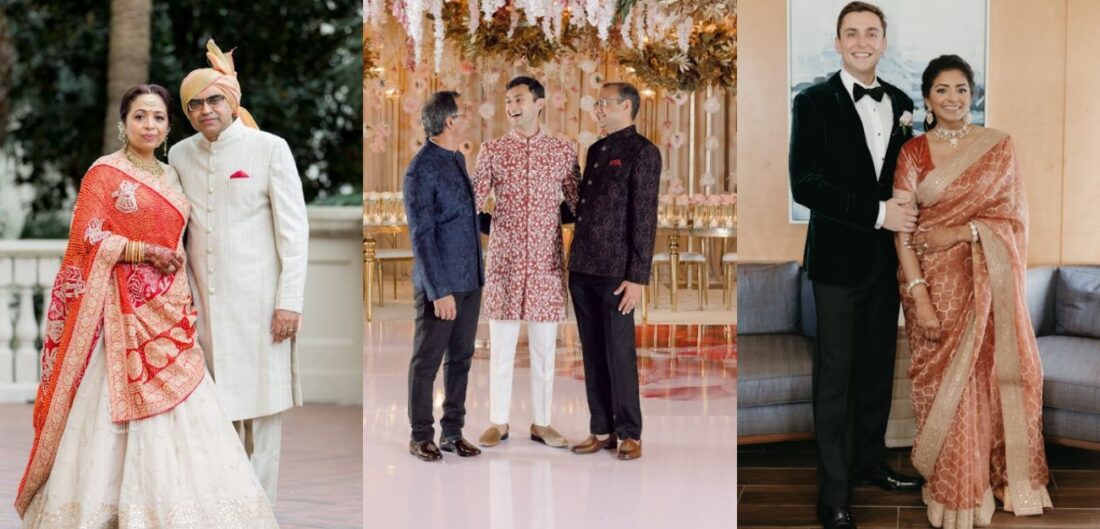
Source: Styl Inc
How to build a color palette that works across 4+ functions
When building a color palette for the groom’s family across multiple functions, start by anchoring key pieces with a neutral base color paired with jewel or earthy tones.
Coordinating The Groom’s Family Palette With The Bride’s Family Palette- Without Clashing
Coordinating the groom’s and bride’s family palette without clashing starts with selecting a shared color palette rather than identical colors. This ensures a cohesive look in photographs. A common approach is to use complementary colors, such as the groom’s side in deep colors and the bride’s side in lighter hues, or vice versa.
[Stylist Insight] In destination weddings especially, we recommend assigning one dominant tone to the groom’s family and letting each member work within adjacent shades. This keeps the look cohesive in outdoor and natural light settings where clashing colors are far more visible.
The palette map- who owns which tone within the family
For the groom’s family, the palette emphasizes rich, warm and complementary colors that stand apart from the bride’s side. The groom might select deep neutral or jewel tones, the mother might choose rich, warm colors, the father might choose muted and earthy colors, and siblings might opt for coordinated pastels for the day and deeper tones for the evening.
Fabric cohesion across roles- what connects the family visually without matching them exactly
Creating fabric cohesion across a family without matching exactly involves blending shared elements – such as a defined color palette, similar fabric textures, or complementary patterns to achieve a coordinated, not identical look.
Metal cohesion: choosing one jewellery metal tone for the entire family across functions
Choosing cohesive metals creates a timeless look across generations. Yellow gold suits warm tones, while silver or platinum complements cooler tones, ideal for Indian weddings.
The Groom’s Family Styling Guide – Role By Role, Function By Function
Role 1 – Mother of the Groom
Mehendi
Mother of the groom outfits for an Indian wedding include silk and chiffon sarees or sharara and anarkali suits in pastel colors. Bright hues like coral, turquoise, mint and fuchsia are also suitable. Complete the look with minimal polki or kundan jewellery, bangles, and statement earrings.
Sangeet
For Sangeet, she can opt for a heavily embellished saree, silk lehenga, or anarkali suit in light, breathable fabrics. Jewel tones such as emerald, sapphire, deep rose, and rich plum are ideal for evening wear. Heritage jewellery- such as a statement ring, jewellery set, or elegant studs- completes the look.
Wedding day
The mother can opt for silk or Banarasi sarees in vibrant hues such as maroon, orange, or gold. For the groom’s family, color coordination, complementary tones, such as soft pink, sage green and powder blue, create a cohesive look. Jewellery or heirloom pieces, such as maang tikka, necklace and bangles, add a sentimental value to the outfit.
Reception

Source: Pernia’s Pop Up, Styl Inc, Styl Inc
For the reception ceremony, a silk or draped georgette saree with a contemporary blouse or an anarkali suit is ideal. Elegant colors like champagne, blush, ivory and dusty rose suit all age groups and photograph beautifully. For the reception ceremony, statement earrings or a layered necklace add structure and definition to the look.
Father of the groom
Mehendi
The father of the groom’s outfit for an Indian wedding can include a kurta pyjama with a linen or cotton Nehru jacket. To complement an earthy-tone palette, he can choose a rust or taupe bandhgala; he can wear an ivory kurta set to coordinate with the pastel palette, and for a navy palette, he can opt for an ivory or champagne kurta set. To elevate the outfit, he can add a pocket square or mojaris.
Sangeet
He can opt for a bandhgala suit or a structured kurta with a Nehru jacket in rich colors. Hues like bottle green or burgundy are good options. He can accessorize with a pocket square or brooch to enhance the overall look.
Wedding

Source: Styl Inc
He can choose a sherwani, a three-piece suit or bandhgala in silk or brocade. To coordinate with the groom, deeper or complementary colors work well. A safa, brooch, or juttis can complete the look.
Reception
For the reception, he can opt for classic choices such as a tuxedo, a sherwani set, or a structured bandhgala set. Colors like navy blue, charcoal or ivory are ideal options. Modern accessories such as cufflinks, pocket squares and formal shoes can elevate the look.
Groom’s sister
Mehendi
The groom’s sister’s outfit for all functions can include a mix of ethnic styles, and for the mehendi ceremony, she can opt for a sharara set, a printed anarkali, or a floral lehenga. Vibrant colors like fuchsia, yellow, lime or coral suit the ceremony. To take the look a notch higher, oxidised jewellery, jumkas and bangles are ideal.
Sangeet

Source: Styl Inc
Embellished lehenga, draped sharara or an indo-western co- ord set can be a suitable option for the sangeet ceremony. Jewel tones such as emerald, electric blue, and ruby add a modern touch. Pair the look with statement earrings or a layered necklace for a polished finish.
Wedding
A silk or heavily embroidered anarkali suit for the wedding lends grandeur to the outfit. To coordinate with the family color palette, choose an outfit lighter or darker than the mother of the groom’s outfit.
Reception
For the reception, an indo-western gown, draped saree or a cape lehenga in ivory, blush and champagne or pastel sets the tone. Pair with modern jewellery- statement earrings or layered chains for impact.
Brother of the groom
Mehendi

Source: Styl Inc, Styl Inc, Raghvendra Rathore
For the groom’s brother, various styles work well across functions. For the mehendi, a kurta with a Nehru jacket is ideal. To match the groom’s family palette- floral prints, pastels and navys, he can opt for similar prints or patterns.
Sangeet
He can choose an asymmetrical kurta paired with slim trousers, a velvet Bandhgala, or an indo-western ensemble in bold hues like midnight blue, emerald, or rust. Pair it with a brooch, watch, or mojaris for a refined look.
Wedding
For the wedding day, a sherwani or bandhgala is a traditional yet modern choice. Choose complementary colors to the groom’s outfit for a cohesive look.
Reception
He can opt for a Bandhgala suit, a Nehru jacket with trousers and a well-fitted suit. To complement the family’s reception palette of navy, charcoal, and ivory, he should choose subtle accent colors such as sage green and warm taupe.
Building The Groom’s Family Group Look- Coordination Checklist

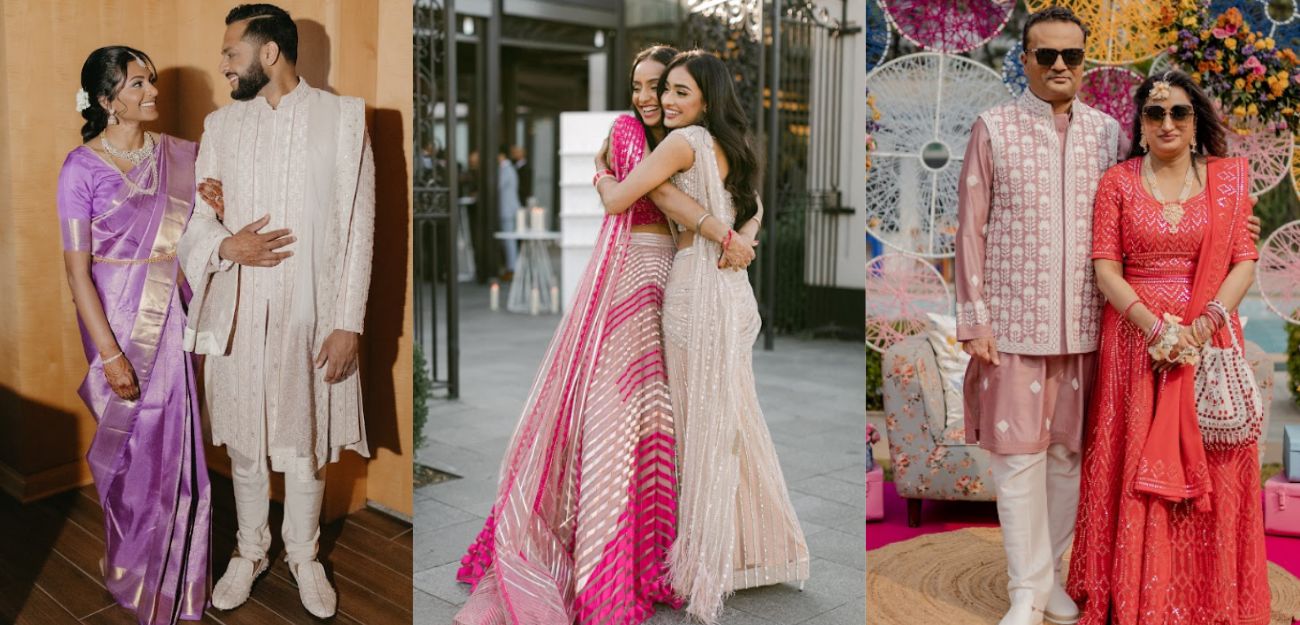
Source: Styl Inc
[Stylist Insight] The families that photograph the best are never the ones who matched exactly; they are the ones who coordinated intentionally. Think of it as a visual conversation between outfits, not a uniform.
How to assign colors across the mother, father, sister and brother without looking costume-y
For the groom’s family color coordination, begin by selecting 2-3 neutral base colors. Next, assign each family member a different complementary accent shade. By keeping tones and contrast varied, you ensure that the outfits coordinate without looking identical or costume-like.
The rule of fabric cohesion: how connecting textures create unity without matching
The rule of fabric cohesion is to create unity through related textures rather than identical outfits. For this, the groom’s family can mix fabrics like chiffon, georgette, organza, or tissue in varying combinations. In doing so, the overall look remains connected while each outfit retains its individuality.
Common Groom Styling Mistakes To Avoid
The mother of the groom is overdressed and competing with the bride’s mother
If the bride’s mother is wearing a heavy outfit, the groom’s mother should choose a subtler look to complement without competing.
The father and brother are in mismatched western wear, while the women are in traditional outfits
To avoid mismatched western wear, the brother and the father of the groom can coordinate by using the same color palette or similar formality, such as both suits in complementary colors.
The sister underdressed for the wedding ceremony because she prioritized the sangeet
The groom’s sister should wear a festive outfit for the wedding that complements the family’s color palette, even if she saved her best look for the sangeet.
How Styl Inc Styles The Groom’s Family As A Unit
Function by Function wardrobe planning for every family member
Styl Inc specializes in groom’s family wardrobe planning, curating coordinated themes, fabrics and colors for each type of ceremony.
Building a palette map before anyone shops
Building a palette map helps family members look coordinated rather than clash. A well-planned, cohesive look ensures families appear harmonious in photographs.
Conclusion
Groom’s family styling should focus on outfits that align with the chosen color palette, ensuring a cohesive look across all ceremonies. Thoughtful groom’s family styling ensures that both the bride’s and groom’s families look coordinated and harmonious.
Until next time
Keepin’ it stylish,
Aparna Iyer
1. What should the mother of the groom wear at an Indian wedding?
2. How does the groom's family coordinate outfits across multiple functions?
3. What should the groom's family avoid wearing on the wedding day?
4. What should the groom's sister wear for the sangeet function?
5. How do I coordinate the groom's family palette with the bride's palette?
6. What should the father of the groom wear for the wedding function?
For the wedding function, the father of the groom can wear a kurta-pyjama or a Nehru jacket set.
7. Does the groom's brother need to wear a sherwani on the wedding day?
8. Can Styl Inc help style the entire groom's family across all wedding functions?
No Comments