
Muslim Nikah Ceremony Outfit Guide: Bride, Groom and Family Styling
Last Updated on August 17, 2026 by gradienteye
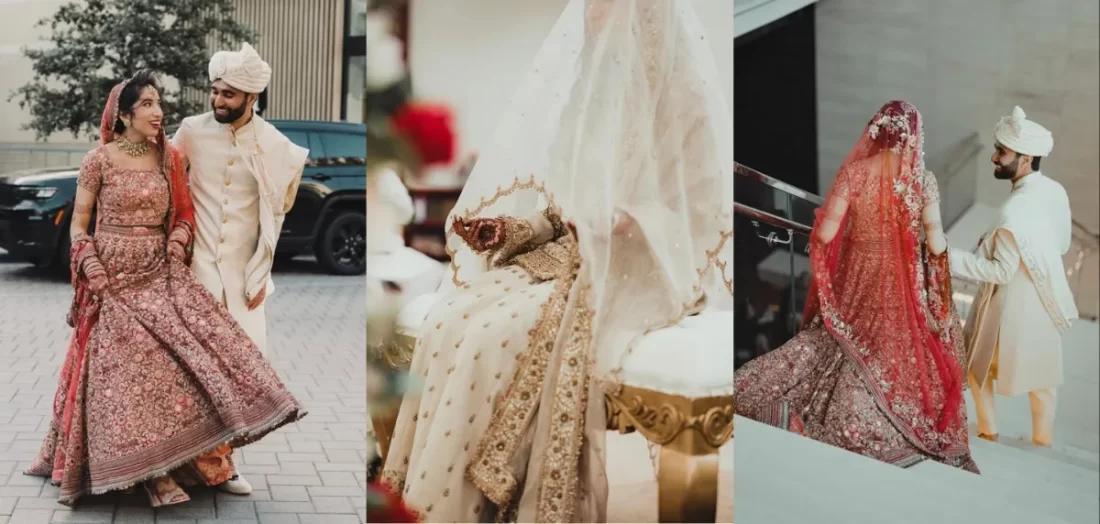
The Nikah is the most sacred moment in a Muslim wedding. It is not merely a party or a photoshoot; rather, it is a religious contract between two people. It is a religious contract between two people, performed in the presence of family and witnesses. What you wear to a Nikah should reflect that. The right outfit balances modesty, elegance, family tradition, and the emotional importance of the ceremony.
In India, Muslim weddings usually involve multiple functions, each with a different mood and dress code. The Mehndi is vibrant and playful, the Nikah is dignified and spiritual, and the Walima is celebratory and formal. This guide explains what to wear for a Nikah ceremony in India, including outfit ideas for the bride, groom, parents, siblings, and close family members, along with practical styling advice for 2026.
Understanding the Nikah and Its Functions
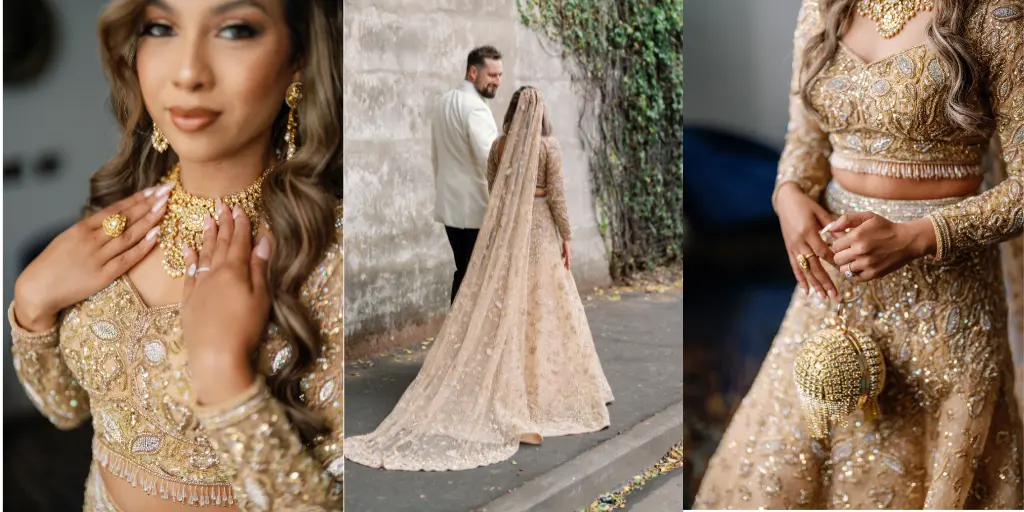
Image Source: Styl inc
What the Nikah ceremony is and how it works
The Nikah is the religious marriage ceremony in Islam. The bride and groom consent to the marriage in the presence of witnesses, and they complete the marriage contract. Depending on the family and region, the ceremony may take place in a mosque, at home, or in a banquet venue.
The difference between Nikah, Mehndi, Mayun, and Walima
- Mayun is often a smaller pre-wedding ritual in some South Asian Muslim communities.
- Mehndi is the colourful celebration centered around henna, music, and family festivities.
- Nikah is the solemn religious ceremony.
- Walima is the reception hosted by the groom’s family after the marriage.
Why each function has its own dress code and energy
A common mistake is treating all three events as equally glamorous. In reality, the Nikah usually calls for the most restrained elegance, while the Walima allows the heaviest embroidery, jewellery, and formal styling.
The Modesty Principle in Nikah Dressing
What modesty means in Muslim wedding fashion
Modesty in Muslim wedding fashion is not about looking plain. It is about coverage, dignity, and occasion-appropriateness. A Nikah outfit should allow the bride or guest to sit comfortably through a religious ceremony while maintaining a graceful silhouette.
This is not about dressing down
Many of the most beautiful Muslim Nikah ceremony outfit India looks are richly crafted, but they avoid excessive exposure, dramatic cut-outs, or nightclub-style styling. The goal is to look refined rather than attention-seeking.
How Indian Muslim wedding fashion balances tradition and faith
Indian Muslim wedding fashion often combines Islamic modesty with regional traditions from Hyderabad, Lucknow, Kashmir, Kerala, Bengal, or North India. This is why you may see ghararas, shararas, anarkalis, silk sarees, or even understated lehengas worn at different Nikah ceremonies.
What the Bride Should Wear for the Nikah Ceremony
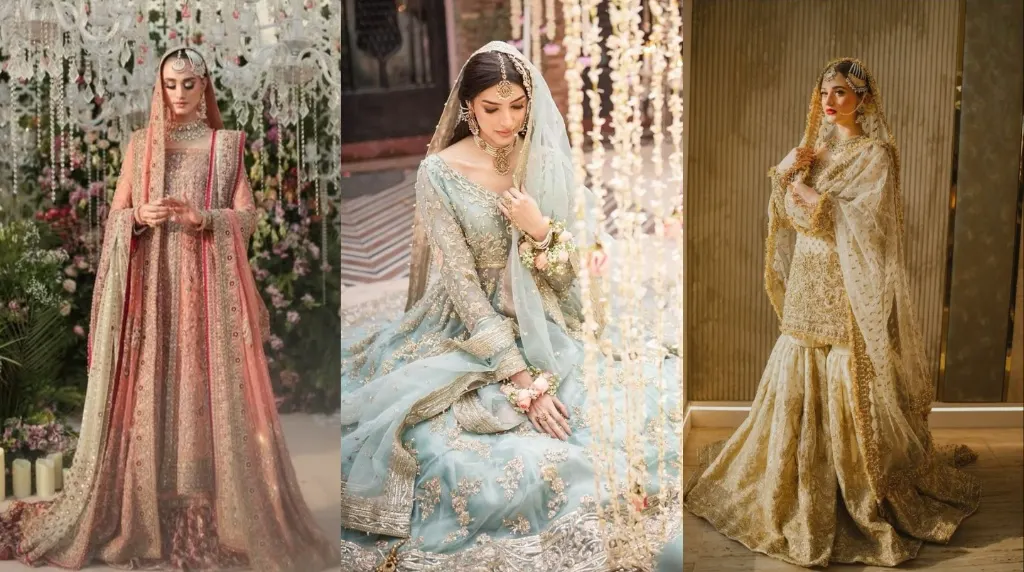
Image Source: Pinterest/Zamalsamanphotography
The most popular Nikah bridal choices
For a Nikah bride outfit 2026, ivory, white, and soft pastels continue to dominate. These shades symbolize purity, calm, and new beginnings. Among silhouettes, the anarkali remains one of the most photographed choices because it is naturally modest, elegant, and comfortable for long ceremonies.
Outfit options for the Nikah bride
- Ivory or blush anarkali suit
- Heavily embroidered sharara set
- Silk kurta set with a flowing dupatta
- Traditional gharara for a classic South Asian look
These options all work well for a Nikah dress for bride because they provide coverage while still looking bridal.
Colours that work beautifully
- Ivory
- White
- Blush pink
- Powder blue
- Soft gold
- Mint green
- Champagne
- Pastel peach
Families that prefer richer traditions may also choose emerald, sapphire, or deep teal, but softer tones are generally considered more appropriate for the Nikah.
Colours to avoid
Avoid all-black for the Nikah, as many Muslim communities associate black with mourning. Also avoid neon shades and extremely saturated colours that feel more suitable for a sangeet or reception.
Dupatta and head covering
The dupatta is one of the most important elements of modest bridal styling India. It should be long enough to cover the hair comfortably and stay in place during the ceremony. Lightweight net, organza, chiffon, or tissue dupattas work well because they drape beautifully without adding excessive weight.
Jewellery for the Nikah bride
Restraint is key. Choose one focal point:
- Statement earrings or
- Statement necklace
Avoid wearing every bridal piece at once. Heavy layered sets are better reserved for the Walima.
What the Bride Should Wear for the Mehndi
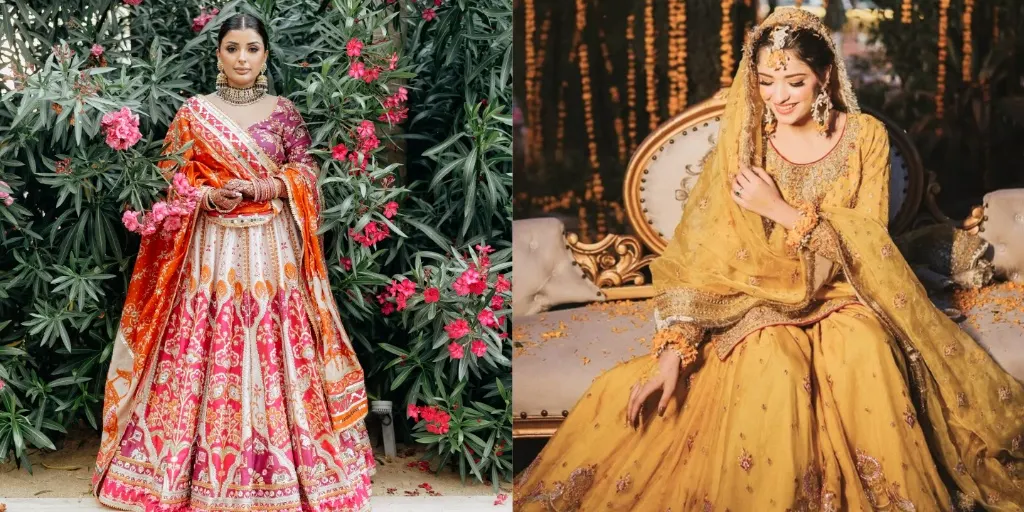
Image Source: Styl inc; Pinterest/Zamalsamanphotography
The energy of a Muslim Mehndi
A Muslim Mehndi is joyful, colourful, and expressive. This is the function where the bride can be playful with colour, tassels, gota work, mirror work, and floral accessories.
Best outfit choices
- Bright sharara
- Colourful anarkali
- Light lehenga choli
- Mirror-work kurta set
Best colours
- Fuchsia
- Yellow
- Coral
- Lime green
- Orange
- Bright teal
Sleeve consideration
Because henna is applied to the hands and forearms, many brides choose short sleeves or sleeveless blouses and then drape a dupatta for coverage when needed.
What the Bride Should Wear for the Walima
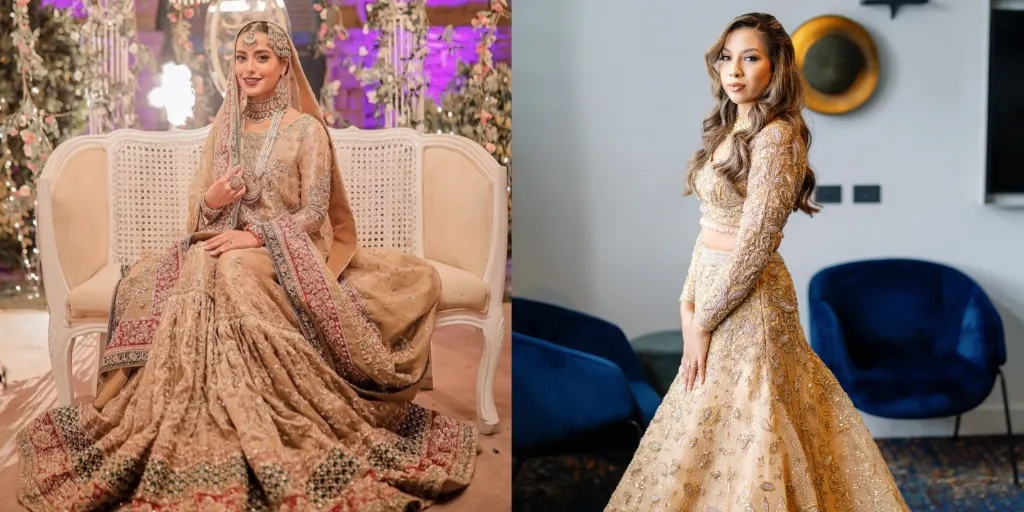
Image Source: Styl inc; Pinterest/Zamalsamanphotography
The Walima is more festive
The Walima is the reception hosted by the groom’s family and is usually more glamorous than the Nikah. This is the event where richer fabrics, heavier embroidery, and more elaborate jewellery are most appropriate.
Outfit options
- Heavily embellished lehenga
- Silk sharara
- Embroidered anarkali gown
- Velvet or brocade bridal ensemble
Best colours
- Deep rose
- Emerald green
- Ruby red
- Royal blue
- Antique gold
- Wine
The Walima is where the bride can wear the outfit that feels the most regal and celebratory.
What the Groom Should Wear for Each Function
Styl Inc; Pinterest/Zamalsamanphotography
Nikah ceremony
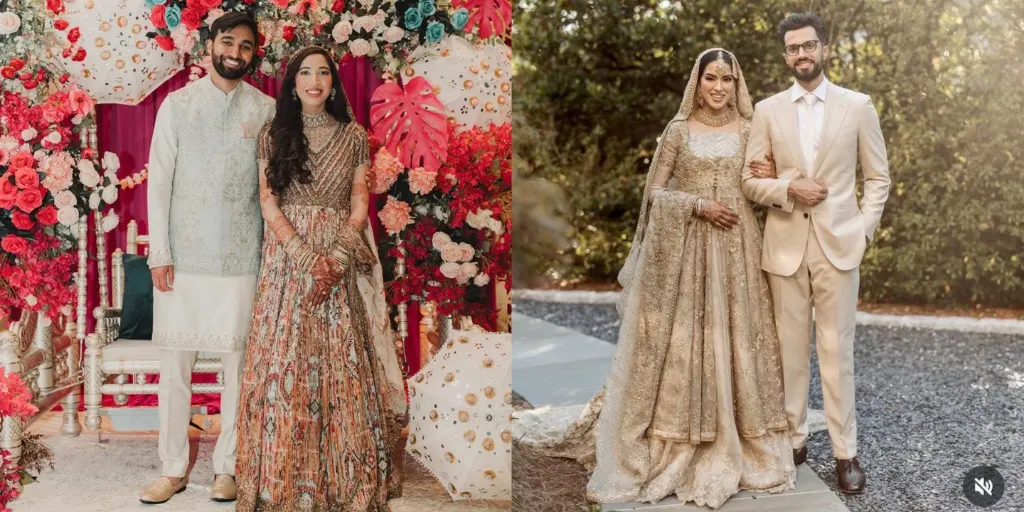
For those wondering what does groom wear for Nikah, the safest and most elegant choice is an ivory, cream, champagne, or soft gold sherwani.
White is traditionally considered auspicious for many Muslim Nikah ceremonies. A well-tailored kurta with churidar and a light embroidered jacket is also perfectly appropriate, especially for daytime or mosque Nikahs.
Mehndi
For the Mehndi, comfort matters.
Choose:
- Printed kurta
- Embroidered kurta
- Nehru jacket
- Cotton silk or linen fabrics
Festive colours such as mustard, teal, green, or coral work well.
Walima
The Walima allows a more formal look.
Choose:
- Richer sherwani
- Bandhgala
- Deeper colours such as emerald, navy, charcoal, or deep maroon
Coordinate with the bride’s Walima palette without wearing the exact same shade.
What grooms should avoid
- Black sherwani for the Nikah (unless it is a specific family tradition)
- Very casual plain kurtas
- Loud metallic fabrics
- Overly heavy accessories
What the Family Should Wear at the Nikah
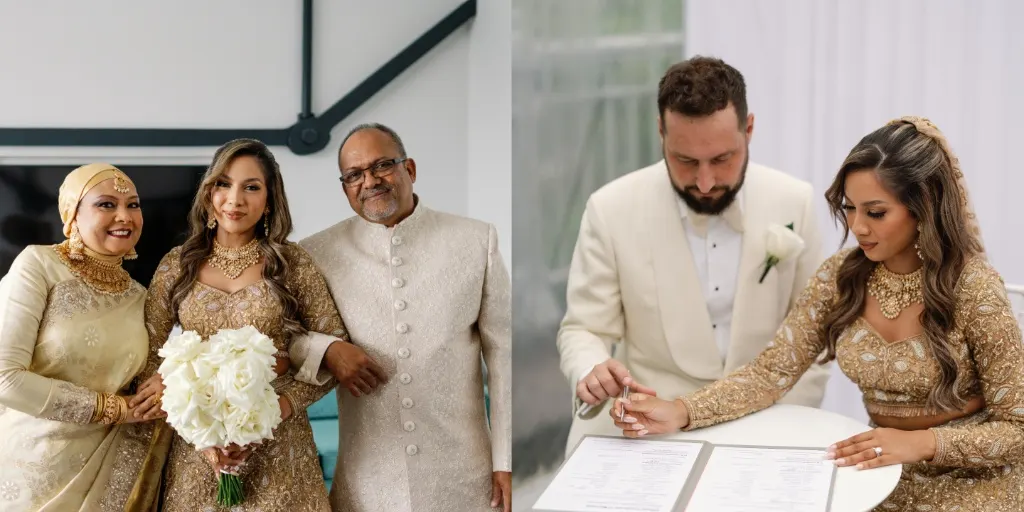
Image Source: Styl Inc
Mothers
For a family-outfit Muslim wedding in India, mothers can choose
- Elegant anarkali
- Silk saree
- Embroidered kurta set
- Pastel or jewel-tone ensembles
Fathers
Fathers should look formal but not more dressed than the groom.
- Bandhgala
- Formal kurta with Nehru jacket
- Light sherwani for the closest family
Sisters and female relatives
- Anarkalis
- Silk sarees
- Modest lehengas
- Coordinated pastel or jewel tones
Brothers and male relatives
- Kurta pajama
- Bandhgala
- Nehru jacket set
Reserve sherwanis for immediate family members.
Venue-Specific Considerations
If the Nikah is at a mosque
For a Nikah ceremony dress code India in a mosque:
- Women should cover arms and legs
- Head covering is essential
- Avoid transparent fabrics without lining
- Men should dress formally and modestly
If the Nikah is at home
The same modesty principles apply, though the styling may be slightly lighter and more intimate.
If the Nikah is at a hotel or banquet hall
You have more room for embellishment, but the outfit should still reflect the religious nature of the ceremony.
Common Nikah Outfit Mistakes to Avoid
Wearing the Walima outfit to the Nikah
Save the heaviest embroidery for the reception.
Choosing fabrics that wrinkle easily
Long seated ceremonies can ruin heavily creased fabrics. Silk blends, georgette, and structured tissue fabrics photograph better over time.
Over-accessorising
A sacred ceremony does not require every bridal accessory at once.
Ignoring the head covering
Plan the dupatta as part of the hairstyle, jewellery, and neckline from the beginning.
How Styl Inc. Helps You Across Every Aspect of Your Nikah
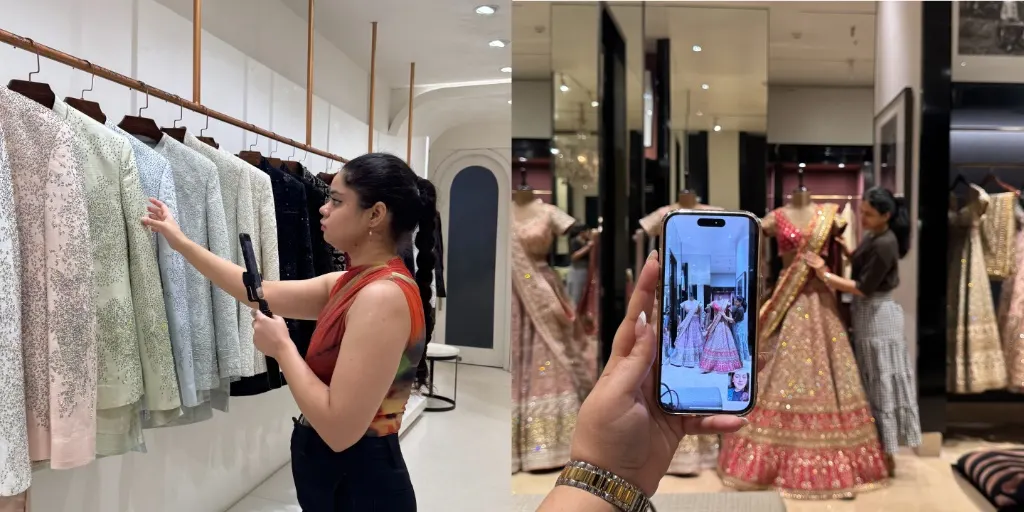
Image Source: Styl Inc
A Nikah involves more than one outfit decision. It includes the bride, the groom, and often an entire family across Mehndi, Nikah, and Walima, each with a different mood and dress code. Styl Inc. approaches Muslim wedding styling as one connected process rather than three separate shopping trips.
One stylist for the bride, groom, and family
This ensures that colours, embroidery levels, and silhouettes feel harmonious across all functions.
Modesty-first sourcing
Outfits are selected with attention to coverage, comfort, and the dignity expected at a Nikah.
Function-wise wardrobe planning
The Mehndi stays vibrant, the Nikah remains elegant, and the Walima feels grand without unnecessary repetition.
Fittings and coordination support
From alterations to dupatta draping and day-of styling, the goal is to reduce stress for the couple and their families.
Book your Muslim wedding styling consultation with Styl Inc.
Until next time, keep it styl’ish,
Lakshita Vohra Manchanda
No Comments