
Parsi Wedding Rituals: The Gara Saree and Traditional Styling Guide
Last Updated on August 28, 2026 by gradienteye
A Parsi wedding carries centuries of ritual, and the clothing worn is integral to that history and how the tradition is carried forward. Nowhere is that clearer than in the Gara saree, a garment shaped by generations of trade, craft, and community identity. For many Parsi families, the wedding wardrobe is not simply about looking beautiful in photographs. It is about honouring ancestors, preserving heirloom textiles, and expressing a distinctive cultural heritage through every fold, thread, and accessory.
This guide explores the rituals that shape a Parsi wedding dress code, the significance of the Gara saree, and how brides, grooms, and family members traditionally dress for each stage of the ceremony. It also offers practical guidance on sourcing, styling, and caring for a Gara saree in contemporary India.
Understanding the Parsi Wedding Ceremony
The Parsi wedding ceremony, known as the Lagan, is rooted in Zoroastrian tradition and is marked by a series of rituals that emphasise purity, blessings, family, and community.
An overview of the Lagan and the sequence of rituals
While customs can vary slightly between families and regions, a traditional Parsi wedding usually includes pre-wedding ceremonies followed by the main wedding day rituals. The sequence often includes the Nahan, Adarni, and Achumichu, culminating in the wedding ceremony where the couple is united before the sacred fire.
Because each ritual carries symbolic meaning, clothing is chosen with equal care. The emphasis is generally on elegance, modesty, and continuity with community tradition rather than overt display.
Nahan: ceremonial purification
The Nahan is a ritual purification bath performed before the wedding. It symbolises spiritual and physical cleansing as the bride and groom prepare to enter married life. The clothing worn for this ritual is usually simple, clean, and light-coloured, reflecting the idea of purity rather than celebration.
Adarni and Achumichu
The Adarni is a ceremonial exchange of gifts between the families, while Achumichu is a welcoming ritual in which the bride and groom are blessed and protected from negative influences. These rituals influence attire by encouraging traditional dress, covered silhouettes, and a dignified presentation before elders and relatives.
Hathevaro: the hand-fastening ritual
During the wedding ceremony, the Hathevaro ritual joins the hands of the bride and groom with a sacred thread, symbolising their union. Since the couple sits facing each other for much of the ceremony, the drape of the saree, the placement of the head covering, and the groom’s ceremonial attire become visually significant.
Why tradition shapes the dress code
Parsi wedding attire is guided by three principles:
- Modesty: clothing is elegant without being excessively revealing.
- Symbolism: colours and garments carry cultural meaning.
- Community continuity: traditional silhouettes connect the present generation to those who came before.
These values are what make the Parsi wedding bridal outfit distinct from many other Indian bridal traditions.
The Gara Saree: History and Significance
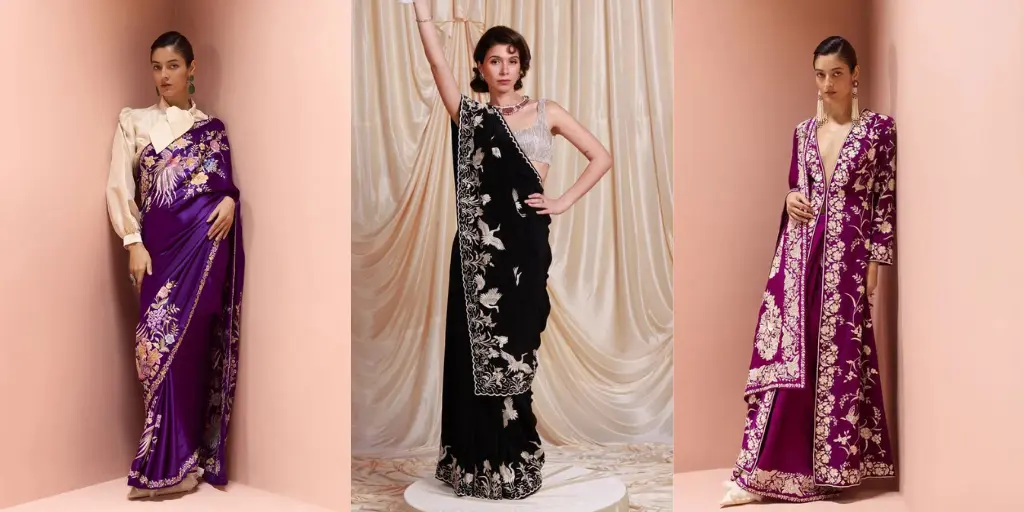
Image Source: Ashdeen
The Gara saree is one of the most recognisable elements of Parsi wedding traditional attire and one of India’s most extraordinary textile traditions.
Origins in the silk trade
The history of Gara embroidery is linked to the historic trade routes between China and the Parsi community. Wealthy Parsi merchants brought embroidered Chinese silk textiles to India, and over time these influences merged with local craftsmanship to create the distinctive Gara embroidery saree.
Signature motifs
Traditional Gara embroidery is worked in fine silk thread and often features:
- Birds
- Pagodas
- Chrysanthemums
- Peonies
- Butterflies
- Vines and floral trails
These motifs reflect strong Chinese artistic influence while becoming deeply associated with Parsi identity.
A family heirloom, not just a wedding garment
For many families, a Gara saree bridal piece is an heirloom passed from grandmother to mother to daughter. The emotional value may far exceed the monetary value. Wearing an ancestral Gara often carries the blessings and memories of previous generations into the marriage.
Antique versus newly commissioned Gara
An antique heirloom Gara may show signs of age, hand-spun silk, and exceptionally fine embroidery that is difficult to reproduce today. A newly commissioned Gara offers durability, custom colours, and contemporary wearability while preserving traditional motifs. Many modern brides choose a restored heirloom for the ceremony and a new Gara for later functions.
Understanding this distinction is important when planning the styling for a Parsi wedding ceremony.
What the Parsi Bride Traditionally Wears
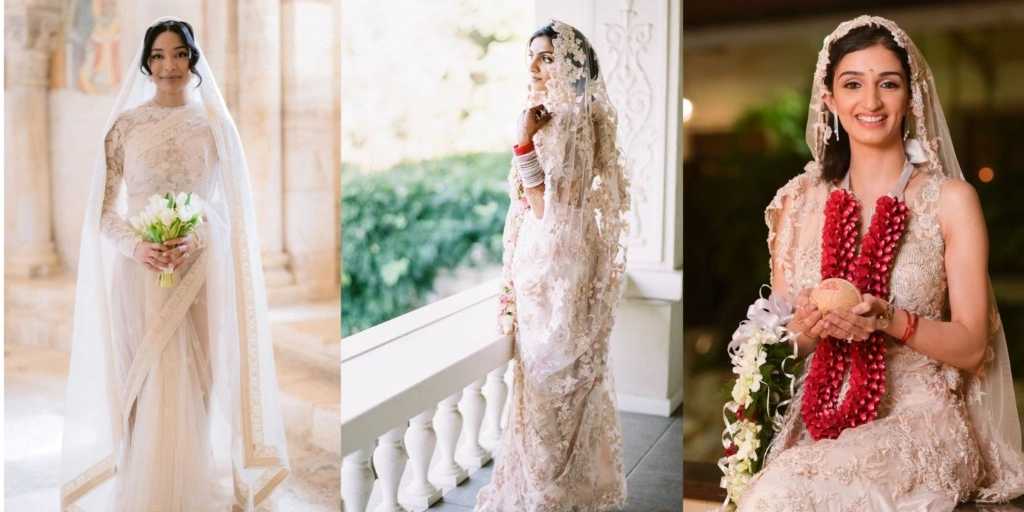
Image Source: Pinterest/MagnoliaRouge
If someone asks what does a Parsi bride wear, the most traditional answer is a white or pastel Gara saree worn with a matching blouse and a ceremonial head covering.
White and pastel Gara sarees
Unlike many Indian bridal traditions that favour red, the classic Parsi wedding bridal outfit is often built around white, ivory, cream, blush pink, pale gold, or other soft pastel tones. White is associated with purity, light, and spiritual clarity in Zoroastrian tradition.
The ceremonial drape
The Gara is usually draped in a style that allows the richly embroidered pallu to remain fully visible. The pallu is often brought over the shoulder and arranged carefully so the border and motifs frame the bride during the ceremony. The emphasis is on showcasing the craftsmanship rather than creating dramatic volume.
The mathabana
A key element of the traditional Parsi bridal look is the mathabana, a head covering placed over the bride’s hair during the ceremony. It represents modesty and reverence in the sacred setting. The mathabana is often coordinated with the saree and secured discreetly so it remains in place throughout the rituals.
Modern interpretations
Contemporary brides are increasingly personalising their look while respecting tradition. Popular updates include:
- A tailored blouse with a slightly modern neckline
- Restored antique Gara paired with a new blouse
- Soft pearl or diamond jewellery
- Fresh flowers woven into the hair
- Subtle makeup that enhances rather than transforms
The most successful modern looks treat the Gara as the centrepiece and build every other element around it.
Jewellery and Accessories for the Parsi Bride
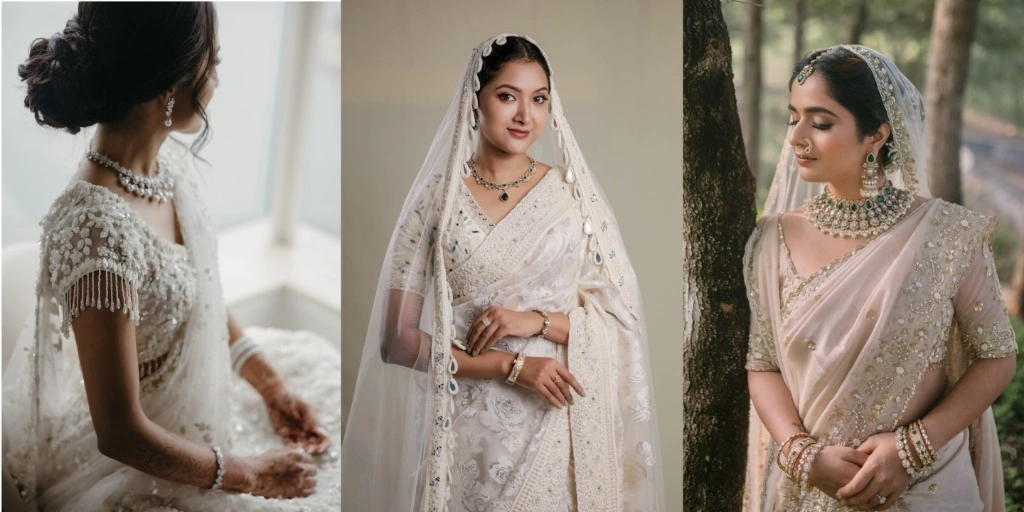
Image Source: Styl Inc; Pinterest/santinni.in
One of the defining features of Parsi bridal styling is restraint.
Jewellery that complements the embroidery
Traditional choices often include:
- Pearl necklaces
- Diamond studs or drops
- Delicate bracelets
- Family heirloom pieces
Because Gara embroidery is visually intricate, heavy jewellery can compete with the saree. The goal is harmony rather than excess.
Letting the Gara remain the focal point
Many brides intentionally avoid oversized chokers, layered necklaces, or heavily embellished accessories. The embroidery is considered the artwork; the jewellery should frame it, not overshadow it.
Footwear and accessories
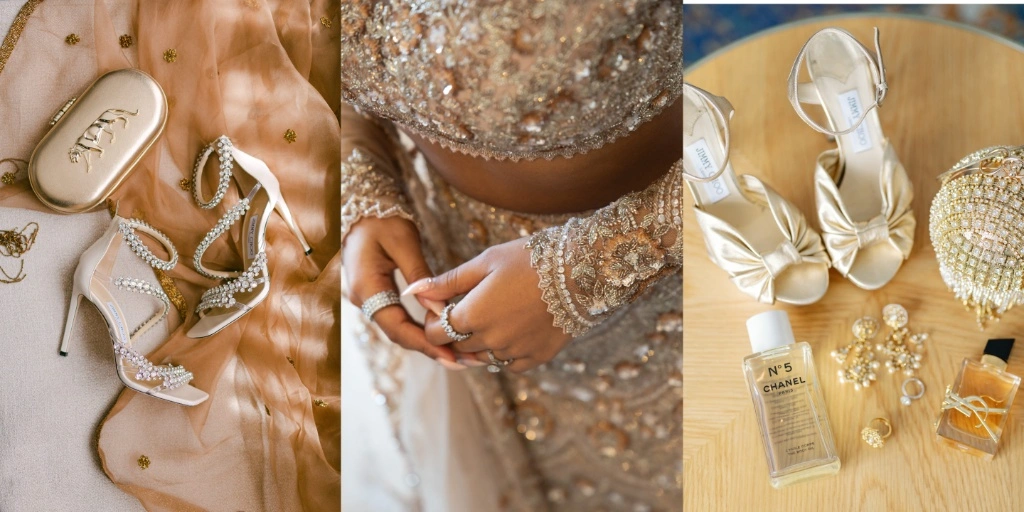
Image Source: Styl Inc
Comfort is important because the ceremony can be lengthy. Brides commonly choose:
- Embroidered flats
- Low heels
- Soft metallic sandals
Other accessories may include a small embroidered potli or a vintage handkerchief carried for sentimental reasons.
What the Parsi Groom Traditionally Wears
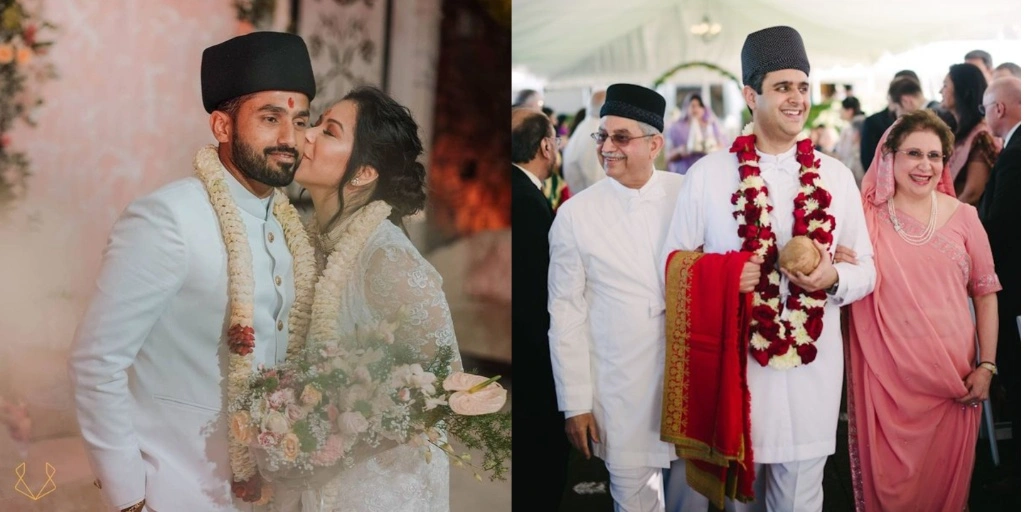
Image Source: Instagram/JunebugWeddings
The groom’s attire is equally rooted in tradition, though it is generally more understated than the bride’s.
The dagli or jama
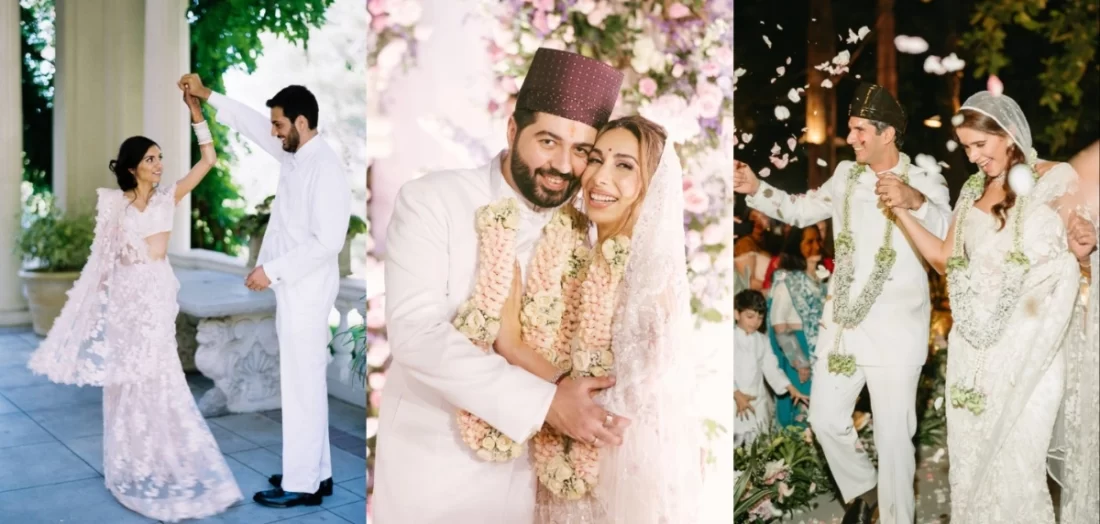
The classic Parsi groom wedding outfit is the dagli (also called jama), a long white coat worn over white trousers. The clean silhouette reflects dignity, simplicity, and ceremonial purity.
The feta
The groom traditionally wears a feta, the distinctive black Parsi cap, during the ceremony. This is one of the most recognisable elements of male Parsi ceremonial dress.
Modern variations
Some grooms choose:
- Ivory or off-white dagli
- Subtle textured fabrics
- Tailored cuts for a contemporary fit
- Formal Western shoes
Even with modern tailoring, the traditional silhouette is usually preserved, maintaining the cultural identity of the outfit.
What Family Members Typically Wear
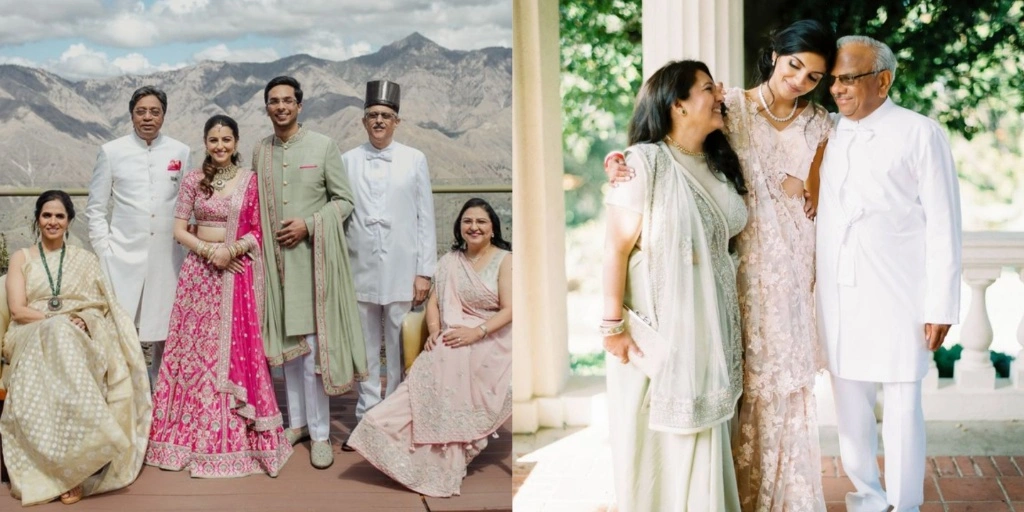
Image Source: Instagram/Anita Dongre ; Pinterest/wedmegood
Parsi weddings are deeply family-centred, and the styling of relatives is planned to support the bridal look rather than compete with it.
Also read: https://styl-inc.com/blogs/questions-to-ask-before-hiring-a-wedding-stylist/
Mothers and female relatives
Senior women often wear:
- Gara sarees
- Traditional silk sarees
- Soft-toned embroidered sarees
- Heirloom jewellery
Younger female relatives may choose pastel silk sarees or elegant salwar suits depending on the function.
Fathers and male relatives
Men may wear:
- Traditional dagli
- White or ivory formal wear
- Western suits for reception functions
The choice often depends on the family’s level of adherence to traditional dress.
Coordinating family looks
A useful principle is to coordinate around the bride’s Gara. If the bride wears an ivory heirloom Gara, the family palette may include blush, silver, champagne, and soft gold. This creates visual cohesion in photographs and keeps the bride as the focal point.
Thoughtful coordination is one of the most overlooked aspects of Parsi wedding family outfits.
Colours and What to Avoid
Colour carries cultural meaning in Parsi weddings.
Traditional foundation
The most traditional palette includes:
- White
- Ivory
- Cream
- Pale pink
- Mint
- Powder blue
- Soft gold
These shades reflect elegance and restraint.
Why black is generally avoided
Although black is widely accepted in contemporary fashion, it is generally avoided in traditional Parsi wedding attire, especially for the main ceremony. Families may have different levels of strictness, but white and pastels remain the safest and most respectful choice.
Personal colour choices
Modern weddings do allow some flexibility, particularly for receptions and pre-wedding events. Deeper jewel tones may appear in evening functions, but the central wedding ceremony is usually kept within the traditional palette.
Sourcing and Caring for a Gara Saree Today
Finding the right Gara requires both aesthetic and practical consideration.
Where to source an authentic Gara
If you are searching for Gara saree India buy options, look for:
- Reputable Parsi textile specialists
- Heritage embroidery ateliers
- Curated vintage dealers
- Family referrals within the community
Hand-embroidered Garas are significantly more expensive than machine-embroidered versions, but the difference in texture, drape, and longevity is substantial.
Working with an heirloom piece
If a family Gara is being worn:
- Have it professionally assessed.
- Repair weak areas before the wedding.
- Avoid aggressive dry cleaning.
- Store it flat until the ceremony.
Many brides choose to wear an underskirt and blouse designed to reduce strain on the antique fabric.
Caring for fine silk embroidery
Before the wedding:
- Keep the saree wrapped in muslin.
- Avoid hanging it for long periods.
During the wedding:
- Pin it carefully.
- Keep perfume away from the embroidery.
- Avoid friction from heavy jewellery.
After the wedding:
- Air it out before storage.
- Refold along different lines.
- Store in a cool, dry place.
Proper care ensures the saree can continue its journey through future generations.
How Styl Inc. Supports Parsi Wedding Styling
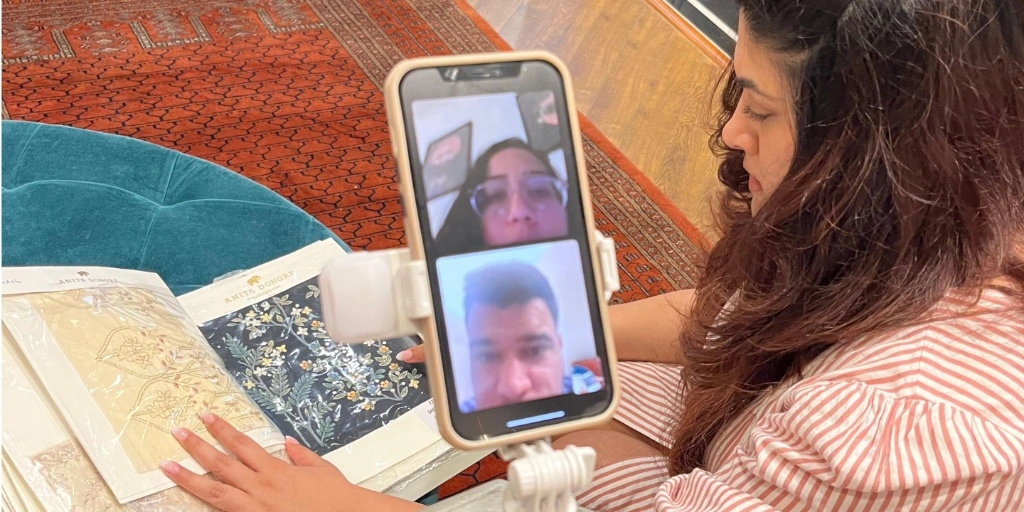
Image Source: Styl Inc
Styling a Parsi wedding involves more than selecting a beautiful saree. It requires understanding ritual, family hierarchy, colour harmony, textile preservation, and function-wise coordination.
Styl Inc. works with families to:
- Source authentic hand-embroidered Gara sarees
- Restore and style heirloom pieces
- Plan the bride’s ceremony and reception looks
- Coordinate the groom’s traditional attire
- Curate family colour palettes
- Ensure the traditional dress code is honoured across every stage of the wedding
Whether the bride is wearing a century-old heirloom or commissioning a new Gara, the focus remains the same: preserving the integrity of the tradition while creating a look that feels personal, elegant, and timeless.
Book Your Parsi Wedding Styling Consultation with Styl Inc.
From heirloom Gara restoration to complete bride-and-family coordination, Styl Inc. helps you build a wedding wardrobe that respects tradition and photographs beautifully for generations to come.
Until next time, keep it styl’ish
Lakshita Vohra Manchanda
No Comments